Paris has long been a beacon for American jazz musicians, offering a haven where their artistry could flourish, often free from the racial prejudices prevalent in the United States. This enduring relationship has significantly shaped both the city’s cultural landscape and the evolution of jazz itself.
Early 20th Century: The Introduction of Jazz to Paris
The bond between Paris and American jazz began during World War I, when the African American military band led by James Reese Europe introduced the genre to French audiences in 1918. Their performances captivated Parisians and laid the groundwork for the city’s burgeoning jazz scene.
The 1920s, known as the Jazz Age, saw an influx of American jazz musicians to Paris, drawn by the city’s acceptance and enthusiasm for the new musical form. Montmartre became the epicenter of jazz clubs, with venues like Le Grand Duc and Bricktop’s thriving. Artists such as Sidney Bechet and Josephine Baker found immense popularity, with Baker’s “Revue Nègre” in 1925 exemplifying the era’s vibrant cultural exchange.
During the Nazi occupation in World War II, jazz was suppressed as “degenerate” music. However, clandestine performances persisted, maintaining the genre’s presence. After the war, American musicians returned to Paris, invigorating the scene. The inaugural Festival International de Jazz in 1948 featured luminaries like Dizzy Gillespie, and subsequent festivals showcased talents such as Charlie Parker and Miles Davis, reinforcing Paris’s status as a jazz hub.
The 1950s and 1960s solidified Paris’s role in the jazz world. The Saint-Germain-des-Prés neighborhood became synonymous with jazz, hosting clubs that attracted both local and international artists. American musicians like Kenny Clarke settled in Paris, contributing to its rich jazz tapestry. The city’s embrace of jazz provided a platform for artistic freedom and cross-cultural collaboration, elements that continue to define its musical identity.
In summary, Paris’s relationship with American jazz is a testament to the city’s openness and appreciation for artistic innovation. This synergy has fostered a dynamic cultural exchange, leaving an indelible mark on the history of jazz.
Most famous american jazz performers connected with the Paris scene
Chet Baker
Chet Baker, the renowned American jazz trumpeter and vocalist, had a significant connection with Paris, both through his performances and recordings.
Performances in Paris:
Baker performed extensively in Paris, especially during the 1950s and 1980s. Notably, he played at various Parisian jazz clubs and venues, captivating audiences with his distinctive trumpet style and vocal delivery. His performances contributed to the vibrant jazz scene in Paris, a city that embraced jazz music and its artists.
Recordings in Paris:
In 1955 and 1956, Baker recorded a series of sessions in Paris for Barclay Records. These sessions were later compiled into albums such as “Chet Baker in Paris” and “Chet in Paris.” The recordings featured collaborations with European jazz musicians and showcased Baker’s versatility and artistry. The “Chet Baker in Paris” sessions have been reissued, highlighting their enduring significance in his discography.
In the early 1980s, Baker returned to Paris, where he continued to perform and record. Live recordings from this period, such as “Chet Baker Trio: Live in Paris,” capture his performances at venues like the Petit Opportun jazz club. These recordings feature Baker in a drum-less trio setting, allowing his trumpet and vocal performances to shine.
Chet Baker’s association with Paris not only enriched his musical career but also contributed to the city’s rich jazz heritage, leaving a lasting legacy that continues to be celebrated by jazz enthusiasts worldwide.
For a glimpse of Chet Baker’s performances in Paris, you might enjoy this video:
Django Reinhardt
Sucesso dele que eu gosto nesta performance:
Other famous jazz musicians are connected with Paris
Paris has long been a magnet for jazz musicians, offering a vibrant scene that has attracted numerous renowned artists. Beyond Django Reinhardt and Chet Baker, several other jazz luminaries have significant connections to the city:
1. Sidney Bechet
An American clarinetist and soprano saxophonist, Sidney Bechet was among the first prominent jazz soloists. He moved to Paris in the 1920s, where he became a central figure in the French jazz scene, performing extensively and influencing many local musicians.
2. Josephine Baker
An American-born French entertainer, Josephine Baker gained fame in Paris during the 1920s. Known for her performances at venues like the Folies Bergère, she became a symbol of the Jazz Age in Paris and was instrumental in popularizing jazz and African-American culture in Europe.
3. Louis Armstrong
The legendary trumpeter and vocalist Louis Armstrong performed in Paris multiple times, notably headlining the Paris Jazz Festival at Salle Pleyel in 1950. His performances were pivotal in solidifying jazz’s popularity in France.
4. Miles Davis
The influential trumpeter Miles Davis had a profound connection with Paris. He performed at the Festival International de Jazz in Paris in 1949 and collaborated with French musicians and filmmakers, including composing the score for Louis Malle’s film “Ascenseur pour l’échafaud” in 1957.
5. Charlie Parker
The pioneering alto saxophonist Charlie Parker performed in Paris during the late 1940s, including appearances at the Festival International de Jazz. His bebop style left a lasting impact on the French jazz community.
6. Thelonious Monk
The innovative pianist and composer Thelonious Monk performed in Paris, notably at the Festival International de Jazz in 1949. His unique approach to jazz piano was influential among European audiences.
7. Kenny Clarke
An American jazz drummer and bandleader, Kenny Clarke moved to Paris in 1956. He became a central figure in the Paris jazz scene, co-founding the Modern Jazz Quartet and performing with numerous European and American musicians.
These artists, among others, contributed to Paris’s rich jazz heritage, making the city a pivotal hub for the development and dissemination of jazz music throughout the 20th century.
Nos anos 70, quando fomos morar nos Estados Unidos, em “assingment” pela IBM, isto é, cumprir uma tarefa para que ela atingisse suas finalidades, não era comum as pessoas viajarem para morar fora do pais. Na primeira viagem, que foi para o sul dos Estados Unidos, éramos examinados como curiosidades, especialmente certos hábitos que tínhamos, como por exemplo fazer excesso de comida para almoçar, que gerava visitas da vizinha com amigas exatamente na hora do almoço, até que perguntamos porque ela fazia isto e ela nos informou que eles não comiam pesadamente no almoço e de forma geral a relação que tinham com comida era diferente da nossa, isto é, não deixavam resto e não jogavam nada fora. Talvez uma das primeiras descobertas surpreendentes sobre a “maravilha” americana foi que acabei sabendo que a comida que enchia uma geladeira valia mais que a geladeira… Alias, eletrodomésticos valem tão pouco que geladeira, fogão, maquina de lavar pratos, pertencem à casa e não valem o custo do transporte, sem pensar na instalação…
Sem listar e discutir a infinidade de detalhes que o Brasil difere dos Estados Unidos e vice versa, vou apresentar porem porque no meu caso prefiro o Brasil, mas existe uma convenção de pensamento que aceita sem discussão que os Estados Unidos (e talvez a maior parte da Europa) é melhor que o Brasil, ponto final.
Discordo e penso que além de equívoco, é fruto de um complexo de viralatas que temos.
Tive quatro assignments entre 74 e 83, perfazendo quase 6 anos lá e a maior parte do tempo passei em Endicott, NY, que acabou virando para mim a referência de Estados Unidos.
Meus filhos nasceram em 70, 72 e 76 e foram expostos numa idade critica à experiência americana, acabando que eles falam Inglês como americanos e se sentem em casa lá, sendo que os dois mais velhos acabaram indo morar lá e viraram cidadãos americanos, incluindo três dos meus cinco netos, que também adquiriram a cidadania.
Eu, desde sempre, isto é, da primeira vez que fomos para lá, tenho uma frase que resume o que eu penso: “Gato nascido em forno, não é pão é gato”, isto é, vocês podem fazer o que quiserem, mas vão sempre ser brasileiros.
Somos produto de nossos colonizadores?
Todos nós vivemos o suficiente lá e aqui para perceber as diferenças e não se trata de sentimento de inferioridade, ou superioridade, que poderia ser o caso para muita coisa do Brasil que os brasileiros “Take for granted” que significa “dar algo como certo” ou “não valorizar algo adequadamente”.
Agravado de que para muita coisa somente se percebe que existe quando se perde vivendo lá fora.
Temos uma atitude de assumir que algo estará sempre presente ou disponível, sem reconhecer seu valor ou sem considerar a possibilidade de que possa ser perdido, que é uma das maiores surpresas quando se vai viver lá fora.
Nossas discussões sobre as diferenças são mais no sentido de porque não podemos ter aqui coisa que lá são “take for granted” e vice versa.
Um dos argumentos mais fortes do porque isto ocorre é que nossa cultura tem as características de nossos colonizadores e a deles dos colonizadores deles.
Este argumento é óbvio e tem muita força à primeira vista, mas lendo o livro de Laurentino Gomes, “1808 – Como uma rainha louca, um príncipe medroso e uma corte corrupta enganaram Napoleão e mudaram a História de Portugal e do Brasil”, que eu imaginava que seria uma pá de cal confirmando a hipótese que nosso problema foi nossos colonizadores, mas que após lê-lo, cheguei a uma conclusão exatamente oposta: Possívelmente seríamos melhores em muitos aspectos se fôssemos colonizados por ingleses, mas com certeza seríamos muito piores ou nem existiríamos se não fossem os portugueses.
Que, se não fossem eles, poderia não ter sido os ingleses e provavelmente seriam espanhois, franceses ou holandeses.
Minha conclusão foi tomar conhecimento no livro citado do livro os pontos que os portugueses foram geniais para nos “parirem” como nação, isto mesmo, não existia Brasil como tal antes deles virem para cá.
Vou ainda tecer considerações porque os ingleses não vieram e nunca viriam pelas razões que vou apontar.
Minha tese é simples: você não pode comparar maçãs com laranjas, não pode esperar plantar bananas, cajá, açai ou graviola nos Estados Unidos, nem plantar cranberry, (mirtillo) blue berry, raspberry (framboesa) e outras “berry” no Brasil e esperar que floresçam da mesma maneira, ou sequer floresçam, como nos Estados Unidos.
Outra idéia que não exploro de forma detalhada, mas que é possível de ser feita com os elementos que vou levantar é que se fosse verdade esta tese de que os colonizadores são os principais responsáveis pelo tipo de civilização, cultura e pais que dão origem, a Australia, a India, o Canadá, a Nigéria e a Africa do Sul teriam que ter similaridade com os Estados Unidos ou serem comparáveis e nada mais distante do que estes paises em termos de cultura, civilização ou tudo que os constituem.
O que é um pais?
Um país é uma entidade geopolítica definida por um território delimitado, com fronteiras reconhecidas, onde vive uma população sob a autoridade de um governo soberano. Ele possui uma estrutura administrativa, leis próprias e exerce soberania interna e externa. Além disso, um país também pode ter características culturais, históricas e linguísticas compartilhadas por sua população.
Os países são reconhecidos no âmbito internacional e, em muitos casos, fazem parte de organizações globais, como a Organização das Nações Unidas (ONU), que ajuda a mediar relações entre nações. Um país pode ser composto por várias regiões, províncias ou estados que têm alguma autonomia, mas são governados por uma entidade central.
Antes da criação da ONU, em 1945, o reconhecimento de países seguia padrões diplomáticos e acordos bilaterais ou multilaterais entre nações. Algumas formas comuns de reconhecimento eram:
Tratados: Países frequentemente assinavam tratados bilaterais ou multilaterais para reconhecer a soberania uns dos outros, muitas vezes após guerras ou revoluções. Esses acordos eram instrumentos formais que confirmavam o status de uma nação.
Reconhecimento Diplomático: Um país reconhecia outro estabelecendo relações diplomáticas formais, como enviar embaixadores e abrir embaixadas.
Conferências Internacionais: Em alguns casos, conferências internacionais, como o Congresso de Viena (1814-1815), reuniam várias nações para discutir questões territoriais e reconhecer novos Estados ou redefinir fronteiras.
Organizações Internacionais Anteriores à ONU: Outras organizações internacionais antes da ONU, como a Liga das Nações (fundada em 1920), também desempenhavam um papel no reconhecimento de novos países, embora com menos poder e abrangência do que a ONU.
Embora esses mecanismos fossem amplamente usados, não havia uma única entidade global como a ONU para formalizar o reconhecimento. Assim, o reconhecimento de um país dependia muito das relações bilaterais e da aceitação por outras nações importantes da época.
Quando os Estados Unidos foram reconhecidos como pais pela primeira vez?
Os Estados Unidos foram oficialmente reconhecidos como uma nação soberana pela primeira vez em 1783, com a assinatura do Tratado de Paris. Esse tratado foi firmado após a Guerra de Independência dos Estados Unidos (1775-1783) e foi o acordo pelo qual a Grã-Bretanha reconheceu a independência das Treze Colônias. O Tratado de Paris marcou o fim oficial do conflito e a aceitação do status dos Estados Unidos como um país independente.
No entanto, antes desse reconhecimento formal, alguns países, como a França, já haviam reconhecido os Estados Unidos durante a guerra. Em 1778, a França foi a primeira nação a estabelecer um tratado de aliança com os Estados Unidos, reconhecendo oficialmente sua independência e fornecendo apoio militar e econômico para a causa revolucionária.
Principais marcos de reconhecimento dos EUA:
Tratado de Aliança com a França (1778) – Primeiro reconhecimento internacional.
Tratado de Paris (1783) – Reconhecimento formal pela Grã-Bretanha.
Esses eventos foram fundamentais para o estabelecimento dos Estados Unidos como uma nação soberana no cenário global.
Quando o Brasil foi reconhecido como pais pela primeira vez?
A transferência da corte portuguesa para o Brasil em 1808 não significou o reconhecimento do Brasil como um país independente. Na verdade, o Brasil ainda era uma colônia de Portugal, embora tivesse ganhado um status especial com a presença da corte, tornando-se o centro administrativo do Império Português. A chegada da corte e a elevação do Brasil à condição de Reino Unido a Portugal e Algarves em 1815 foram importantes passos para sua autonomia, mas o Brasil ainda não era um país independente.
Marcos do Reconhecimento do Brasil
O reconhecimento do Brasil como um país independente só ocorreu após a Proclamação da Independência em 7 de setembro de 1822 e, mais tarde, com o reconhecimento formal por Portugal em 1825, após o Tratado de Paz e Aliança. O período entre 1808 e 1822 foi de transição, mas o Brasil só se tornou um país reconhecido internacionalmente como independente após a separação oficial de Portugal.
Qual era a Geografia envolvida nestes reconhecimentos?
Fases de formação territorial dos Estados Unidos como pais continental
1. Colonização e Independência (1607-1783)
Colonização Inglesa: A colonização das Treze Colônias, que começou com a fundação de Jamestown em 1607, estabeleceu a base para o futuro país. Essas colônias desenvolveram-se economicamente e socialmente de maneira independente, mas sob o domínio britânico.
Guerra de Independência (1775-1783): A luta contra o controle britânico levou à Declaração de Independência em 1776 e à eventual vitória dos colonos na Guerra de Independência, com a assinatura do Tratado de Paris em 1783.
2. Expansão Territorial Inicial (1783-1848)
Tratado de Paris (1783): Com o fim da Guerra de Independência, os Estados Unidos adquiriram territórios ao leste do Rio Mississippi, ampliando suas fronteiras.
Compra da Luisiana (1803): A compra da Luisiana da França dobrou o território dos Estados Unidos, abrindo vastas áreas para a colonização e o desenvolvimento.
Doutrina Monroe (1823): Essa política externa afirmou que qualquer tentativa de colonização nas Américas seria vista como uma ameaça aos EUA, marcando o início da influência americana no hemisfério.
Guerra Mexicano-Americana (1846-1848): A vitória dos EUA resultou na aquisição de grandes territórios no oeste, incluindo Califórnia, Novo México, Arizona, Nevada e Utah, por meio do Tratado de Guadalupe Hidalgo.
3. Consolidação e Guerra Civil (1848-1865)
Corrida do Ouro na Califórnia (1848-1855): A descoberta de ouro acelerou a migração para o oeste e o desenvolvimento econômico.
Guerra Civil Americana (1861-1865): O conflito entre os estados do norte (União) e do sul (Confederação) sobre a escravidão e os direitos dos estados foi um momento crítico que definiu a sobrevivência da União e a abolição da escravidão.
4. Reconstrução e Expansão Pós-Guerra Civil (1865-1898)
Reconstrução (1865-1877): Período de reorganização política e social no Sul dos EUA, com a reintegração dos estados confederados e a implementação de reformas para garantir os direitos dos recém-libertos afro-americanos.
Expansão para o Oeste: A construção de ferrovias transcontinentais e a Lei de Homestead (1862) facilitaram a colonização e o desenvolvimento agrícola do Oeste, levando à integração completa do território dos EUA.
Guerra Hispano-Americana (1898): A vitória dos EUA contra a Espanha resultou na aquisição de territórios ultramarinos, como Porto Rico, Guam e Filipinas, marcando o início da expansão americana além de suas fronteiras continentais.
5. Era Moderna e Ascensão como Potência Global (Século 20 e 21)
Era Progressista e Reformas (Início do Século 20): Reformas políticas, sociais e econômicas que modernizaram o país.
Participação em Guerras Mundiais (1917-1945): A participação dos EUA na Primeira e Segunda Guerras Mundiais consolidou sua posição como uma potência global.
Guerra Fria (1947-1991): Durante este período, os EUA emergiram como uma superpotência mundial, competindo com a União Soviética pela influência global.
Desenvolvimento Contemporâneo: Após o fim da Guerra Fria, os EUA continuaram a influenciar as questões globais, enquanto internamente enfrentavam desafios sociais, econômicos e políticos complexos.
Essas fases ilustram a evolução dos Estados Unidos desde uma coleção de colônias até uma potência global com influência significativa no mundo moderno.
As Treze Colônias originais que formaram os Estados Unidos tinham uma extensão territorial total estimada em cerca de 820.000 quilômetros quadrados (km²). Essa área abrange os territórios que hoje são os estados da Costa Leste dos Estados Unidos, desde a Geórgia ao sul até o Maine ao norte.
A compra da Luisiana da França dobrou o território dos Estados Unidos, abrindo vastas áreas para a colonização e o desenvolvimento.
A Guerra Mexicano-Americana, que ocorreu entre 1846 e 1848, resultou na cessão de um vasto território do México para os Estados Unidos através do Tratado de Guadalupe Hidalgo. A extensão territorial adquirida pelos Estados Unidos como resultado dessa guerra foi de aproximadamente 1,36 milhão de quilômetros quadrados.
Esse território incluía as atuais regiões dos estados de:
Califórnia
Nevada
Utah
Grande parte do Arizona
Nova México
Colorado
Wyoming
Essa aquisição foi uma das maiores expansões territoriais na história dos Estados Unidos e teve um impacto significativo no desenvolvimento do país como uma nação continental.
Na época da Guerra Civil Americana (1861-1865), os Estados Unidos tinham uma extensão territorial de aproximadamente 7,8 milhões de quilômetros quadrados.
Essa área incluía os 34 estados que compunham a União e os territórios não incorporados a oeste. A Guerra Civil ocorreu em um momento em que o país já havia passado por várias expansões territoriais significativas, incluindo a Compra da Luisiana (1803) e a cessão de territórios do México (1848), que adicionaram grandes áreas ao país. No entanto, ainda havia territórios que não eram estados e não estavam plenamente integrados ao sistema político dos EUA.
A extensão territorial dos Estados Unidos modernos, no século 19, após várias expansões significativas, como a Compra da Luisiana (1803), a anexação do Texas (1845), a cessão de territórios do México após a Guerra Mexicano-Americana (1848), e a Compra do Alasca (1867), alcançou aproximadamente 7,8 milhões de quilômetros quadrados.
No final do século 19, os Estados Unidos já tinham adquirido a maior parte do território que compõe o país hoje, incluindo as áreas no oeste que mais tarde se tornariam estados. Essa expansão foi fundamental para o desenvolvimento dos Estados Unidos como uma nação continental e teve um impacto duradouro na história e na economia do país.
Fases de formação territorial do Brasil como pais continental
O território do Brasil controlado por Portugal em 1500, segundo o Tratado de Tordesilhas, cobria aproximadamente 1,5 a 2 milhões de quilômetros quadrados, uma porção relativamente estreita da costa leste do Brasil.
Na época do descobrimento do Brasil em 1500, o território que seria controlado por Portugal estava delimitado pelo Tratado de Tordesilhas (1494), que estabelecia uma linha imaginária a aproximadamente 370 léguas a oeste das ilhas de Cabo Verde. Isso concedia a Portugal uma faixa de terra na costa atlântica, mas não o território inteiro que o Brasil tem hoje.
Extensão da Costa Atlântica em 1500:
O território brasileiro controlado pelos portugueses, de acordo com o Tratado de Tordesilhas, abrangia aproximadamente 1.300 a 1.400 quilômetros da costa atlântica. Essa extensão correspondia a uma faixa ao longo da costa leste, começando em algum ponto próximo ao atual estado do Maranhão e se estendendo até o sul, próximo ao atual estado de Santa Catarina.
Expansão Posterior:
Com o tempo, o território brasileiro foi expandido além dessa linha por meio de explorações e tratados como o Tratado de Madri (1750), que consolidou a maior parte do que é hoje a costa atlântica brasileira, com aproximadamente 7.491 quilômetros de extensão, cobrindo a costa desde o Oiapoque no norte, até o Chuí no sul.
Extensão da Costa Atlântica das 13 colônias e do Brasil em 1500
A extensão da costa atlântica das Treze Colônias americanas, antes da independência dos Estados Unidos, é estimada em cerca de 2.500 quilômetros (1.550 milhas). Esse território cobria a área que hoje se estende do Maine (então parte de Massachusetts) no norte, até a Geórgia no sul.
O território brasileiro controlado pelos portugueses, de acordo com o Tratado de Tordesilhas, abrangia aproximadamente 6 a 7 mil quilômetros da costa atlântica. Essa extensão correspondia a uma faixa ao longo da costa leste, começando em algum ponto próximo ao atual estado do Maranhão e se estendendo até o sul, próximo ao atual estado de Santa Catarina.
Distâncias das Matrizes envolvidas
A distância entre Nova York e Londres, pelo Oceano Atlântico, é de aproximadamente 5.570 quilômetros (cerca de 3.460 milhas).
A distância entre Rio de Janeiro e Lisboa, pelo Oceano Atlântico, é de aproximadamente 7.500 a 8.000 quilômetros (cerca de 4.600 a 5.000 milhas náuticas)
A distância entre Rio de Janeiro e Londres é de aproximadamente 4.921 milhas náuticas (cerca de 9.115 quilômetros).
Qual eram as populações que se localizavam nestas geografias?
População dos Estados Unidos nos séculos 16,17,18 19 e 20
Século 16:
Durante o século 16, não havia uma população europeia significativa estabelecida no que viria a ser os Estados Unidos. As estimativas populacionais consideram as populações indígenas, que variavam amplamente. Estima-se que a população indígena na região fosse entre 2 a 5 milhões antes do contato europeu.
Século 17:
1620: A população dos colonos europeus era muito pequena, cerca de 2.500 na Virgínia e Nova Inglaterra.
1650: Aproximadamente 50.000 colonos europeus.
1700: Cerca de 250.000 pessoas, incluindo europeus e africanos escravizados.
Século 18:
1750: A população cresceu para cerca de 1,5 milhão.
1776 (Independência): Estima-se que a população das Treze Colônias fosse de aproximadamente 2,5 milhões.
1800: A população dos Estados Unidos era de cerca de 5,3 milhões.
Século 19:
1850: A população cresceu para cerca de 23 milhões.
1860 (véspera da Guerra Civil): A população era de aproximadamente 31,4 milhões.
1900: A população dos Estados Unidos era de cerca de 76,2 milhões.
Século 20:
1950: A população alcançou aproximadamente 151 milhões.
2000: A população dos Estados Unidos era de cerca de 281 milhões.
Atualmente, há aproximadamente 7 milhões de indígenas nos Estados Unidos, segundo o Censo dos EUA de 2020. Este número inclui pessoas que se identificam como indígenas americanos ou nativos do Alasca, com ou sem mistura de outras etnias.
Cerca de 574 tribos indígenas são reconhecidas pelo governo federal, e essas populações vivem tanto em reservas quanto em áreas urbanas.
Esses números refletem o crescimento rápido da população dos Estados Unidos ao longo dos séculos, impulsionado por fatores como imigração, expansão territorial e crescimento natural da população.
Fontes:
U.S. Census Bureau
Historical Statistics of the United States
População do Brasil nos séculos 16,17,18 19 e 20
Século 16:
1500: A população indígena do Brasil antes da chegada dos portugueses é estimada entre 2 a 5 milhões. A população de colonos europeus era insignificante.
1580: Após o início da colonização, a população de colonos portugueses era muito pequena, em torno de 15.000 a 20.000 pessoas.
Século 17:
1600: A população da colônia portuguesa no Brasil era de aproximadamente 100.000 pessoas, incluindo colonos, africanos escravizados e indígenas.
1700: A população total do Brasil colonial era estimada em cerca de 300.000 a 350.000 pessoas.
Século 18:
1750: A população do Brasil cresceu significativamente, atingindo aproximadamente 2 milhões de pessoas, impulsionada pelo aumento da importação de escravos africanos e o crescimento da economia de exportação de açúcar e ouro.
1800: No final do século 18, a população do Brasil era estimada em cerca de 3,25 milhões.
Século 19:
1822 (Independência): A população do Brasil era de aproximadamente 4,5 milhões.
1850: A população cresceu para cerca de 7 milhões.
1900: A população do Brasil era de cerca de 17 milhões.
Século 20:
1950: A população do Brasil alcançou cerca de 51 milhões.
2000: A população do Brasil era de aproximadamente 170 milhões.
Atualmente, a população indígena no Brasil é estimada em aproximadamente 900 mil a 1 milhão de pessoas, de acordo com dados do Censo de 2010 realizado pelo IBGE e atualizações posteriores. Essa população está distribuída por várias regiões do país, vivendo tanto em áreas urbanas quanto em territórios indígenas, que cobrem cerca de 13% do território nacional, principalmente na Amazônia.
O Brasil reconhece mais de 300 grupos étnicos indígenas e aproximadamente 274 línguas indígenas ainda são faladas.
Esses números refletem o crescimento gradual da população brasileira ao longo dos séculos, impulsionado por fatores como imigração, escravização de africanos, miscigenação e crescimento natural da população.
Fontes:
IBGE (Instituto Brasileiro de Geografia e Estatística)
Dados Históricos de População do Brasil
Como era a politica, como definição de poder que estava por trás disto tudo?
Porque a América somente foi colonizada por ingleses, franceses, espanhóis e portugueses?
A colonização das Américas por ingleses, franceses, espanhóis e portugueses foi resultado de uma combinação de fatores históricos, geopolíticos, e econômicos. Algumas das razões principais incluem:
Exploração e Competição Europeia: No século XV, os países europeus começaram a explorar novas rotas comerciais e territórios desconhecidos. Espanha e Portugal foram pioneiros, apoiados pelo Tratado de Tordesilhas de 1494, que dividia o Novo Mundo entre esses dois países. A Inglaterra e a França entraram na corrida pela colonização mais tarde, buscando também expandir seus impérios e acesso a recursos.
Poder Naval e Tecnologia: Esses quatro países tinham a capacidade naval necessária para empreender longas viagens transoceânicas e estabelecer colônias. A superioridade naval era crucial para a exploração, colonização e controle das novas terras.
Interesses Comerciais e Econômicos: A motivação econômica era um dos principais impulsionadores da colonização. A busca por novas terras, recursos naturais (como ouro, prata, e especiarias), e novas rotas comerciais incentivou esses países a estabelecer colônias nas Américas.
Apoio Real e Imperialismo: Reis e rainhas desses países apoiaram e financiaram as expedições com o objetivo de expandir seus impérios e espalhar suas influências culturais e religiosas. Espanha e Portugal, por exemplo, viam a colonização também como uma missão religiosa para converter os povos indígenas ao cristianismo.
Acidentes Geográficos e Descobertas: As primeiras explorações por Cristóvão Colombo (a serviço da Espanha) e outros navegadores como Pedro Álvares Cabral (Portugal) levaram à descoberta das Américas por essas potências europeias. As divisões geográficas e a proximidade dos territórios colonizados favoreceram esses quatro países.
Outras potências europeias, como os Países Baixos (Holanda) e a Suécia, também tentaram estabelecer colônias nas Américas, mas seus esforços foram menos bem-sucedidos ou foram eventualmente absorvidos por outras potências maiores. Esses fatores, combinados com a era das Grandes Navegações e o imperialismo europeu, explicam porque a América foi colonizada predominantemente por esses quatro países.
Porque a América do norte ficou com os ingleses, sendo que Colombo trabalhava para os espanhóis?
A colonização da América do Norte pelos ingleses, apesar de Cristóvão Colombo ter trabalhado para a Espanha, é o resultado de uma série de fatores históricos e geopolíticos:
Divisão Geográfica e Tratados: Após as descobertas iniciais de Colombo, a Espanha concentrou seus esforços de colonização nas áreas da América Central, do Sul, e no Caribe, onde encontraram grandes civilizações e riquezas, como o Império Asteca e o Império Inca. A linha do Tratado de Tordesilhas (1494), que dividia as novas terras entre Espanha e Portugal, foi uma tentativa de delimitar áreas de influência, mas acabou por não cobrir as áreas mais ao norte, que seriam exploradas mais tarde por outros países europeus.
Interesses Diferentes: A Espanha estava focada nas áreas mais ao sul devido às riquezas que encontraram lá, como ouro e prata, e às oportunidades de evangelização em massa. A América do Norte, especialmente as áreas ao norte do que hoje é o México, não apresentava as mesmas riquezas minerais, o que fez com que a Espanha não se concentrasse tanto nessas regiões.
Exploração e Colonização Inglesa: Enquanto isso, a Inglaterra, que entrou mais tarde na corrida colonial, começou a explorar as regiões mais ao norte. As expedições inglesas, como a de John Cabot em 1497, ajudaram a estabelecer reivindicações inglesas na América do Norte. A primeira colônia permanente da Inglaterra na América do Norte foi estabelecida em Jamestown, Virgínia, em 1607.
Conflitos e Rivalidades Europeias: A colonização da América do Norte também foi influenciada pelas rivalidades entre as potências europeias. Inglaterra, França e os Países Baixos competiram para estabelecer colônias na América do Norte. A Espanha tentou manter o controle sobre a Flórida e outras áreas, mas a pressão de outras potências europeias e as limitações logísticas impediram uma colonização espanhola mais abrangente no norte.
Fatores Demográficos e Econômicos: A colonização inglesa se beneficiou de uma migração em massa de pessoas em busca de novas oportunidades, liberdade religiosa e terras. Isso levou ao rápido crescimento das colônias inglesas na América do Norte, em contraste com as colônias espanholas que estavam mais focadas no controle de pequenas elites sobre vastos territórios.
Assim, a América do Norte ficou predominantemente com os ingleses devido à combinação de escolhas estratégicas da Espanha, interesses econômicos e políticos divergentes, e a forte competição e presença inglesa na região.
Porque os ingleses não usurparam o Brasil de Portugal, que precisou da proteção deles para transferir a corte de Portugal para o Brasil quando Napoleão invadiu Portugal?
Os ingleses não usurparam o Brasil de Portugal, apesar de terem ajudado na transferência da corte portuguesa para o Brasil durante a invasão napoleônica, por várias razões estratégicas e diplomáticas:
Aliança Histórica: Portugal e Inglaterra mantinham uma aliança muito antiga, formalizada pelo Tratado de Windsor em 1386. Essa aliança era baseada em benefícios mútuos, com a Inglaterra oferecendo proteção militar em troca de acesso preferencial ao comércio português.
Interesses Comerciais: A Inglaterra tinha interesse em manter Portugal e suas colônias, incluindo o Brasil, como parceiros comerciais estáveis. Se os ingleses tivessem tomado o Brasil, isso poderia ter desestabilizado a região e prejudicado os lucrativos acordos comerciais que já tinham com Portugal.
Complexidade Geopolítica: Durante o período napoleônico, a Europa estava em grande turbulência. A Inglaterra estava concentrada em conter Napoleão e garantir que outros países europeus não caíssem sob seu domínio. Assumir o controle direto do Brasil poderia ter complicado suas alianças e focado recursos necessários em outros teatros de guerra.
Relações Diplomáticas: A Inglaterra ajudou na transferência da corte portuguesa para o Brasil como parte de um acordo diplomático que visava manter Portugal independente do controle napoleônico. A usurpação direta do Brasil teria violado esse acordo e poderia ter levado a conflitos com outras potências europeias.
Administração e Controle: Administrar diretamente uma colônia tão vasta e distante como o Brasil seria extremamente complicado e dispendioso para os ingleses, especialmente durante um período em que estavam envolvidos em várias frentes de guerra.
Assim, a aliança estratégica, os interesses comerciais e as considerações geopolíticas e diplomáticas pesaram mais para a Inglaterra do que a ideia de tomar o Brasil para si.
O tipo de colonização feito pelos ingleses influiu no progresso maior dos Estados Unidos ou foi pela qualidade da imigração?
O tipo de colonização realizado pelos ingleses, assim como a qualidade da imigração, desempenhou um papel crucial no desenvolvimento e progresso dos Estados Unidos. Há alguns fatores-chave que diferenciam a colonização inglesa de outras formas de colonização nas Américas e que contribuíram para o crescimento econômico e social dos Estados Unidos:
1. Colonização de Povoamento:
Ao contrário da colonização espanhola e portuguesa, que era em grande parte exploratória e focada na extração de riquezas (como ouro e prata), a colonização inglesa na América do Norte foi predominantemente de povoamento. Isso significava que os colonos ingleses estabeleceram comunidades permanentes, com foco na agricultura, comércio e desenvolvimento de infraestruturas locais.
2. Propriedade Privada e Desenvolvimento Econômico:
As colônias inglesas incentivaram a propriedade privada da terra, o que fomentou o desenvolvimento de uma economia baseada no mercado. Essa ênfase na propriedade privada e nos direitos individuais impulsionou a inovação e o crescimento econômico, diferentemente do sistema de encomiendas e latifúndios utilizado nas colônias espanholas.
3. Instituições Políticas e Legais:
As colônias inglesas desenvolveram cedo instituições políticas e legais que promoviam a autogovernança e a participação política. Assembleias coloniais e práticas de autogoverno local proporcionaram uma base para a democracia e o estado de direito, que seriam fundamentais para o desenvolvimento posterior dos Estados Unidos.
4. Diversidade e Qualidade da Imigração:
A imigração para as colônias inglesas era composta por um grupo diversificado de pessoas, incluindo puritanos em busca de liberdade religiosa, camponeses em busca de novas oportunidades e artesãos qualificados. Essa diversidade, combinada com um forte espírito empreendedor, foi fundamental para o desenvolvimento econômico e social das colônias.
5. Foco na Educação e na Religião:
As colônias inglesas deram grande importância à educação e à religião, fundando instituições como Harvard em 1636. Esse foco na educação contribuiu para uma sociedade alfabetizada e instruída, o que facilitou a inovação e o progresso.
6. Menor Dependência do Trabalho Escravo Inicialmente:
Embora a escravidão tenha se tornado uma parte significativa da economia sulista mais tarde, as colônias do norte, em particular, dependiam mais do trabalho livre, o que fomentou o desenvolvimento de uma economia diversificada e mais industrializada.
Em resumo, tanto o tipo de colonização praticado pelos ingleses quanto a qualidade e diversidade da imigração contribuíram significativamente para o progresso maior dos Estados Unidos. As instituições estabelecidas durante o período colonial, combinadas com uma economia baseada na propriedade privada e na inovação, criaram as bases para o rápido desenvolvimento do país.
Extrativismo (espanhóis e portugueses) vs Diversificação econômica (ingleses)
A diferença fundamental entre a colonização espanhola e portuguesa, focada no extrativismo, e a colonização inglesa, que desenvolveu outros tipos de subsistência, está ligada a vários fatores econômicos, geográficos e culturais.
Colonização Espanhola e Portuguesa: Foco no Extrativismo
Extrativismo Mineral: A colonização espanhola e portuguesa na América Latina foi fortemente centrada na extração de recursos naturais, como ouro, prata e, no caso do Brasil, açúcar e pau-brasil. As grandes minas de prata no México e no Peru, por exemplo, tornaram-se os pilares da economia colonial espanhola. Essa economia extrativista estava associada a um modelo de produção baseado no trabalho forçado, incluindo a encomienda e a mita, que exploravam a mão de obra indígena.
Latifúndios e Monocultura: Em ambas as colônias, havia uma forte concentração de terras nas mãos de poucos (latifúndios), com produção focada em monoculturas destinadas à exportação. Essa estrutura resultou em pouca diversificação econômica e um desenvolvimento limitado de mercados internos.
Colonização Inglesa: Diversificação Econômica
Economia de Subsistência e Agricultura Mista: Ao contrário, as colônias inglesas na América do Norte desenvolveram uma economia agrícola diversificada. Pequenos proprietários cultivavam uma variedade de produtos para subsistência e comércio local, além de exportar produtos como tabaco, algodão e cereais. Essa diversificação econômica facilitou o desenvolvimento de mercados internos mais robustos e menos dependentes de um único produto de exportação.
Desenvolvimento Industrial e Comercial: As colônias inglesas, especialmente no norte, também começaram a desenvolver indústrias locais, como construção naval, têxteis e manufatura. Isso não só diversificou a economia, mas também criou uma classe mercantil e industrial que desempenhou um papel importante no desenvolvimento das colônias e, posteriormente, na formação dos Estados Unidos.
Autossuficiência e Inovação: A falta de recursos minerais comparáveis aos encontrados na América Latina forçou os colonos ingleses a desenvolver outros meios de sustento, levando a uma cultura de autossuficiência e inovação. Isso incluiu a construção de infraestruturas como estradas, portos e escolas, que eram menos comuns nas colônias ibéricas, onde o foco estava mais na extração e exportação.
O modelo extrativista da colonização portuguesa daria certo ser substituido pelo modelo inglês de pequenas propriedades e diversificação ou era condição da realidade que os portugueses encontraram?
A colonização inglesa implantou modelos econômicos mais diversificados, menos dependentes de um único recurso, e baseados na pequena propriedade e na inovação. Em contraste, as colônias espanholas e portuguesas eram predominantemente extrativistas, com uma economia baseada na exportação de recursos naturais e na exploração de grandes massas de trabalho. Esses diferentes enfoques ajudaram a moldar o desenvolvimento posterior de cada região, com as colônias inglesas estabelecendo as bases para economias mais diversificadas e sociedades mais voltadas para o desenvolvimento interno.
O que teria acontecido
A substituição do modelo extrativista da colonização portuguesa no Brasil pelo modelo inglês de pequenas propriedades e diversificação econômica teria encontrado muitos desafios práticos e contextuais. As condições da realidade que os portugueses enfrentaram, em comparação com as dos ingleses na América do Norte, eram bastante diferentes e influenciaram diretamente os modelos coloniais adotados. Aqui estão alguns fatores a serem considerados:
1. Condições Econômicas e Geográficas
Riquezas naturais abundantes: O modelo extrativista de Portugal era baseado nas riquezas que os portugueses encontraram no Brasil, como o pau-brasil, a cana-de-açúcar, e posteriormente, o ouro e os diamantes. A exploração desses recursos incentivava um sistema econômico voltado para a exportação e concentrado em grandes latifúndios, o que era economicamente viável e lucrativo na época.
Geografia e agricultura: No Brasil, as grandes plantações, como os engenhos de açúcar, requeriam vastas extensões de terra e trabalho intensivo. Esse modelo latifundiário se adequava ao clima tropical e às necessidades de grandes monoculturas voltadas para o mercado externo. Em contraste, nas colônias inglesas da América do Norte, as condições climáticas e o solo variado incentivaram a criação de pequenas propriedades voltadas para a agricultura diversificada e subsistência.
2. Demografia e Disponibilidade de Trabalho
Uso de mão de obra escrava: O sistema colonial português dependia fortemente da mão de obra escravizada, principalmente africanos, para trabalhar nas plantações. O trabalho escravo era central para manter a lucratividade do sistema. O modelo inglês, com pequenas propriedades agrícolas e economia diversificada, também utilizou o trabalho escravo, mas em menor escala, especialmente nas colônias do norte, onde o trabalho livre era mais comum.
Densidade populacional indígena: A população indígena no Brasil era inicialmente usada como mão de obra, mas rapidamente substituída pelos escravos africanos. Os indígenas não se adaptaram ao trabalho forçado, e muitas áreas tinham populações dispersas, o que dificultava a adoção de um modelo de pequenas propriedades que dependesse de trabalho indígena ou europeu assalariado.
3. Interesses Comerciais e Políticos
Monopólio e controle colonial: O sistema extrativista português foi desenhado para servir aos interesses mercantilistas da Coroa portuguesa. A metrópole controlava rigorosamente a produção e o comércio, garantindo que os lucros das exportações, como o açúcar, fossem direcionados a Portugal. Esse modelo de exploração não incentivava a criação de pequenas propriedades autossustentáveis, pois o foco estava no comércio externo.
Descentralização econômica inglesa: Nas colônias inglesas, especialmente no norte, havia maior autonomia econômica e política. A Inglaterra não exercia o mesmo controle rigoroso sobre o comércio e as colônias desenvolveram uma economia mais diversificada. A descentralização do controle incentivou a criação de pequenas propriedades agrícolas.
4. Interesses Geopolíticos e Religião
Religião e sociedade: Muitos colonos ingleses na América do Norte eram puritanos e outros grupos religiosos que buscavam liberdade religiosa e uma vida baseada no trabalho e na autossuficiência. Isso ajudou a moldar uma sociedade que valorizava o trabalho individual e a propriedade privada. Em contraste, os colonos portugueses no Brasil estavam mais focados na exploração econômica direta das terras e na conversão religiosa dos indígenas, sem a mesma ênfase na criação de uma sociedade de pequenos agricultores.
Conclusão: O modelo colonial português refletia as realidades econômicas, políticas e sociais da época e do contexto específico do Brasil.
O modelo extrativista português era, em grande parte, uma resposta às condições específicas encontradas no Brasil, incluindo a disponibilidade de terras para monoculturas e o acesso à mão de obra escrava. A tentativa de aplicar o modelo inglês de pequenas propriedades e diversificação enfrentaria grandes barreiras, como a geografia, o sistema de trabalho escravo, e os interesses mercantilistas da Coroa portuguesa. Portanto, o modelo colonial português refletia as realidades econômicas, políticas e sociais da época e do contexto específico do Brasil.
Repito o que disse na introdução:
Minha tese é simples: você não pode comparar maçãs com laranjas, não pode esperar plantar bananas, cajá, açai ou graviola nos Estados Unidos, nem plantar cranberry, (mirtillo) blue berry, raspberry (framboesa) e outras “berry” no Brasil e esperar que floresçam da mesma maneira, ou sequer floresçam, como nos Estados Unidos.
Outra idéia que não exploro de forma detalhada, mas que é possível de ser feita com os elementos que foram descritos aqui é que se fosse verdade esta tese de que os colonizadores são os principais responsáveis pelo tipo de civilização, cultura e pais que dão origem, a Australia, a India, o Canadá, a Nigéria e a África do Sul teriam que ter similaridade com os Estados Unidos ou serem comparáveis e nada mais distante do que estes países em termos de cultura, civilização ou tudo que os constituem.
A França possui uma política de laïcité (secularismo) e não coleta dados censitários detalhados sobre raça, etnia ou religião.
A comunidade muçulmana é uma das maiores presenças culturais e religiosas na França. Estima-se que os muçulmanos representem quase 10% da população total do país. Essa comunidade é bastante diversa, composta por pessoas de várias origens, incluindo o Norte da África (Argélia, Marrocos, Tunísia), África Subsaariana, Turquia, Oriente Médio e outras regiões.
Como a França proíbe a coleta de dados censitários oficiais baseados em raça, etnia ou religião devido à política de laïcité, essas estimativas são feitas com base em:
Pesquisas Sociológicas e Estudos Acadêmicos: Instituições acadêmicas e organizações de pesquisa conduzem estudos que, embora não possam coletar dados diretamente sobre raça ou religião, fazem uso de outros indicadores, como país de origem, nacionalidade de nascimento dos pais, e outras características demográficas.
Dados de Imigração: Informações sobre imigração e naturalização fornecem insights sobre a composição da população com base no país de origem, o que pode ajudar a inferir a presença de determinadas comunidades.
Organizações e Associações Comunitárias: Algumas organizações não governamentais, associações religiosas e culturais, e grupos comunitários podem fornecer estimativas baseadas em suas atividades e registros, embora esses números não sejam oficiais.
Estimativas de Especialistas: Especialistas em demografia, sociologia e estudos de migração também fornecem estimativas baseadas em uma combinação de fontes e métodos analíticos.
Pesquisas de Opinião: Algumas pesquisas de opinião pública, conduzidas por institutos de pesquisa, podem incluir perguntas relacionadas a identidade cultural, que permitem inferir a composição étnica e religiosa da população.
Os percentuais de presença das diversas culturas na França, além da comunidade muçulmana, podem ser difíceis de quantificar com precisão, especialmente devido às leis francesas que proíbem a coleta de dados estatísticos oficiais com base em raça, etnia ou religião. No entanto, algumas estimativas e informações baseadas nos estudos sociológicos e históricos citados que fornecem uma visão geral:
1. Comunidade de Origem Norte-Africana e Oriente Médio (excluindo muçulmanos):
Inclui pessoas de origem argelina, marroquina, tunisiana, libanesa e síria, entre outras. Juntas, essas comunidades representam uma parte significativa da população francesa. A comunidade magrebina (norte-africana) é uma das maiores, com estimativas variando entre 5% a 10% da população total da França, incluindo muçulmanos e não-muçulmanos.
2. Comunidade Africana Subsaariana:
Inclui pessoas de países como Senegal, Mali, Costa do Marfim, entre outros. A comunidade africana subsaariana, incluindo muçulmanos e cristãos, é significativa, mas também difícil de quantificar exatamente. Estimativas sugerem que ela pode representar cerca de 3% a 5% da população francesa.
3. Comunidade Asiática:
Inclui vietnamitas, chineses, cambojanos, laosianos, entre outros. A comunidade vietnamita é uma das maiores entre os asiáticos na França, com uma presença significativa em cidades como Paris. Estimativas sugerem que as comunidades asiáticas representam cerca de 1% a 2% da população total.
4. Comunidade Caribenha e das Américas:
Inclui pessoas de origem guadalupense, martinicana, haitiana, brasileira e outras. As comunidades caribenhas são particularmente presentes devido aos departamentos ultramarinos franceses. Estima-se que essas comunidades, junto com outras da diáspora africana e caribenha, representem cerca de 3% da população.
5. Comunidade Europeia (Imigrantes e Descendentes):
Inclui italianos, portugueses, espanhóis, britânicos, alemães, e outros europeus. A imigração de países europeus tem uma longa história na França, especialmente no pós-guerra. Os portugueses e italianos, em particular, têm uma presença significativa. Estimativas sugerem que as comunidades de origem europeia imigrante representam uma porção considerável da população, mas é difícil especificar um percentual devido à mistura cultural e à integração.
6. Comunidade Turca e Curda:
Inclui turcos e curdos, com uma presença estimada em cerca de 1% da população francesa.
Essas estimativas são aproximadas e podem variar dependendo das fontes e dos critérios utilizados para definir a origem cultural ou étnica. A diversidade cultural na França é um aspecto dinâmico e em constante evolução, refletindo a história complexa de imigração e intercâmbio cultural do país.
Em termos numéricos
A França tem cerca de 65 milhões de habitantes na Europa mais uns 2 ou 3 milhões em territorios ultramarinos, no censo de 2022.
Estou usando Chat GPT (Inteligência Artificial) e se compararmos os dados dá para perceber que a cultura de cancelamento e progressista atinge esta ferramenta, pois embora existam em torno de 15 milhões de muçulmanos, ele diz que a participação deles na população é 10%.
África Subsaariana: entre dois e quatro milhões. Essa população inclui imigrantes de países como Senegal, Mali, Costa do Marfim, República Democrática do Congo, Camarões, Nigéria, entre outros,
Os Vietnamitas, como o diretor do filme em análise tem uma participação de uns 400 000 habitantes.
Muitos dos imigrantes e seus descendentes de países como Argélia, Marrocos e Tunísia são muçulmanos, mas há também minorias cristãs e judaicas, bem como pessoas seculares ou de outras crenças. Estima-se que cerca de 5 a 10 milhões de pessoas na França tenham origens norte-africanas.
Ou seja, mais de um terço da população que habita a França hoje vem de fora e a tão famigerada “diversidade” acaba sendo a cultura que os está recebendo e que em vez de absorvê-los, está sendo absorvida por eles graças à esperteza da esquerda que resolveu usar esta estrategia de “inclusão de minorias” para tomar o poder. Na esteira vai LBGT e todos estes esquisitos que surfam nesta onda gratuitamente pela cegueira e a estupidez, bem maior que a cupidez, ganância e ambição de tomar o poder que é o motor disto tudo.
O sabor da vida foi apresentado como candidato oficial da academia francesa porque o verdadeiro candidato, que era Anatomia de uma queda, foi boicotado porque a diretora deste filme criticou a esquerda. A indicação deste filme foi impedida de ser para melhor filme e acabou ganhando como melhor roteiro.
Olfato, Paladar e Sistema Sensorial
Alias, no começo do filme ele elabora um argumento que somente depois de 40 anos bem vividos que a pessoa consegue perceber os gostos e cheiros necessários para ser um apreciador da gastronomia, que é o mesmo argumento para o que ele quis explicar sobre o tutano para a menina.
Os fatos e nosso sistema sensorial não confirmam isso.
O que está em jogo é a constituição fisiológica de quem experimenta e o treinamento adequado.
É o oposto do que ele afirma, pois as pessoas jovens tem mais chance de executar estas identificações que as mais velhas, pois nosso sistema sensorial vai caindo na sua percepção e é notavel a perda para funções gastronômicas acima dos 50 anos.
Começa que este aspecto do nosso sistema sensorial não é usado apenas para gastronomia e muito menos para distinguir o que é comestível ou não como ele elaborou sobre a mastigação e a lingua. Não sei se o diretor pegou isto do livro que ele se inspirou, mas faltou lição de casa sobre este item.
O sistema sensorial que nos permite perceber cheiros e sabores é complexo e multifacetado, e sua aplicação vai muito além do consumo de alimentos, desempenhando papéis importantes na saúde, bem-estar, comércio, e muitas outras áreas.
Além da gastronomia, o sistema sensorial envolvido na percepção de cheiros e sabores é utilizado em várias outras áreas e contextos:
1. Indústria de Perfumes e Cosméticos
O olfato é fundamental na criação de perfumes e produtos cosméticos. Perfumistas (narizes) utilizam sua capacidade de distinguir e combinar aromas para desenvolver fragrâncias atraentes.
2. Indústria de Alimentos e Bebidas
Além da gastronomia, especialistas em aromas e sabores trabalham na formulação de alimentos processados, bebidas, vinhos e produtos de panificação para garantir que os produtos tenham um sabor e aroma agradáveis e consistentes.
3. Análise Sensorial
Utilizada em testes de produtos alimentares, bebidas, e outros produtos de consumo, a análise sensorial avalia atributos como sabor, aroma, textura e aparência para garantir a qualidade e a aceitabilidade do produto pelos consumidores.
4. Saúde e Medicina
O olfato pode ser usado em diagnósticos médicos. Por exemplo, mudanças no sentido do olfato podem ser um sinal precoce de doenças neurodegenerativas como Parkinson e Alzheimer. Além disso, o uso de aromas específicos pode ajudar no tratamento de distúrbios alimentares ou na melhora do apetite em pacientes.
5. Agricultura e Horticultura
A capacidade de identificar cheiros é útil na agricultura para detectar a maturação de frutas, identificar doenças nas plantas pelo cheiro, ou determinar a qualidade de produtos agrícolas.
6. Segurança e Defesa
O treinamento de cães farejadores para detectar drogas, explosivos, ou pessoas desaparecidas baseia-se na acuidade do olfato dos cães, que é muito mais sensível do que o humano.
7. Psicologia e Bem-Estar
Aromaterapia: Utiliza óleos essenciais para melhorar o bem-estar psicológico e físico. Aromas específicos podem ser usados para promover relaxamento, aliviar o estresse ou melhorar o humor.
8. Marketing e Vendas
Aromas são frequentemente usados em marketing para criar uma atmosfera específica em lojas, hotéis, ou outros ambientes comerciais, influenciando o comportamento do consumidor e melhorando a experiência de compra.
9. Cultura e Tradições
O uso de incensos e óleos aromáticos em cerimônias religiosas ou rituais culturais é comum em muitas culturas. O olfato desempenha um papel importante em criar uma atmosfera espiritual ou culturalmente significativa.
Um aspecto que o Chat GPT não mencionou, mas que eui o forcei a fazê-lo é que nosso olfato talvez seja o mais poderoso mecanismo de acionamento da memória. Esse fenômeno é conhecido como “memória olfativa”. O olfato tem uma ligação direta e profunda com o sistema límbico do cérebro, que é responsável por emoções e memória.
Razões pelas quais o olfato é poderoso na evocação de memórias:
Conexão Direta com o Cérebro: Os receptores olfativos no nariz têm uma conexão direta com o bulbo olfativo, que é uma parte do sistema límbico. O sistema límbico inclui estruturas como a amígdala e o hipocampo, que estão fortemente envolvidos na emoção e na formação de memórias. Essa conexão direta permite que os cheiros evoquem emoções e lembranças de maneira mais intensa e imediata do que outros sentidos.
Memórias Emocionais: Como o olfato está intimamente ligado ao sistema límbico, ele pode evocar memórias emocionais mais intensas. Por exemplo, o cheiro de uma comida específica pode trazer lembranças vívidas de uma infância ou de uma pessoa querida.
Memórias de Longo Prazo: As memórias olfativas tendem a ser duradouras. Um cheiro pode trazer à tona uma memória que não foi pensada em muitos anos, mas que ainda está clara e vívida.
Processamento Menos Consciente: O olfato muitas vezes opera de maneira mais subconsciente do que os outros sentidos, o que significa que pode evocar memórias sem que a pessoa esteja conscientemente ciente do processo.
Em resumo, o olfato é um poderoso acionador de memórias devido à sua conexão direta com partes do cérebro responsáveis por emoções e memórias. Isso faz com que os cheiros possam evocar lembranças e sentimentos de maneira particularmente vívida e emocional.
Acho interessante contar porque eu percebi isso e me chamou a atenção no filme.
No Brasil não temos neve e nosso frio não se compara com países onde neva. Quando você faz a barba e passa loção facial, e sai num frio onde tem neve, você tem um choque no rosto, porque a loção facial aumenta o efeito do frio. A loção facial da Mennen para mim sempre evocou neve que me vinha a mente imediatamente com seu perfume. Eu tive estas experiencias entre 30 e 40 anos e acostumei-me no Brasil a lembrar de neve a partir dai. Percebi envelhecendo que a memória da neve foi apagando mesmo com o uso desta loção facial e sumiu quando eu tive covid que reduziu muito minha percepção para perfumes.
Porque Clos-Vougeot 1846
É meio complicado. Tem a ver com o vinho e o contexto. Para o mundo moderno claramente foi o livro e principalmente o filme sobre a Festa de Babette de Karen Blixen (aka Isak Dinesen). Ela escreveu o livro em 1950 e ambientou o conto no século XIX, mais precisamente em 1871. A narrativa se passa em uma pequena aldeia na costa da Noruega, onde Babette, uma refugiada francesa, prepara um elaborado jantar francês para os aldeões locais, mudando suas vidas para sempre.
Penso que ela foi influenciada pelo mesmo conto que deu origem ao filme que estamos discutiindo, que foi escrito em 1924. “A Vida e Paixão de Dodin-Bouffant” é ambientado no final do século XIX e início do século XX, durante a Belle Époque na França. Este período, que durou aproximadamente de 1871 até o início da Primeira Guerra Mundial em 1914, é caracterizado por um florescimento cultural e artístico, bem como pela prosperidade e o prazer de viver. No livro, Marcel Rouff explora o mundo da alta gastronomia e da cultura francesa da época, refletindo o luxo, a sofisticação e a apreciação pela arte culinária que eram comuns entre as classes mais altas da sociedade francesa naquele tempo.
Marcel Rouff, por sua vez, provavelmente gostava de pinot noir e tambem porque:
O Clos-Vougeot 1846 é considerado especial por várias razões, que combinam fatores históricos, culturais e de qualidade:
Vintage Histórico: O ano de 1846 é um dos mais antigos que ainda pode ser encontrado em coleções privadas ou leilões, tornando qualquer garrafa desse ano uma raridade. A longevidade de um vinho de 1846 que ainda é bebível ou colecionável é por si só uma grande curiosidade e um testemunho das técnicas de vinificação e armazenamento da época.
Terroir Excepcional: Clos-Vougeot é uma renomada denominação Grand Cru na região da Borgonha, conhecida por produzir alguns dos melhores vinhos de Pinot Noir do mundo. O terroir de Clos-Vougeot, com seu solo e microclima únicos, contribui significativamente para a qualidade e complexidade dos vinhos produzidos lá.
Aging Potencial: Vintages como o de 1846 demonstram o potencial de envelhecimento dos vinhos de Borgonha, especialmente de um Grand Cru. Esses vinhos são conhecidos por desenvolver complexidade e profundidade de sabor com o tempo, com notas terciárias que podem incluir aromas de terra, trufas, couro e frutas secas.
Raridade e Colecionabilidade: Garrafas de Clos-Vougeot 1846 são extremamente raras. A raridade aumenta seu valor para colecionadores e entusiastas de vinhos antigos, que estão dispostos a pagar preços elevados por essas preciosidades.
Referências Culturais e Literárias: O Clos-Vougeot 1846 é mencionado em obras literárias e culturais, como no filme “A Festa de Babette”, onde é servido como parte de um jantar luxuoso. Esse tipo de referência aumenta o fascínio e o status do vinho.
Qualidade Percebida e Tradição: A Borgonha é uma das regiões vitivinícolas mais respeitadas do mundo, e os vinhos de Clos-Vougeot têm uma longa tradição de excelência. Essa reputação de qualidade, combinada com a história e a raridade de um vintage tão antigo, faz do Clos-Vougeot 1846 um vinho altamente valorizado e especial.
Esses fatores combinados fazem do Clos-Vougeot 1846 um vinho particularmente especial e procurado por colecionadores, historiadores e apreciadores de vinho.
Porém, a isso tem que acrescentar:
O Clos-Vougeot 1846 é considerado especial não só pelos seus atributos de qualidade e história, mas também pelo contexto histórico específico que torna os vinhos dessa época particularmente raros e valiosos.
1. Crise da Filoxera
O período em que o Clos-Vougeot 1846 foi produzido antecede a devastadora crise da filoxera, uma praga que atingiu os vinhedos da Europa no final do século XIX. A filoxera, um inseto que ataca as raízes das videiras, dizimou uma enorme quantidade de vinhedos na França e em outras regiões. Essa praga começou a afetar a Borgonha por volta de 1875. Portanto, vinhos anteriores a esse período, como o de 1846, são particularmente raros, pois muitas vinhas antigas foram destruídas e as variedades de uva tiveram que ser replantadas com porta-enxertos americanos resistentes.
2. Raridade e Sobrevivência
Devido à filoxera, muitos vinhos antigos se tornaram extremamente raros. O Clos-Vougeot 1846 sobrevive como uma das raras relíquias de uma era antes da praga, oferecendo uma visão única de como eram os vinhos antes desse desastre. Isso aumenta o fascínio e a raridade de garrafas remanescentes desse vintage.
3. Patrimônio Histórico e Cultural
Vinhos desse período não são apenas bebidas; são artefatos históricos que representam uma era específica da viticultura antes da filoxera mudar a face da produção de vinhos na Europa. A degustação de um vinho como o Clos-Vougeot 1846 é uma experiência que conecta o presente com o passado, oferecendo um vislumbre da herança cultural e enológica da época.
4. Qualidade Intrínseca
Além desses aspectos históricos, o terroir de Clos-Vougeot é renomado por sua capacidade de produzir vinhos de excelente qualidade. Mesmo sem a praga, um vinho dessa época e desse terroir já seria altamente valorizado por suas características organolépticas e potencial de envelhecimento.
Esses fatores combinados — a crise da filoxera, a raridade dos vinhos sobreviventes, o patrimônio histórico e a qualidade intrínseca — contribuem para que o Clos-Vougeot 1846 seja considerado extremamente especial e cobiçado por colecionadores e amantes do vinho.
Resultado: Atualmente, não há registros recentes de vendas específicas de garrafas de Clos-Vougeot 1846, mas é importante notar que vinhos históricos e bem preservados dessa época podem alcançar preços exorbitantes. Em comparação, garrafas de Clos-Vougeot de outras safras antigas e raras podem alcançar preços entre $2.000 e $10.000 (dólares) ou mais, dependendo da condição da garrafa, da reputação do produtor e da proveniência do vinho.
O preço de uma garrafa de Clos-Vougeot moderna pode variar significativamente dependendo do produtor, da qualidade da safra, e da reputação do vinhedo. Em média, os preços de uma garrafa de Clos-Vougeot recente (dos últimos anos) geralmente ficam entre $100 a $500 USD, mas podem chegar a $1.000 ou mais para safras excepcionais ou de produtores muito renomados.
Alguns exemplos de preços de Clos-Vougeot de produtores bem conhecidos incluem:
Domaine de la Vougeraie – Garrafas dessa vinícola podem ser encontradas na faixa de $200 a $400 USD.
Domaine Anne Gros – Seus vinhos frequentemente custam entre $300 a $500 USD.
Domaine Méo-Camuzet – Conhecido por produzir vinhos de alta qualidade, com preços que podem superar $600 USD dependendo da safra.
Os preços variam não apenas com a safra e o produtor, mas também com fatores como a demanda do mercado e a disponibilidade. Para obter o preço mais preciso e atual, é recomendável consultar lojas de vinhos especializadas, leilões ou sites de comércio de vinhos online.
Vinhos modernos semelhantes ao Clos-Veugeot
Porém, você pode ter uma viagem de Clos-Veugeot com vinhos da California com um preço accessível:
(Você pode comprar um Clos-Veugeot moderno, Francês, mas vai custar muito mais caro que algo semelhante da Califórnia)
Na Califórnia, existem várias vinícolas conhecidas por produzir vinhos de alta qualidade que podem se assemelhar ao estilo e à elegância de um Clos-Vougeot da Borgonha. Embora nenhum vinho possa replicar exatamente o terroir único de Clos-Vougeot, alguns Pinot Noirs da Califórnia oferecem experiências semelhantes em termos de finesse, complexidade e equilíbrio. Algumas regiões e produtores notáveis incluem:
Regiões:
Sonoma Coast: Conhecida por seu clima frio, ideal para o cultivo de Pinot Noir. Os vinhos desta região geralmente exibem uma acidez brilhante, sabores de frutas vermelhas e uma estrutura refinada, similar aos vinhos de Borgonha.
Russian River Valley: Esta área em Sonoma County é famosa por seus Pinot Noirs ricos, com sabores de frutas maduras, acidez equilibrada e textura suave.
Santa Lucia Highlands: Localizada no Condado de Monterey, esta região produz Pinot Noir com uma combinação de sabores de frutas maduras e acidez crocante, frequentemente com uma qualidade mineral que lembra alguns vinhos de Borgonha.
Produtores:
Kosta Browne: Reconhecida por produzir Pinot Noirs com complexidade e camadas de sabor, muitas vezes comparados com a elegância de Borgonha.
Domaine de la Côte: Focado em expressar o terroir, seus Pinot Noirs são refinados e nuanceados.
Calera Wine Company: Localizada na Costa Central, a Calera é celebrada por seus Pinot Noirs inspirados em Borgonha, com ênfase em equilíbrio e mineralidade.
Williams Selyem: Outro produtor de destaque no Russian River Valley, conhecido por criar Pinot Noirs elegantes e complexos.
Embora esses vinhos da Califórnia não possam replicar exatamente um Clos-Vougeot, eles oferecem experiências de degustação de alta qualidade que refletem a versatilidade e a beleza do Pinot Noir.
Eu pesquisei no Ebay todas elas e a melhor opção me pareceu esta:
O Sabor da vida é um filme francês estrelado por Juliette Binoche e seu ex marido (1998/2003) Benoit Magimel que foi candidato oficial da Academia Francesa ao Oscar de melhor filme. É dirigido pelo franco vietnamita Tran Anh Hung e é uma mistura de três coisas: 1- Festa de Babette, 2- “The Passionate Epicure: La Vie et la Passion de Dodin-Bouffant”,“O Epicuro Apaixonado: A Vida e Paixão de Dodin-Bouffant”, de Marcel Rouff. e 3- as impressões do Diretor do filme sobre a forma que a cultura francesa encara a realidade ou a existência.
Antes de detalhar cada uma destas 3 coisas, temos que ter em mente a moldura que está por trás deste aspecto da cultura francesa: O Epicurismo.
Epicurismo
Vamos à explicação do titulo da obra que deu origem ao filme.
Um epicurista é alguém que segue ou aprecia as filosofias do filósofo grego Epicuro, que viveu entre 341 e 270 a.C. Epicuro fundou uma escola de pensamento conhecida como Epicurismo, que enfatiza a busca do prazer e a evitação da dor como o caminho para alcançar a felicidade. No entanto, a definição de “prazer” no contexto epicurista é mais sutil do que a simples busca por indulgência física.
Princípios do Epicurismo:
Prazer e Felicidade: Para os epicuristas, o objetivo principal da vida é alcançar a felicidade através da busca de prazeres moderados e a evitação de sofrimentos desnecessários. No entanto, eles advogam por prazeres mais elevados e duradouros, como o prazer intelectual e a tranquilidade da mente, ao invés de prazeres efêmeros e corporais.
A Vida Simples: Epicuro ensinava que uma vida simples e autossuficiente, com a companhia de amigos e o cultivo da mente, era o caminho para a felicidade. Ele acreditava que muitos desejos humanos são desnecessários e que a verdadeira felicidade pode ser alcançada ao satisfazer apenas necessidades básicas.
Ausência de Dor (Ataraxia): Uma das ideias centrais do epicurismo é a ataraxia, ou a ausência de perturbação na mente. Para Epicuro, a paz de espírito e a ausência de ansiedade ou medo eram essenciais para uma vida feliz.
Medo da Morte e dos Deuses: Epicuro também argumentava que o medo da morte e dos deuses era irracional. Ele acreditava que a alma é mortal e que os deuses não se envolvem nos assuntos humanos, portanto, não há razão para temer a morte ou as divindades.
Na cultura moderna, o termo “epicurista” às vezes é usado de forma mais ampla para descrever alguém que aprecia os prazeres da vida, especialmente em termos de comida e bebida gourmet, sem necessariamente seguir os princípios filosóficos mais profundos do epicurismo.
Acho que a explicação porque os franceses estão ficando ara trás e permitem a barbaridade da abertura das olimpíadas é que se tornaram um bando de epicuristas…
Vamos ver em detalhes os três aspectos que deram origem ao filme
A Festa de Babette
“ A Festa de Babette ” é um conto escrito por Karen Blixen (também conhecida como Isak Dinesen ), publicado originalmente em 1950 como parte da coleção “ Anedotas do Destino ”. A história gira em torno de temas de sacrifício, arte, altruísmo e o poder transformador da beleza e da indulgência.
A preocupação central em “A Festa de Babette” pode ser compreendida através dos seguintes temas-chave:
Sacrifício e Abnegação: A história retrata os sacrifícios altruístas feitos pelas duas irmãs idosas, Martine e Philippa, que desistiram de seus desejos e oportunidades pessoais pelo bem de sua comunidade religiosa. Elas priorizam o bem-estar dos outros acima de sua própria felicidade, o que leva a uma vida de simplicidade e abnegação.
Arte e Criatividade: Babette, uma refugiada da turbulência política na França, traz suas habilidades culinárias excepcionais para a comunidade. Sua arte na culinária se torna uma metáfora para a expressão criativa e o potencial da beleza para enriquecer e elevar vidas humanas.
Transformação por meio da Indulgência: O banquete extravagante que Babette prepara para a comunidade representa um momento de indulgência e prazer sensorial que contrasta com o estilo de vida ascético dos moradores. Por meio desse banquete, a arte e a generosidade de Babette transformam os participantes, libertando-os momentaneamente de suas crenças e inibições rígidas.
O poder da beleza: a comida requintada e a experiência sensorial do banquete despertam emoções e desejos adormecidos nos moradores, lembrando-os da alegria e da beleza da vida.
Redenção e Graça: O ato de Babette de preparar o banquete também é um ato de redenção pessoal. O banquete serve como um veículo para a graça, simbolizando o potencial para a transformação espiritual e emocional.
No geral, “Babette’s Feast” explora os temas de sacrifício, arte, indulgência e o potencial para que as conexões humanas sejam aprofundadas por meio de experiências compartilhadas. A história destaca a tensão entre abnegação e autoindulgência, e enfatiza a capacidade da arte e da beleza de inspirar mudanças profundas e momentos de graça.
Além da exploração dos mesmos temas, catalisados através de uma refeição, a seleção dos vinhos dos dois filmes é a mesma, especialmente o Clos de Vougeot de 1846, que é idêntica.
A Vida e Paixão de Dodin-Bouffant”, de Marcel Rouff.
“La Vie et la Passion de Dodin-Bouffant, Gourmet” do escritor suíço Marcel Rouff é um romance delicioso e bem-humorado que celebra a arte da gastronomia. A história segue Dodin-Bouffant, um epicurista e conhecedor gastronômico, em suas aventuras culinárias. O livro é uma homenagem aos prazeres da alta gastronomia e à busca pela perfeição gastronômica, misturando sagacidade, sátira e profunda apreciação pela culinária francesa. Por meio da paixão de Dodin-Bouffant, Rouff explora temas de arte, cultura e as alegrias da indulgência. É uma leitura encantadora para entusiastas da comida e amantes da literatura francesa.
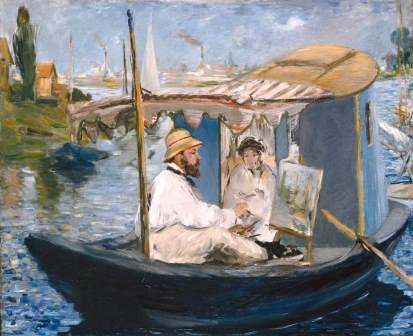
Em “La Vie et la Passion de Dodin-Bouffant, Gourmet”, Marcel Rouff faz conexões entre as artes culinárias e outras formas de arte, incluindo a pintura. O romance frequentemente usa descrições ricas e vívidas que lembram estilos artísticos, traçando paralelos entre a criatividade e a paixão de grandes chefs e artistas. Essa comparação ressalta a ideia de que cozinhar, assim como pintar, é uma forma de arte que requer não apenas habilidade técnica, mas também criatividade e uma profunda apreciação pela beleza e expressão. As descrições exuberantes e detalhadas no livro evocam o trabalho de pintores que prestam muita atenção à cor, textura e composição.
Por exemplo, o estilo em “La Vie et la Passion de Dodin-Bouffant, Gourmet” compartilha semelhanças com a arte impressionista. Como o impressionismo, que captura momentos da vida com foco na luz, cor e experiência imediata, a escrita de Rouff captura vividamente a essência das experiências gastronômicas. As descrições detalhadas da comida, ambiente e os prazeres sensoriais associados à alimentação evocam o foco impressionista em capturar momentos fugazes e a experiência subjetiva da beleza. Essa escolha estilística aprimora a celebração das artes culinárias no romance como uma busca expressiva e estética.
“La Vie et la Passion de Dodin-Bouffant, Gourmet” pode ser visto como uma celebração da cultura francesa, particularmente suas tradições culinárias, o que pode parecer pretensioso para alguns leitores. O romance idealiza a gastronomia francesa e os gostos refinados associados a ela, retratando esses costumes como um pináculo de conquista cultural. No entanto, esse retrato é frequentemente mais um tributo à arte da alta gastronomia do que uma reivindicação de superioridade. A ênfase está na paixão e dedicação à gastronomia, que pode ser encontrada em muitas culturas, não apenas na francesa.
Eu redigi o parágrafo acima em dúvida, pois o que me veio a mente foi que os franceses adoram “cagar goma”, que é uma gíria usada em português, especialmente no Brasil, para descrever alguém que está se exibindo ou querendo se mostrar superior. É uma maneira informal de dizer que uma pessoa está se achando, ostentando ou tentando impressionar os outros de forma exagerada. É uma expressão coloquial e, dependendo do contexto, pode ser considerada vulgar ou depreciativa.
Aviso ao leitor(a) que estou movido pela experiência da abertura dos jogos olímpicos de 2024, onde a Santa Ceia foi esculhambada com um bando de gente esquisita e não vou reproduzir aqui, porém vou citar a crítica de uma autora inglesa:
Vale a pena traduzir porque é excelente: O termo “Paedo Perv” é uma gíria depreciativa e ofensiva que combina “paedo”, uma forma abreviada de “pedófilo”, com “perv”, abreviação de “pervertido”. É usado para descrever alguém que se acredita ter um interesse sexual inapropriado em crianças.
Esta é a sua atualização dos Jogos Olímpicos de Paris Paedo Perv.
A tocha foi entregue a um homem e um homem feio vestido como uma mulher ainda mais feia com muita maquiagem e peitos cômicos, como se dissesse que as mulheres não são mais necessárias, que é muito a maneira como Macron opera com sua esposa. (entre aspas – ela é esposa de araque) As Olimpíadas Paedo Perv então passaram para uma última ceia blasfema composta por artistas drag e trans e um smurf azul. A maioria deles parece compartilhar o hobby de comer demais. Se fosse a última ceia deles, não seria uma coisa ruim. Um dos esquisitos decidiu deixar sua mão esquerda pendurada para fora de seu short de lantejoulas brilhantes como aquela última tangerina mofada que fica na ultima que fica nos enfeites alaranjados do Natal Alguém se pergunta o que teria acontecido se essa cena fosse sobre um profeta transando com uma criança de oito anos. Deve ter sido uma criança não binária de oito anos, presumivelmente não é verdade, teria sido queimada novamente. Tudo o que podemos dizer neste momento é graças a Deus por Celine Dion que escapou da síndrome da pessoa rígida momentaneamente para trazer um pouco de dignidade aos procedimentos. Enquanto isso, a câmera corta para imagens de Tom Daley vestido em seus Speedos mais uma vez com seu parceiro Lance Black dando uma surra para os pensamentos de um smurf azul com seu pau para fora. É isso do primeiro dia dos Jogos Olímpicos Paedo Perv.
—————————–
Eu não consigo ficar imparcial para analisar o filme “O Sabor da Vida”, diante de uma barbaridade destas, e concordo plenamente com o ex ministro da cultura francês que declarou que foi um suicídio e minha intenção é mais nesta direção, isto é, examinar a falecida (cultura francesa), mas vou misturar um pouco do que também está lá no bom sentido, ou no sentido nobre, ou no sentido sofisticado e de alto nível, com o qual a cultura francesa está associada.
Voltando a “La Vie et la Passion de Dodin-Bouffant, Gourmet” o estilo do autor compartilha semelhanças com a arte impressionista. Como o impressionismo, que captura momentos da vida com foco na luz, cor e experiência imediata, a escrita de Rouff, e por consequência o filme, captura vividamente a essência das experiências gastronômicas. As descrições detalhadas da comida, ambiente e os prazeres sensoriais associados à alimentação evocam o foco impressionista em capturar momentos fugazes e a experiência subjetiva da beleza. Essa escolha estilística aprimora a celebração das artes culinárias no romance como uma busca expressiva e estética.
A cena do pedido de casamento dele é uma reprodução do Déjeuner sur l’Herbe de Édouard Manet e a mulher nua na relva tem relação com a cena da Juliette Binoche nua, que é bem complicada e requer um quilo de sal para entender o que está por trás. No verbete da wikipedia explica.
Uma coisa dificil neste filme e que deixa o espectador em dúvida, principalmente se já tiver tido contacto com o que está por trás do que está vendo, é a nuance muito delicada e rarefeita entre a estética do que está ali e de onde saiu, como por exemplo a cena do pedido de casamento ambientada em cima do quadro de Manet.
Menos evidente, mas também ligada, está na semelhança com “À la recherche du temps perdu” (Em busca do tempo perdido) de Marcel Proust. Ambas as obras exploram temas de memória, experiência sensorial e busca do prazer. O trabalho de Proust é notoriamente centrado em torno das memórias involuntárias desencadeadas por experiências sensoriais, como o gosto de um bolo madeleine, que é paralelo ao foco de Rouff nas experiências sensoriais e emocionais associadas à alta gastronomia. Ambos os autores usam descrições ricas e detalhadas para evocar a natureza efêmera e profundamente pessoal dessas experiências.
As impressões de Tran Anh Hung Diretor do filme
Tenho dificuldade em falar mal dele, pois se tem uma raça que eu admiro são os vietnamitas. E na entrevista que ele deu acima que eu tirei do Youtube, é uma simpatia. No Brasil não se tem notícia clara que os Estados Unidos foram derrotados na guerra do Vietnã. Eu sabia disso superficialmente e incrivelmente descobri em detalhe quando estava visitando meu filho que mora nos Estados Unidos ajudando meu neto mais velho a fazer um trabalho escolar examinando a guerra do Vietnã e porque os Estados Unidos foram derrotados. É uma pena que fuja ao tema que estamos examinando, mas basicamente os americanos (e os franceses), foram derrotados simplesmente por Determinação e Resiliência Vietnamita: A resistência dos vietnamitas, tanto do Norte quanto do Viet Cong no Sul, foi extremamente forte. Eles estavam dispostos a lutar por um longo período de tempo, suportando grandes sacrifícios. Uma coisa sensacional quando examinada em detalhe foram suas Estratégias de Guerrilha: O uso de táticas de guerrilha pelo Viet Cong, aliado ao apoio logístico e militar do Vietnã do Norte, que tornou impossível para as forças americanas derrotarem os combatentes vietnamitas.
Mas, em que pese a competência, o esmêro e o talento com que Tran Anh Hung realizou este filme, ele fez mesmo foi um assalto ao arquivo e uma celebração de uma cultura que não é a dele e que teve uma relação complicada com seu pais de origem.
Além de que o momento não ajuda… Como pode toda esta sofisticação, este admirável “savoir de vivre”, estes gases tão nobres, verdadeiros eflúvios do paraíso, ter uma besta como o Macron mandando e estar nas mãos de gente como a que fez a abertura dos jogos olímpicos, não dá para entender. Além de, pelo menos para mim, deixar um sabor amargo que é tudo falso.
O Vietnã foi uma colônia francesa de meados do século XIX até 1954, parte da Indochina Francesa. Esse passado colonial deixou um legado complexo, com influências culturais, arquitetônicas e culinárias que ainda são evidentes em ambos os países.
A França tem uma comunidade vietnamita significativa, composta por imigrantes e descendentes de vietnamitas que chegaram em diferentes períodos, especialmente após a Guerra do Vietnã.
No Vietnã, a língua francesa ainda é ensinada em algumas escolas e universidades, e é falada por uma minoria de vietnamitas, especialmente entre as gerações mais velhas.
Fato da vida é que a quinta essência da cultura francesa está sendo apresentada baseada num autor suiço, num filme dirigido por um vietnamita e, principalmente apoiada como representante oficial por uma ala da politica francesa que está por tras da abertura dos jogos olímpicos, e que é progressista
Isso não tira os méritos do filme, mas é uma metáfora perfeita sobre o que está acontecendo com a França.
Embora eu tenha dito que não iria mostrar a abertura, vou abrir exceção, porque vale a pena ver o que está acontecendo:
A França tem cerca de 65 milhões de habitantes na Europa mais uns 2 ou 3 milhões em territorios ultramarinos, no censo de 2022.
Pelo menos 25 milhões, senão mais, são imigrantes, metade muçulmanos.
Títulos ou nomes do filme
No Festival de Cannes de 2024 o filme foi apresentado como “La Passion de Dodin Bouffant,” e inicialmente foi apresentado ao publico americano como “The Pot-au-Feu,” O Pot-au-Feu”. O pot-au-feu é um prato tradicional da culinária francesa, conhecido como um cozido de carne e vegetais. A tradução literal do termo seria “Pote no Fogo”, mas geralmente é mantido o nome original em francês, “pot-au-feu”, para se referir especificamente a esse prato tradicional.
Porém, como Anatomia de uma queda venceu em Cannes e como a diretora criticou o governo, ele foi excluido para representar a França no Oscar.
Toda a critica elogia O Sabor da Vida, porem a bilheteria dele foi 5 milhões de dólares e a do Anatomia de uma queda 35 milhões de dólares.
Juliette Binoche, em entrevista sobre o filme, parece desculpar-se insistindo que foram escolhidos e não fizeram nada para promover o filme e apenas se dedicaram de corpo e alma ao roteiro.
Uma palavra sobre o vinho e a comida
Para efeito de comparação e para entender um dos argumentos do filme, desmontar seria mais preciso, temos que pegar a receita do Pot au Feu:
Aqui está uma receita clássica de pot-au-feu, um prato tradicional francês que é basicamente um cozido de carne e vegetais. É simples, mas delicioso, e é perfeito para um jantar acolhedor.
Ingredientes
Para a carne e vegetais:
1,5 kg de carne de boi (uma combinação de ossobuco, peito, paleta ou costela)
1 osso de tutano (opcional, mas adiciona sabor)
2 cebolas grandes, cortadas ao meio
4 cenouras grandes, cortadas em pedaços grandes
4 nabos, cortados em pedaços grandes
4 batatas grandes, descascadas e cortadas em pedaços grandes
3 talos de aipo, cortados em pedaços grandes
1 alho-poró grande, cortado em pedaços grandes
1 bouquet garni (um amarrado de ervas que pode incluir louro, tomilho, salsinha, etc.)
Sal grosso e pimenta-do-reino a gosto
Para servir:
Pão francês ou baguete
Mostarda Dijon
Cornichons (picles pequenos)
Flor de sal
Instruções
Preparar a Carne e o Caldo:
Coloque a carne e o osso de tutano (se estiver usando) em uma panela grande e cubra com água fria. Leve ao fogo e deixe ferver. Quando começar a ferver, abaixe o fogo e deixe cozinhar por alguns minutos para que a espuma se forme na superfície.
Escorra a água e lave a carne para remover as impurezas. Isso ajudará a obter um caldo claro e limpo.
Cozinhar o Pot-au-Feu:
Retorne a carne para a panela limpa e adicione água suficiente para cobrir completamente a carne. Adicione o bouquet garni e uma boa pitada de sal grosso.
Leve a panela ao fogo e deixe ferver. Em seguida, abaixe o fogo e cozinhe lentamente por cerca de 2 a 2,5 horas. Durante o cozimento, retire a espuma e a gordura que se formarem na superfície para manter o caldo claro.
Adicionar os Vegetais:
Adicione as cebolas, cenouras, nabos, aipo e alho-poró à panela. Cozinhe por mais 30-40 minutos, ou até que os vegetais estejam macios e a carne esteja bem cozida e macia. Nos últimos 20 minutos, adicione as batatas.
Servir:
Retire a carne e os vegetais da panela e arrume-os em uma travessa. Coe o caldo e sirva em uma tigela separada, para que cada pessoa possa adicionar conforme desejado.
O pot-au-feu é tradicionalmente servido com pão francês ou baguete, mostarda Dijon e cornichons. Você também pode adicionar flor de sal à mesa para temperar a carne.
Dicas:
O pot-au-feu pode ser preparado com antecedência, pois os sabores só melhoram com o tempo. É comum preparar o prato no dia anterior e depois aquecê-lo antes de servir.
Se desejar, você pode servir o osso de tutano como uma entrada, espalhando o tutano sobre o pão com uma pitada de sal.
O Chef, personagem central do filme, pede para a menina candidata a aprendiz e com excepcional talento para gostos e habilidades que fazem uma cozinheira que sinta o gosto do tutano e elabora uma teoria que somente o tempo poderia dar a ela noção do que estava percebendo.
O tutano, que é a substância gordurosa encontrada dentro dos ossos, especialmente nos ossos longos de animais como vacas, tem um sabor rico e único que é bastante apreciado na culinária. Seu gosto especial pode ser descrito como:
Untuoso e Rico: O tutano é extremamente gorduroso, o que lhe confere uma textura aveludada e um sabor rico e cremoso. Essa qualidade untuosa é semelhante à da manteiga, mas com uma profundidade de sabor mais complexa.
Umami: O tutano é uma fonte natural de umami, o quinto gosto que é frequentemente descrito como saboroso ou salgado. Esse perfil de sabor é intenso e satisfatório, muitas vezes comparado ao sabor da carne assada ou ao caldo de carne.
Sabor de Noz: Algumas pessoas percebem um leve sabor de noz no tutano, o que contribui para sua complexidade e profundidade de sabor.
Levemente Adocicado: Há também uma leve doçura natural no tutano, que complementa seus sabores salgados e umami.
Sabor Sutil de Carne: Por ser parte do osso, o tutano tem um sabor que lembra a essência da carne, mas de forma mais delicada e sutil.
O tutano é apreciado em várias culturas culinárias por essas qualidades e é frequentemente usado como ingrediente em pratos sofisticados ou como uma iguaria por si só. É comum ser assado e servido em pratos, com uma pitada de sal e, às vezes, acompanhado de pão torrado para contrastar com sua textura cremosa.
Penso que é um paradoxo intransponível tentar transmitir experiências sensoriais que exigem experimentação real sendo retratadas apenas com texto escrito ou por meio mais sofisticado como o cinema. Para saber como é o “Real Thing”, ou a coisa mesmo em si, tem que passar pelo nosso sistema sensorial. Vira um vasto Bla bla bla e se não for salvo pelo talento de uma Karen Blixen, como na Festa de Babette, fica uma coisa tediosa e uma ginástica mental ficar procurando entender cada metáfora estética, cada referência cultural, cada filigrana sofisticada que a frescura da cultura francesa tenta impingir ao mundo como coisa superior. Ou então uma “Noblesse Oblige” aliviada que parece mais a fábula do rei nú apresentando suas roupas que somente pessoas altamente capacitadas conseguiam ver.
The term originated from the Latin word “momentum,” meaning “movement” or “importance,” and in Latin, originally it meant the following:
(I speak Portuguese, which came from Latin and in my youth, at high school, we studied Latin and from the dictionary of Latin, which I still keep, the definition is):
I)Practical meaning:
In abstract terms: Impulse, movement, variation In concrete terms: Weight (determined by the movement and inclination of the scale)
II)Moral meaning:
Cause that determines a decision in a direction due to influence, motive Portion, small quantity, small division, especially in terms of time, minute, instant
III)Figurative meaning:
Weight, importance, (of people and things) Influence, motive, consequence
In English, (Webster’s Third New International Dictionary and Webster’s Collegiate) it means the following:
Moment Latin: momentum movement, particle sufficient to turn the scales, moment French: movére to move.
1: a minute portion or point of time: INSTANT
2 a: present time (at the present time he is working on a novel) b: a time of excellence or conspicuousness (he has his remarkable moments)
3: importance in influence or effect: notable or remarkable consequence
4: a cause or motive of action
5: a stage in historical or logical development
6 a: tendency or measure of tendency to produce motion esp. about a point or axis b: the product of quantity (as a force) and the distance to a particular axis or point b : the product of quantity (as a force) and the distance to a particular axis or point — INERTIA
7 a : the mean of the nth powers of the deviations of the observed values in a set of statistical data from a fixed value b: the expected value of a power of the deviation of a random variable from a fixed value
Relation between reality and moment
The relationship between reality and a moment is fundamentally about perception and existence. A moment is a snapshot in the continuous flow of time, capturing a specific instance within reality. Reality comprises an infinite number of moments, each representing a unique configuration of events, objects, and experiences. In philosophical and existential terms, each moment can be seen as a unique, singular point of experience that contributes to the broader tapestry of reality. Our perception and interpretation of these moments shape our understanding of reality. is fundamentally about perception and existence. A moment is a snapshot in the continuous flow of time, capturing a specific instance within reality. Reality comprises an infinite number of moments, each representing a unique configuration of events, objects, and experiences. In philosophical and existential terms, each moment can be seen as a unique, singular point of experience that contributes to the broader tapestry of reality. Our perception and interpretation of these moments shape our understanding of reality.
A “moment” can be seen as an abstraction that depends on the context in which it is used. Whether referring to time, physics, statistics, or another field, the concept of a moment captures a specific aspect or characteristic relevant to that context. It simplifies and isolates a particular instance or measurement for analysis or understanding, allowing for a more focused examination of complex phenomena. Thus, defining a moment is inherently tied to the context and the specific properties being considered.
I will expand more after some considerations.
Abstraction
An abstraction is a conceptual process where general concepts or ideas are derived from the use and classification of specific examples, literal meanings, or other data. In essence, abstraction involves simplifying complex systems by focusing on the most important aspects and ignoring irrelevant details. This can occur in various fields, such as art, mathematics, computer science, and philosophy, where it helps to manage complexity and facilitate understanding by creating models, theories, or representations that are easier to work with.
We are going to leave aside physics and statistics, after brief considerations and broadlly will discuss under the following contexts:
As a minute portion or point of time: INSTANT
As it is discussed in literature, specially novels
Its notable or remarkable consequence under different contexts
As a cause or motive of action
As a stage in historical or logical development
Before going to these contexts, let´s briefly discuss it under physics and statistics for the sake of not ignoring it:
In Physics
There are two major areas where moment is used to define:
As Inertia
One is kind of simple and does not need too much discussion, it is the product of quantity (as a force) and the distance to a particular axis or point and the product of quantity (as a force) and the distance to a particular axis or point. The other one is torque.
The moment of inertia is a property of a body that quantifies its resistance to angular acceleration around an axis. It depends on the mass distribution of the object relative to the axis of rotation. The moment of inertia III is calculated as the sum of the products of each mass element mim_imi and the square of its distance rir_iri from the axis, expressed mathematically as I=∑miri2I = \sum m_i r_i^2I=∑miri2. It plays a crucial role in rotational dynamics, analogous to mass in linear motion.
A practical example of the moment of inertia is the difference between a solid disk and a hollow ring when rolling down a hill.
Solid Disk: If a solid disk and a hollow ring have the same mass and radius, the solid disk will reach the bottom of the hill first. This happens because the solid disk has a smaller moment of inertia compared to the hollow ring. The mass of the solid disk is distributed closer to the axis of rotation, requiring less torque to achieve the same angular acceleration.
Hollow Ring: The hollow ring, with its mass distributed farther from the axis, has a greater moment of inertia, making it more resistant to changes in its rotational state.
This difference in moments of inertia affects how each object accelerates under the influence of gravity, demonstrating how mass distribution influences rotational motion.
In real life you can you observe the moment of inertia in various man-made objects, particularly in engineering and design:
Aerospace Engineering: The distribution of mass in aircraft and spacecraft affects stability and control during flight.
Flywheels: Used in engines and machinery to store rotational energy. A larger moment of inertia helps maintain consistent rotational speed.
Bicycles and Motorcycles: Wheel design, including the distribution of mass, affects stability and handling.
Skates and Skateboards: The distribution of mass in wheels influences the ease of performing tricks.
As torque
The seconf large group which uses moment to define is torque. The moment of force, commonly known as torque, refers to the rotational effect produced by a force applied to an object. It is calculated as the product of the force (FFF) and the perpendicular distance (rrr) from the point of rotation to the line of action of the force, expressed as τ=r×F\tau = r \times Fτ=r×F. Torque is measured in Newton-meters (Nm) and indicates how effectively a force can cause an object to rotate around an axis.
It plays a crucial role in many everyday applications:
Door Handles: The force applied on a door handle at a distance from the hinges creates torque, making it easier to open the door.
Wrenches and Screws: Applying a force at a distance from a bolt’s center generates torque, allowing for the tightening or loosening of the bolt.
Car Engines: The engine’s torque determines the vehicle’s ability to accelerate. Higher torque provides better acceleration, especially at lower speeds.
Seesaws: A child sitting farther from the pivot point can balance a heavier child sitting closer by generating more torque.
KONICA MINOLTA DIGITAL CAMERA
One area which few people know that torque is crucial is in the placement of dental implants. When inserting an implant, the torque must be carefully controlled to ensure that the implant is securely anchored into the jawbone without causing damage. Adequate torque helps achieve primary stability, which is essential for the successful osseointegration of the implant. This means the bone will grow around the implant, firmly securing it in place. Excessive or insufficient torque can lead to complications such as implant failure or bone damage.
Einstein Relativity and Block Universe and moment
The block universe theory, often associated with the theories of Einstein and Hawking, posits that time is a dimension similar to space, and all points in time (past, present, and future) exist simultaneously in a four-dimensional space-time continuum. This theory is a direct extension of Einstein’s theory of relativity, which integrates space and time into a single, unified framework. In this view, time does not “flow” as commonly perceived; instead, it is a static dimension, and what we experience as the passage of time is our movement through this four-dimensional block.
Time is fixed or in motion?
In the block universe theory, it is indeed us who perceive the flow of time while moving through a fixed, four-dimensional space-time continuum. In this model, every point in time—past, present, and future—exists simultaneously, and our conscious experience gives the illusion of time flowing. This concept differs from the common perception of time as a dynamic process, instead suggesting that all moments are equally real and permanent, and what we perceive as the passage of time is simply our journey through these different points in space-time.
In the context of Einstein’s and Hawking’s theories, where time is treated as a dimension similar to space, a “moment” can be understood as a specific point in the four-dimensional space-time continuum. Unlike the traditional view of time as a flowing river, in this framework, all moments—past, present, and future—exist simultaneously as different coordinates in space-time. Thus, a moment is a coordinate that defines a unique point in space-time, rather than a transient slice of an ever-moving timeline. This perspective aligns with the block universe theory, where the universe is seen as a fixed four-dimensional entity
Experimental tests of the validity of these ideas
The block universe theory, while a compelling interpretation of space-time, is primarily a philosophical and theoretical framework rather than a hypothesis with direct experimental tests. However, several experimental results indirectly support the foundations of this theory:
Time Dilation: Experiments, such as those with atomic clocks on airplanes (Hafele–Keating experiment), confirm time dilation, a prediction of special relativity, suggesting that time can vary depending on relative motion.
General Relativity: Observations of gravitational time dilation, where time runs slower in stronger gravitational fields, also support the idea that time is a dimension influenced by space-time curvature.
GPS satellites account for time dilation by incorporating relativistic corrections into their onboard clocks. These corrections are based on Einstein’s theory of relativity, which predicts that clocks in a stronger gravitational field (like those on Earth) run slower than those in a weaker field (like those on satellites). The GPS system includes both special and general relativistic effects: special relativity accounts for the satellites’ high velocity, and general relativity accounts for the difference in gravitational potential. Ground-based systems and receivers, such as iPhones, then use these corrected time signals to calculate accurate positions.
The block universe theory, which treats time as a static dimension, is one interpretation of the implications of relativity. While time dilation and gravitational time dilation support the interconnectedness of space and time, they do not explicitly prove that time is static rather than flowing. It is possible that these phenomena arise from yet-to-be-discovered principles or deeper aspects of physics. The block universe theory is a useful conceptual framework, but like all scientific theories, it is subject to revision or replacement as our understanding evolves.
There is a huge problem for the whole or to the framework of philosophical and religious ideas, in short, everything that civilization has ever thought of, which clash fatally with the notion of a block universe, should its authors be right. Dr. Gary A. Stilwell has an excellent discussion on this issue.
So much for Physics. Let’s discuss the possibilities that brought us here.
As an Instant
The measurement of a “moment” depends on the context:
Temporal Context: Measured using units of time (seconds, minutes, etc.).
Physics (Torque): Measured as the product of force and the perpendicular distance from the axis of rotation, typically in Newton-meters (Nm).
Statistics: Moments (e.g., mean, variance) are calculated using mathematical formulas that involve summing powers of deviations from a central value, often measured in units related to the data set (e.g., kg, meters).
Each context uses specific units and methods suitable for the type of measurement.
We are particularly interested to the amount of the temporal context to limit a moment.
There is no strict, universally accepted convention for the duration of a “moment” in a temporal context. The term is inherently subjective and can vary based on context and perception. In casual use, it generally refers to a very brief period, often just a few seconds or minutes. However, in philosophical or psychological contexts, a “moment” can be seen as any distinct period of experience or consciousness, which may vary greatly in perceived length. The exact duration is therefore flexible and context-dependent.
Thinking about the longest accepted duration of a moment under any context, Chat GPT tells us that The concept of a “moment” typically implies a very brief duration, but its maximum length can vary based on context. In general, there is no universally accepted upper limit for the duration of a moment, as it is a subjective measure. However, in philosophical or psychological discussions, a moment might be considered as long as it encapsulates a single, unified experience or event. This could range from a few seconds to several minutes, depending on the intensity and complexity of the experience being described.
Types of context
The term “moment” is used in various contexts beyond those previously mentioned:
Finance: In portfolio theory, “moment” refers to statistical measures (e.g., mean return, volatility).
Mechanics: Moments in structural engineering relate to bending moments in beams.
Music: A “moment” can denote a section or point in a musical composition.
Language and Idioms: In expressions like “moment of truth” or “momentous occasion,” it signifies critical or significant events.
Psychology: A “moment” can refer to a short instance of emotional or cognitive experience.
Philosophers, men of science, artists, which are famous for pursuing the depiction of moments
Philosophers
Heraclitus:
Known for his doctrine of change, Heraclitus emphasized that everything is in a constant state of flux, famously stating, “You cannot step into the same river twice.” His focus on the ever-changing nature of reality highlights the significance of individual moments.
Edmund Husserl:
The founder of phenomenology, Husserl focused on the structures of consciousness and the experience of moments. His work emphasized the importance of present experience and how moments of perception contribute to our understanding of reality.
Henri Bergson:
Bergson’s concept of “duration” explores the continuous flow of time and how we experience it in moments. He distinguished between objective, measurable time and the subjective experience of time as a series of interconnected moments.
Men of Science
Niels Bohr:
A key figure in quantum mechanics, Bohr’s work on the nature of particles and wave functions delves into the idea of moments in time. The uncertainty principle and the observation effect highlight how the act of measuring or observing affects the state of particles at any given moment.
William James:
Often referred to as the “Father of American psychology,” James explored the “stream of consciousness,” a concept that considers the flow of thoughts and sensations as a series of continuous moments.
Daniel Kahneman:
A psychologist and Nobel laureate, Kahneman studied the perception of happiness and memory, distinguishing between the “experiencing self” and the “remembering self.” His work underscores how moments of experience and moments of reflection shape our understanding of well-being.
Artists
Claude Monet:
A leading figure in the Impressionist movement, Monet sought to capture the fleeting effects of light and color in his paintings. His series of works, like “Water Lilies” and “Haystacks,” depict the same scenes at different times, emphasizing the changing moments.
Marcel Proust:
Though a writer, Proust’s exploration of memory and time in “In Search of Lost Time” is a literary depiction of moments. He delved into how past moments can be vividly recalled and how they shape our present experience.
Edward Hopper:
An American realist painter, Hopper is known for his depictions of everyday moments imbued with a sense of stillness and contemplation. His works like “Nighthawks” capture the essence of particular moments in time and space.
Jackson Pollock:
A leading figure in Abstract Expressionism, Pollock’s “drip paintings” can be seen as capturing the moment of creation, with each drip and splatter representing a specific instant in the process of painting.
Writers and Poets
James Joyce:
Joyce’s use of stream of consciousness in “Ulysses” and “A Portrait of the Artist as a Young Man” captures the flow of thoughts and moments in the minds of his characters. I have already explored Jams Joyce and reality, but here, in the sequence, I will add specific considerations about his writings and moment
Virginia Woolf:
Woolf’s novels, such as “Mrs. Dalloway” and “To the Lighthouse,” use stream of consciousness to depict the inner lives of her characters, capturing the transient and fleeting nature of moments.
T.S. Eliot:
In his poetry, particularly in works like “The Waste Land” and “Four Quartets,” Eliot explores the nature of time and moments, blending past, present, and future in his meditative and reflective verses.
These individuals from various disciplines have contributed to our understanding of moments and how they shape our perception of reality, highlighting the universality and importance of this concept across different fields of human inquiry and expression.
Reality as a pile of moments
This assumption aligns with certain philosophical perspectives, particularly those that emphasize the subjective nature of time and the way we experience it. Here are some key points that support this view:
Philosophical Perspectives
Presentism:
Presentism is the philosophical theory that only the present exists. According to this view, the past and future are not real in the same way the present is; they exist only in our memories and anticipations. Therefore, only the present moment truly exists.
Phenomenology:
Edmund Husserl, a prominent phenomenologist, argued that our experience of time is a flow of moments. We perceive time through the succession of present moments, with the past and future being constructs of our consciousness.
Eternalism:
In contrast, eternalism posits that past, present, and future events are equally real. However, even in this view, our perception of time is still anchored in the present moment, with past and future being accessible only through memory and anticipation.
Bergson’s Duration:
Henri Bergson introduced the concept of “duration,” which contrasts with the scientific, linear view of time. Duration is the qualitative experience of time as a continuous flow of moments, emphasizing the subjective nature of temporal experience.
Scientific Perspectives
Relativity Theory:
Albert Einstein’s theory of relativity revolutionized our understanding of time and space. According to relativity, time is relative and not absolute; it can vary depending on the observer’s frame of reference. This implies that our experience of moments is influenced by our position and motion in the universe.
Quantum Mechanics:
In quantum mechanics, the concept of time can become even more complex. Some interpretations suggest that at the quantum level, the distinction between past, present, and future may blur, supporting the idea that only moments (quantum events) exist.
Psychological and Cognitive Perspectives
Perception of Time:
Cognitive psychology suggests that our perception of time is constructed by the brain, and we experience it as a series of moments. Our sense of past and future is derived from our ability to remember and anticipate, but our direct experience is always in the present moment.
Mindfulness and Presence:
Practices like mindfulness and meditation emphasize living in the present moment. These practices highlight how focusing on the present can alter our perception of time and reduce the influence of past regrets and future anxieties.
Conclusion
While traditional views of time consider past, present, and future as distinct entities, many philosophical, scientific, and psychological perspectives suggest that these distinctions are constructs of human perception. Instead, what fundamentally exists are moments—discrete experiences that we organize into a temporal framework.
So, it is correct to assume that, from a certain perspective, there is no objective past, present, or future, but rather a continuous series of moments. These moments are given meaning and located in time through our subjective experience and cognitive processes. This viewpoint aligns with various modern and classical understandings of time and perception.
It is correct to assume that our mechanism of perception is fundamentally based on the accumulation of moments. Here are some reasons why this perspective holds:
Temporal Nature of Perception
Sequential Processing:
Our brains process information sequentially, with each moment of perception building on the previous ones. This continuous flow creates a cohesive experience of reality, even though it is composed of discrete perceptual moments.
Neuroscientific Basis:
Neuroscientific research shows that our sensory systems and neural networks operate in a way that processes information in temporal sequences. For instance, visual and auditory stimuli are processed in successive stages, each lasting mere milliseconds, but creating a fluid perceptual experience.
Psychological and Philosophical Insights
Present Moment Awareness:
Psychological practices such as mindfulness emphasize the importance of being aware of the present moment. This aligns with the idea that perception is always rooted in the current moment, even as it integrates past experiences and anticipates future ones.
Phenomenological Perspective:
Phenomenologists like Edmund Husserl argue that our experience of reality is always tied to the present moment. Our consciousness is constantly synthesizing these moments into a coherent flow of experience, but each unit of perception is a moment in time.
Cognitive Mechanisms
Memory and Experience:
Our memory functions by encoding, storing, and retrieving information based on moments of experience. Even our long-term memories are constructed from sequences of moments that we have experienced.
Episodic memory, in particular, is the memory of specific events and experiences, which are essentially collections of moments.
Attention and Focus:
Our attention shifts from moment to moment, allowing us to focus on different aspects of our environment. This selective attention mechanism means that perception is inherently tied to the moments we attend to.
Philosophical Implications
Existential Reality:
From an existential perspective, our understanding of being and existence is tied to the succession of moments. As Jean-Paul Sartre noted, “Existence precedes essence,” meaning our lived experience, moment by moment, defines our reality.
Temporal Finitude:
The temporality of human existence means that we are always situated in a specific moment in time. This finitude shapes our perception and understanding of reality.
Practical Considerations
Technological and Therapeutic Applications:
Understanding perception as a series of moments is crucial in areas like virtual reality (VR) and augmented reality (AR), where creating seamless experiences requires managing how moments are presented to the user.
Therapeutic practices, such as cognitive-behavioral therapy (CBT), often focus on modifying moment-to-moment thoughts and behaviors to effect long-term change.
Conclusion
While our perception is indeed composed of moments that pile up to create a continuous experience, this is not a limitation but rather the fundamental nature of how we interact with and understand the world. Each moment is a unit of perception, and our consciousness strings these units together to form the fabric of our lived reality. This understanding bridges neuroscience, psychology, and philosophy, providing a comprehensive view of human perception.
James Joyce, moments and reality
Joyce published 4 novels, a play, a collection of short stories and three poetry collections.
Joyce wrote four fictional works set in Ireland: Dubliners (a collection of short stories), A Portrait of the Artist as a Young Man, Ulysses, and Finnegan’s Wake, (four novels)
Ulysses and moments
It is not entirely accurate to say that for James Joyce, the entire day depicted in “Ulysses” is considered a single moment. However, the novel does illustrate the idea that a single day can be deeply rich and complex, filled with numerous significant moments that contribute to the overall tapestry of human experience. Here are some points to consider:
Narrative Technique and Structure
Stream of Consciousness:
Joyce employs the stream of consciousness technique to delve deeply into the thoughts and feelings of his characters, capturing the multitude of moments that make up their internal and external experiences throughout the day. This approach highlights the richness of each individual moment within the day.
Episode Structure:
“Ulysses” is structured into 18 episodes, each focusing on different characters, settings, and events occurring on June 16, 1904. Each episode represents distinct moments in time, contributing to the overall narrative.
Thematic Exploration
Everyday Life:
Joyce’s focus on a single day underscores the significance of everyday life and ordinary moments. By magnifying the events of one day, he shows how each moment is filled with meaning and potential for insight.
Temporal and Spatial Fluidity:
Joyce plays with the fluidity of time and space, often blending past memories, present experiences, and future anticipations within the characters’ consciousness. This approach suggests that moments are interconnected and layered.
Philosophical Implications
Epiphanies:
Joyce is known for his use of epiphanies—sudden moments of insight or revelation experienced by his characters. These moments often occur within the broader context of the day, emphasizing the importance of individual moments within the continuum of time.
Narrative Depth:
By exploring the depth and complexity of a single day, Joyce illustrates how time can be experienced subjectively. Each moment within the day is significant and contributes to the characters’ development and understanding.
Artistic Representation
Lyrical Realism:
Joyce’s detailed and lyrical depiction of the events of June 16, 1904, elevates the ordinary to the extraordinary. This artistic choice reinforces the idea that each moment is part of a larger, meaningful whole.
Conclusion
While “Ulysses” is not about reducing an entire day to a single moment, it does reflect Joyce’s belief in the richness and significance of individual moments within a given period. The novel shows how a single day can encompass a vast array of experiences, thoughts, and emotions, each contributing to the intricate mosaic of human life. Therefore, it is more accurate to say that Joyce’s work emphasizes the profound depth and complexity of everyday moments rather than viewing the day itself as one singular moment.
Finnegans Wake and moments
“Finnegans Wake” by James Joyce is an even more complex and experimental work than “Ulysses,” and it offers a unique perspective on the concept of moments and time. Here are some key points that relate to “Finnegans Wake” and the idea of moments:
Nonlinear Narrative
Cyclical Structure:
“Finnegans Wake” is known for its cyclical structure. The novel ends mid-sentence, which is completed by the beginning of the first sentence of the book, suggesting a continuous, unending cycle of time and events. This structure reflects the idea that moments are interconnected and that time is not linear but rather circular.
Fragmentation and Fluidity:
The narrative is highly fragmented, with a fluid and dream-like quality. Moments in the book often blend and overlap, making it difficult to distinguish between different times, places, and events. This reflects the idea that moments are not isolated but part of a larger, interconnected whole.
Language and Symbolism
Polysemy and Multilayered Language:
Joyce uses a highly complex, polysemous language in “Finnegans Wake,” where words and phrases often have multiple meanings and references. This multilayered use of language mirrors the complexity of moments, each carrying multiple layers of significance and interpretation.
Dream Logic:
The narrative follows a logic akin to dreams, where time and space are fluid, and moments from different periods can coexist and influence each other. This dream-like structure emphasizes the non-linear and subjective nature of moments.
Themes and Motifs
Recurrence and Rebirth:
Themes of recurrence, rebirth, and the eternal return are prevalent in “Finnegans Wake.” The story of HCE (Here Comes Everybody) and the recurring motifs of fall and resurrection suggest that moments are part of a recurring cycle of life, death, and rebirth.
Historical and Mythical Layers:
Joyce interweaves historical and mythical references throughout the text, collapsing different times and events into a single narrative moment. This layering reinforces the idea that moments are not confined to a single point in time but are part of a continuous and interconnected historical and mythical fabric.
Character and Consciousness
Collective Consciousness:
The characters in “Finnegans Wake” often seem to embody collective archetypes and shared human experiences rather than individual consciousnesses. This collective aspect suggests that moments in the novel are shared, universal experiences rather than isolated incidents.
Multiplicity of Perspectives:
The narrative frequently shifts perspectives, blending the voices and experiences of various characters. This multiplicity reflects the idea that moments are perceived differently by different individuals, yet are part of a shared human experience.
Conclusion
In “Finnegans Wake,” James Joyce explores the concept of moments in a highly complex and non-linear fashion. The cyclical structure, fragmented narrative, and multilayered language all contribute to a portrayal of moments as interconnected, fluid, and part of a continuous cycle of time and experience. Rather than depicting moments as isolated or sequential, “Finnegans Wake” presents them as overlapping and interwoven, emphasizing the richness and complexity of human consciousness and history.
Dubliners and A Portrait of the Artist as a Young Man,
James Joyce’s treatment of the concept of a “moment” in his short stories, particularly in the collection Dubliners, and in his novel A Portrait of the Artist as a Young Man, is central to his narrative style. In these works, Joyce often explores “epiphanies,” moments of sudden insight or revelation experienced by his characters. These moments reveal deeper truths about the characters’ lives and their social environment, capturing the complexities and nuances of their inner worlds. Joyce’s focus on these fleeting yet significant moments highlights the importance of individual experiences in shaping one’s understanding of reality.
Version 1.0.0
Dubliners
Narrative and Language: Joyce uses a realist style with simple language to depict the lives of Dublin’s residents, capturing mundane yet profound moments that reveal deeper truths.
Symbolism and Themes: Themes of paralysis, escape, and epiphany are explored through symbolic moments, such as the “dead” in the final story.
Character and Consciousness: Joyce delves into his characters’ inner lives, using moments of epiphany to reveal their emotional and psychological states.
A Portrait of the Artist as a Young Man
Narrative and Language: The novel employs a stream-of-consciousness style, evolving from simpler language to more complex as Stephen Dedalus matures.
Symbolism and Themes: Moments of aesthetic and religious epiphany define Stephen’s journey toward self-realization and artistic identity.
Character and Consciousness: Stephen’s consciousness is central, with his evolving awareness and moments of insight driving the narrative and his development as an artist.
In both works, Joyce’s focus on moments, whether mundane or profound, serves as a window into his characters’ inner lives and broader societal issues.
Marcel Proust À la recherche du temps perdu (In Search of Lost Time)
I don’t know how to say it, but for the interest I have in time, which is shown in my site blog “Man & Time”, which started with J.B,Priestley and evolved into a bottomless exploration of the theme and in literature, which is shown in Dante’s Inferno and James Joyce Encyclopedia, Marcel Proust is a long due candidate to be also explored.
The very name of his main work: À la recherche du temps perdu (In Search of Lost Time), is a screaming denunciation for the themes I have been exploring.
For the moment, let’s explore him briefly.
Proust came first, but by very little time. Proust was involved in writing and publishing from an early age. In addition to the literary magazines with which he was associated, and in which he published while at school (La Revue verte and La Revue lilas), from 1890 to 1891 he published a regular society column in the journal Le Mensuel.
Joyce began writing his stories in the early 1900s while still living in Ireland. He continued to work on the collection while living in Europe. He moved back to Dublin in 1909 to finally have his work published to no avail. It took twenty attempts, but Dubliners finally made it to publication in 1914.
James Joyce and Marcel Proust met once in 1922. The meeting occurred in Paris at a dinner hosted by Sidney and Violet Schiff, two literary patrons. Despite being two of the most influential modernist writers of their time, the encounter was brief and not particularly remarkable. Reports suggest that they had little to say to each other, possibly due to differences in personality and interests. The meeting has since become a famous anecdote in literary history, symbolizing a brief intersection of two great literary minds.
James Joyce and Marcel Proust are often mentioned together as leading figures of modernist literature, but their works developed largely independently. There is no strong evidence to suggest that Joyce was directly influenced by Proust. However, both authors shared an interest in exploring inner consciousness, memory, and the complexities of time, which were central themes in their respective masterpieces, Ulysses and À la recherche du temps perdu. Their works reflect the broader modernist movement’s preoccupations rather than a direct influence from one on the other.
Marcel Proust was deeply interested in the concepts of moments and reality. In À la recherche du temps perdu (In Search of Lost Time), he extensively explores how fleeting moments, often triggered by involuntary memories, can reveal profound truths about reality and the self. Proust’s work delves into the nature of time, memory, and existence, examining how our perception of reality is shaped by these ephemeral experiences. His focus on the subjective nature of time and the intricate layers of memory underscores his fascination with these themes.
Elaborating Proust the same way we did with Joyce, it looks like that:
Narrative and Language
In À la recherche du temps perdu (In Search of Lost Time), Marcel Proust employs a highly introspective and reflective narrative style. The language is intricate and lyrical, often delving deep into the protagonist’s thoughts and emotions. Proust’s narrative is characterized by long, complex sentences that mimic the flow of memory and consciousness.
Symbolism and Themes
Proust explores themes of memory, time, and identity. Symbolism is prevalent, with objects like the madeleine cake and places like Combray serving as triggers for involuntary memories, revealing deeper truths about the characters’ lives and the passage of time.
Character and Consciousness
The novel is intensely focused on the inner lives of its characters, particularly the narrator, Marcel. Proust’s treatment of consciousness is nuanced, capturing the fluid and often fragmented nature of human thought. Moments of introspection and self-awareness are central, as the characters navigate their memories and experiences, seeking to understand themselves and their world.
Moments and Epiphanies
Similar to Joyce, Proust emphasizes moments of epiphany, where the narrator experiences sudden, profound insights, often triggered by sensory experiences. These moments are crucial in understanding the nature of memory and the self, as they connect the past and present in a continuous thread, highlighting the theme of the elusiveness of time and the reconstruction of past experiences.
In Proust’s work, these elements combine to create a rich, layered exploration of the complexities of human experience, emphasizing the power of memory and the passage of time in shaping identity and understanding.
Last, but not leas, perhaps Proust’s most famous quote is a libel for everything I’m trying to demonstrate here:
“The real voyage of discovery consists not in seeking new landscapes, but in having new eyes,”
If we can do that, we will have our moment, in the sense that achieving a particular goal or change in perspective will lead to a significant, defining experience or realization. It implies that “having our moment” is about reaching a point of success, clarity, or insight, as a result of overcoming challenges or achieving a new understanding. In this context, “our moment” represents a personal breakthrough and/or achievement.
Wrapping it up
I thought that this last paragraph, specially associated with the idea of Epiphany, would work as a conclusion, but my good friend Dr. Gary Stillwell pointed me out, after a careful revision, that I didn’t make it clear what at the end of the day is a moment. I think that Proust nailed it and his famous phrase defines what is a moment. Let’s dig it a little bit more: When Marcel Proust said, “The real voyage of discovery consists not in seeking new landscapes, but in having new eyes,” he was emphasizing the importance of perception and perspective over mere physical exploration. Here are some key interpretations of what Proust was conveying:
1. Inner Perception over Outer Exploration
Proust suggests that true discovery is about changing the way we see the world around us rather than just changing our surroundings. It’s about developing a deeper understanding and appreciation for what we encounter every day.
2. Mindfulness and Awareness
This quote encourages mindfulness and being fully present in our experiences. By paying closer attention and being more aware of the details in our surroundings, we can find newness and wonder in what might otherwise seem mundane.
3. Personal Growth and Insight
Proust’s statement can be seen as an invitation to introspection and personal growth. By adopting “new eyes,” we can gain insights into ourselves and our relationships, transforming our understanding and enriching our experiences.
4. Novelty in Familiarity
The idea that novelty isn’t necessarily found in new places but in new ways of seeing suggests that familiar environments can be just as inspiring and revelatory as exotic locations if we approach them with fresh perspectives.
5. Artistic and Creative Vision
For artists and creators, this perspective is crucial. It highlights the importance of creativity and the ability to see the extraordinary in the ordinary. Artists often find inspiration not by traveling far, but by observing their familiar surroundings in new ways.
References:
Proust’s own writings, especially in “In Search of Lost Time,” where he explores themes of memory, perception, and the profound impact of seemingly trivial experiences.
The broader philosophical context of the quote aligns with the ideas of mindfulness and changing one’s internal perspective to alter one’s experience of the world.
In essence, Proust’s quote is a profound reminder that the richness of life is not necessarily found in external changes but in the way we perceive and interpret our world. This shift in perspective can lead to deeper understanding, greater appreciation, and personal transformation.
A moment definition falls in the same category as that of the “The Hard Problem”
At first glance, a pair like Dante and James Joyce seems highly unlikely. In fact, I brought them together because I have devoted myself extensively to both on websites I have created (not pointed here because it would deviate the reasoning and after this introduction at the end I will provide their addresses) and there are many aspects of both that can enter into our discussion about literature and reality. Briefly, the relationship between the two can be considered as follows:
Dante Alighieri
Dante is the first realist author and perhaps the greatest. He was the first to configure (quoting Michael Dirda in his introduction to Auerbach’s Dante: Poet of the Secular World):
“…man, not as a remote legendary hero, not as an abstract or anecdotal representative of an ethical type, but man as we know him in his living historical reality, the concrete individual in his unity and wholeness; and in that he has been followed by all subsequent portrayers of man, regardless of whether they treated a historical or a mythical or a religious subject, for after Dante myth and legend also became history.”
Dante is not a religious poet only. He is far more than that: he is a “poet of the secular world”. What is secular? It is not subject to or bound by religious rule; not belonging to or living in a monastic or other order.
In Dante’s vision, people laugh and conspire, love and hate, sin and triumph over sin, even though technically disembodied spirits, they show up with their essential character and as Auerbach notices: “though the concrete data of their lives and the atmosphere of their personalities are drawn from their former existences on earth, they manifest them here with a completeness, a concentration an actuality, which they seldom achieved during their term on earth and assuredly never revealed to anyone else”.
Actually for our purposes it is better not to go to Dante, which complicated and time consuming but to go to Auerbach’s Mimesis: The Representation of Reality in Western Literature, a history of representation in Western literature from ancient to modern times and frequently cited as a classic in the study of realism in literature.
Mimesis famously opens with a comparison between the way the world is represented in Homer’s Odyssey and the way it appears in the Bible. From these two seminal Westerntexts, Auerbach builds the foundation for a unified theory ofrepresentation that spans the entire history of Western literature, including even the Modernistnovelists writing at the time Auerbach did his study. (1942/1945)
Mimesis gives an account of the way in which everyday life in its seriousness has been represented by many Western writers, from ancient Greek and Roman writers such as Petronius and Tacitus, early Christianwriters such as Augustine, Medieval writers such as Chretien de Troyes, Dante, and Boccaccio, Renaissance writers such as Montaigne, Rabelais, Shakespeare and Cervantes, seventeenth-century writers such as Molière and Racine, Enlightenmentwriters such asVoltaire, nineteenth-century writers such as Stendhal, Balzac, Flaubert, and Zola, all the way up to twentieth-century writers such as Proust, and Woolf. Despite his treatment of the many major works, Auerbach apparently did not think he was comprehensive enough, and apologized in the original publication in 1946 explaining that he had access only to the ‘insufficient’ resources available in the library at Istanbul University where he worked.[2] Many scholars consider this relegation to primary texts a happy accident of history, since in their view one of the great strengths of Auerbach’s book is its focus on fine-grained close reading of the original texts rather than an evaluation of critical works.
Details and a more comprehensive analysis from this discussion can be seen at:
I assume that most readers of this discussion have English as their native language or were educated in the English-speaking system.The inclusion of James Joyce’s works in high school curricula varies widely depending on the country, region, and specific educational institution and is almost mandatory for a fair education. Because of that I will not try to do as I did for Dante, which is practically unknown at high school level and will limit to comparing them under our context assuming that the reader has some idea about Joyce. Anyway, if you don’t, perhaps you should browse my James Joyce Encyclopedia and my blog FINNEGANS WAKE.
Connection between James Joyce and Dante Alighieri:
James Joyce had a significant intellectual and artistic connection with Dante Alighieri. This connection is evident in several aspects of Joyce’s work and his personal life:
Literary Influence: Joyce was deeply influenced by Dante’s “Divine Comedy.” He admired Dante’s ability to combine complex theological, philosophical, and political themes with rich narrative and poetic techniques. This influence is particularly noticeable in Joyce’s use of symbolism, allegory, and his creation of detailed, layered texts.
Structural Parallels: Joyce’s “Ulysses” has been compared to Dante’s “Divine Comedy” in its structural ambition and scope. Just as Dante’s work is divided into three parts (Inferno, Purgatorio, and Paradiso), “Ulysses” follows a highly structured format, with each episode corresponding to different aspects of Homer’s “Odyssey” and various literary styles.
Themes of Exile: Both Joyce and Dante experienced exile, which profoundly affected their work. Dante was exiled from Florence and spent much of his life wandering, while Joyce voluntarily exiled himself from Ireland, living in various European cities. Themes of exile, wandering, and the search for identity and belonging are central to both authors’ works.
Use of Language and Symbolism: Joyce, like Dante, was a master of language and used it in innovative ways to convey deep meanings. Joyce’s use of stream of consciousness and complex wordplay echoes Dante’s intricate terza rima and symbolic language.
Direct References: Joyce makes direct references to Dante in his works. In “A Portrait of the Artist as a Young Man,” Stephen Dedalus refers to Dante’s works, and in “Ulysses,” there are numerous allusions to Dante, particularly in the “Circe” episode, which contains many infernal images reminiscent of the “Inferno.”
Personal Admiration: Joyce expressed his admiration for Dante in his personal writings and letters. He considered Dante one of his greatest influences and often reflected on Dante’s impact on his own literary development.
Epiphany and Revelation: The concept of epiphany, which is central to Joyce’s writing, can be linked to the moments of revelation and insight in Dante’s “Divine Comedy.” Both authors use these moments to deepen the reader’s understanding of their characters and themes.
Joyce’s engagement with Dante’s work is a testament to the enduring influence of the medieval poet on modern literature. Joyce’s complex, multifaceted writing style and his exploration of themes such as exile, identity, and revelation reflect a deep and meaningful connection with Dante’s literary legacy.
Edward Hopper and Norman Rockwell created through their paintings a very special kind of reality associated with the american scene and are excellent examples to discuss reality and visual arts.
I did a post/blog about about Edward Hopper where I discussed extensively his art and you can find pratically everything he painted. When his wife Jo Hopper died, she bequeathed all of Edward’s work, as well as all her own, to the Whitney Museum – over 3,000 pieces in total what makes him a very special case because his wife donated almost all of his pintings to a single institution.
I didn’t do a post/blog on Norman Rockwell, but I discussed extensively in some posts the relation of the image he depicted about the american scene, specially during the WWII and the Golden Age or the Post War era.
From both of these sources I will separate contexts that allow us to better understand how the point of view converts reality and the image that is created of it.
Edward Hopper
The reality that he was inserted in and probably the one we would perceive can be understood through these two videos:
In the second video, Mrs. Jennifer Tipton, among other very interesting considerations, says something that perhaps define Edward Hopper: “He uses light in an inexpressible way – in a way that makes you feel something that is very difficult to articulate.”
From Hopper’s point of view and to make it easier for the reader you can examine the following subjects from which Hopper is famous which are a testimony to my quest about the image and reality:
Edward Hopper Women It should better be written woman… From 1924 to his death in 1967, Hopper painted women who were shadow-faced, round-contoured ciphers. In the world of his imagination, they stayed up all night, poring over cups of coffee, lost in thought at the movies, undressing next to a radiator or lingering in the office with their boss, permanently stuck in some noir urban peepshow. Hopper’s women never age, but his wife, their only model, was not so immune. After 25 years of marriage, she bemoaned ‘time passing, passing, drop by drop of one’s life blood – hair greying, fashions changing, an entirely new slant on art rampant and 25 years of my life gone’.
I know that academia shuns and despises realism in favor of modern abstract art and for some very good reasons which me included accept but, to be educated and put it blandly, while realism remains an important and respected style within the broader art world, the preference for modern and abstract art in academic and critical circles is influenced by a combination of historical shifts, philosophical trends, institutional support, and market dynamics. This does not mean that realism is disregarded entirely, but rather that abstract and modern art have been more prominently aligned with the values and interests of the contemporary art establishment.
It is obvious that Rockwell was almost completely unaffected by the revolutionary events in painting that occurred during his lifetime. If we are to compare it with Edward Hopper (1882 – 1967), we will feel that where Hopper, who also represented American life in a realistic way, albeit with some degree of abstraction, expressed coldness, alienation, separation, and uncertainty, Rockwell showed joy, sociability, and warmth. Most 20th century artists discovered the need to distance themselves from society, especially in the abstraction of imagery, creating worlds that exist only inside people’s heads. Especially people disturbed by the direction civilization has taken. Rockwell didn’t, he placed himself at the center of average American values, allowing himself only a few humorous digs here and there and into the simplicity of the naivety of the young or the conservatism of the older generation. He was, therefore, much more of an insider to his large audience as he was excluded from the avant-garde of American artists (or any other nationality).
While Rockwell’s early works often focused on idyllic and idealized scenes of American life, his later works shifted towards more serious and socially conscious themes. This change was partly influenced by his departure from The Saturday Evening Post and his subsequent association with Look magazine, which allowed him more freedom to explore social issues.
Norman Rockwell’s concern for social justice bedame evident in his powerful and evocative paintings addressing civil rights and racial equality. His later works reflect a deep commitment to highlighting the struggles and injustices faced by marginalized communities, marking a significant shift from his earlier, more nostalgic depictions of American life.
We can understand all this well when we see that The Scream of the Norwegian Edvard Munch was recently sold for 120 million dollars while Norman Rockwell highest price for one of his paintings reached fairly 50 million dollars.
Norman Rockwell’s paintings addressing civil rights and racial equality
“The Problem We All Live With” (1964)
Description: This painting depicts Ruby Bridges, a six-year-old African American girl, being escorted by U.S. Marshals to an all-white school in New Orleans, highlighting the issue of school desegregation.
Impact: The painting is considered one of Rockwell’s most poignant works on civil rights and remains an iconic image of the struggle for racial equality in America.
“Southern Justice” (Murder in Mississippi) (1965)
Description: This painting portrays the brutal murder of three civil rights workers—James Chaney, Andrew Goodman, and Michael Schwerner—by members of the Ku Klux Klan in 1964.
Impact: It serves as a stark reminder of the violent resistance to civil rights efforts and Rockwell’s commitment to addressing these critical issues.
“New Kids in the Neighborhood” (1967)
Description: This painting shows two African American children moving into a predominantly white neighborhood, capturing a moment of integration and the social tensions surrounding it.
Moving Day depicts the integration of Chicago’s Park Forest suburban community. The children examine each other with curiosity and it appears likely that they will soon be friends. However, the face appearing from behind a window curtain make us wonder how the adults will react.
Impact: The work reflects Rockwell’s sensitivity to the everyday realities of desegregation and racial integration.
President Franklin D. Roosevelt’s “Four Freedoms” speech, delivered on January 6, 1941, was a call to action for the United States and other democracies to work together to defend four essential freedoms around the world. These four freedoms were freedom of speech, freedom of worship, freedom of will and freedom of fear.
President Roosevelt argued that these freedoms were necessary for people to live in peace and security, and that they were under threat from aggression from fascist powers in Europe and Asia. He called on the United States to take a leadership role in defending these freedoms and supporting democracy around the world.
No one better than Norman Rockwell to express the image of what these “freedoms” would be.
Which were the materialization in the American imagination of what President Franklin D. Roosevelt proposed on January 6, 1941, which went down in history as the 1941 State of the Union address and which should “contemplate all the people of the world”.
And what was happening to “all the people in the world”?
Before checking this, let’s look at the US domestic situation before involvement in World War II.
The State of the Union address before Congress was largely about the national security of the United States and the threat to other democracies from World War I that was raging on every continent in the Eastern Hemisphere. In the speech, he broke with the United States tradition of non-interventionism that had long existed in the United States. He highlighted the US role in helping allies already engaged in war In this context, he summarized the values of democracy that were behind the bipartisan consensus on international engagement that existed at the time. The famous quote from the preface of this speech tells what these values are: “In the same way that men do not live by bread alone, they do not fight by weapon alone.” In the second half of the speech, he lists the benefits of democracy, which include opportunities economic, employment, social security, and the promise of “adequate health care.” The first two freedoms of speech and religion are protected by the First Amendment of the United States Constitution. Roosevelt’s inclusion of the latter two freedoms went beyond the traditional constitutional values protected by the U.S. Bill of Rights. Roosevelt endorsed a broader human right to economic security and anticipated what would come to be known decades later as the “human security” paradigm in social science and economic development. It also included “freedom from fear” against national aggression before the idea of a United Nations for this protection was conceived or discussed by world leaders and allied nations.
Historical Context of the Four Freedoms Speech
With the end of the First World War (1914-1918), the United States adopted a policy of isolationism and non-interventionism, having refused to approve the Treaty of Versailles (1919) or formally enter the League of Nations. Many Americans remembering the horrors of World War I and, believing that their involvement in World War I had been a mistake, were adamantly against continued intervention in European affairs. With the Neutrality Act established after 1935, US law prohibited the sale of weapons to countries that were at war and placed restrictions on travel with belligerent vessels. When World War II began in 1939 with Germany’s invasion of Poland, the United States was still committed to its noninterventionist ideals. Although Roosevelt, and a large segment of the population, supported the Allied cause, neutrality laws and a strong isolationist element in Congress ensured that no substantial support could be given. With the revision of the Neutrality Act in 1939, Roosevelt adopted a “methods-short-of-war policy”, in which supplies and armaments could be provided to European allies, as long as there was no declaration of war and no troops were sent. In December 1940, Europe was largely at the mercy of Adolf Hitler and Germany’s Nazi regime. With the defeat of France by Germany in June 1940, Great Britain was practically alone against the military alliance of Germany, Italy and Japan. Winston Churchill, as Prime Minister of Great Britain, asked Roosevelt and the United States to provide them with weapons in order to continue their war effort.
What was the actual reality and what changes which ocurred to that reality?
Before particularize and focus in the contribution of Norman Rockwell art and the kind of reality it foresaw, let’s recall and understand what happened: (If you are american our educated in history, you can jump directly toWhere Norman Rockwell art played a role):
“Methods short of war” in U.S. foreign policy during World War II refers to a range of strategies and actions employed by the United States to support Allied nations and oppose Axis powers without directly entering the conflict until the attack on Pearl Harbor in December 1941. The policies involved were:
Key Elements of “Methods Short of War”:
1. Economic Measures:
Lend-Lease Act (1941): This critical policy allowed the U.S. to supply military aid to Allied nations, particularly the United Kingdom and the Soviet Union, without requiring immediate payment. The act enabled the transfer of arms, ammunition, and other supplies essential for the Allied war effort.
Neutrality Acts: Initially, these acts aimed to prevent U.S. involvement in foreign conflicts by restricting arms sales and loans to belligerent nations. However, they were gradually modified to allow for greater support to Allies, particularly through the “cash and carry” provision that permitted belligerents to purchase arms from the U.S. as long as they paid cash and transported the goods themselves.
Economic Sanctions and Embargoes: The U.S. imposed economic sanctions and embargoes on Axis powers, notably Japan, to restrict their access to vital resources such as oil and steel. These measures aimed to weaken the military capabilities of Axis nations without direct military confrontation.
Atlantic Charter (1941): A pivotal policy statement issued by President Franklin D. Roosevelt and British Prime Minister Winston Churchill that outlined the Allies’ goals for the post-war world, emphasizing self-determination, economic cooperation, and peace. The charter strengthened the U.S.-UK alliance and set the stage for broader international cooperation.
Good Neighbor Policy: While primarily aimed at improving relations with Latin American countries, this policy also sought to secure hemispheric solidarity against Axis influence in the Americas.
Destroyers for Bases Agreement (1940): An agreement between the U.S. and the UK in which the U.S. provided 50 destroyers to Britain in exchange for leases on British bases in the Caribbean and Newfoundland. This deal bolstered British naval capabilities while enhancing U.S. strategic positioning.
Patrolling the Atlantic:U.S. Navy ships began patrolling the Atlantic Ocean to monitor and report Axis submarine activity, providing critical intelligence to Allied forces.
Support for China: The U.S. provided military aid and advisors to China to help resist Japanese aggression, reflecting a broader strategy to limit Axis expansion in the Asia-Pacific region.
“Methods short of war” encapsulates the various strategies the U.S. employed to support Allied nations and undermine Axis powers while avoiding direct involvement in World War II until the Pearl Harbor attack. These methods included economic support through the Lend-Lease Act, diplomatic initiatives like the Atlantic Charter, and limited military engagements such as the Destroyers for Bases Agreement. These efforts helped shape the course of the war and laid the groundwork for the U.S.’s eventual full-scale entry into the conflict.
America goes to war
I transcribe it here from the National Museum of WW2 because eventually I will translate it to my mother language Portuguese and because it might disappear. This is what is under or behind the transformation of the United States of America the number one nation in the world. World War II and its aftermath can indeed be seen as the “final touch” or the “last drop” that solidified the United States’ rise to global dominance. While the foundations for this rise were already in place due to the country’s economic, industrial, and cultural strengths, the war and subsequent events accelerated and cemented its position as the leading global superpower. This period marked the transition from a strong, influential nation to the preeminent world leader in various domains. Let’s take a look in more detail how it initially evolved:
December 7, 1941: A Day That Will Live in Infamy
America’s isolation from war ended on December 7, 1941, when Japan staged a surprise attack on American military installations in the Pacific. The most devastating strike came at Pearl Harbor, the Hawaiian naval base where much of the US Pacific Fleet was moored. In a two-hour attack, Japanese warplanes sank or damaged 18 warships and destroyed 164 aircraft. Over 2,400 servicemen and civilians lost their lives.
America’s Reaction
“No matter how long it may take us to overcome this premeditated invasion, the American people in their righteous might will win through to absolute victory.” — President Franklin D. Roosevelt, December 8, 1941
Though stunned by the events of December 7, Americans were also resolute. On December 8, President Roosevelt asked Congress to declare war against Japan. The declaration passed with just one dissenting vote. Three days later, Germany and Italy, allied with Japan, declared war on the United States. America was now drawn into a global war. It had allies in this fight–most importantly Great Britain and the Soviet Union. But the job the nation faced in December 1941 was formidable.
JOINING THE MILITARY
The United States faced a mammoth job in December 1941. Ill-equipped and wounded, the nation was at war with three formidable adversaries. It had to prepare to fight on two distant and very different fronts, Europe and the Pacific.
America needed to quickly raise, train, and outfit a vast military force. At the same time, it had to find a way to provide material aid to its hard-pressed allies in Great Britain and the Soviet Union.
Meeting these challenges would require massive government spending, conversion of existing industries to wartime production, construction of huge new factories, changes in consumption, and restrictions on many aspects of American life. Government, industry, and labor would need to cooperate. Contributions from all Americans, young and old, men and women, would be necessary to build up what President Roosevelt called the “Arsenal of Democracy.”
In the months after Pearl Harbor, the nation swiftly mobilized its human and material resources for war. The opportunities and sacrifices of wartime would change America in profound, and sometimes unexpected, ways.
Recruitment
The primary task facing America in 1941 was raising and training a credible military force. Concern over the threat of war had spurred President Roosevelt and Congress to approve the nation’s first peacetime military draft in September 1940. By December 1941 America’s military had grown to nearly 2.2 million soldiers, sailors, airmen, and marines.
America’s armed forces consisted largely of “citizen soldiers”,men and women drawn from civilian life. They came from every state in the nation and all economic and social strata. Many were volunteers, but the majority,roughly 10 million,entered the military through the draft. Most draftees were assigned to the army. The other services attracted enough volunteers at first, but eventually their ranks also included draftees.
Barracks Life
Upon their arrival at the training camps, inductees were stripped of the freedom and individuality they had enjoyed as civilians. They had to adapt to an entirely new way of living, one that involved routine inspections and strict military conduct, as well as rigorous physical and combat training. They were given identical haircuts, uniforms, and equipment, and were assigned to spartan barracks that afforded no privacy and little room for personal possessions.
The Draft
By late 1942 all men aged 18 to 64 were required to register for the draft, though in practice the system concentrated on men under 38. Eventually 36 million men registered. Individuals were selected from this manpower pool for examination by one of over 6,000 local draft boards. These boards, comprised of citizens from individual communities, determined if a man was fit to enter the military. They considered factors like the importance of a man’s occupation to the war effort, his health, and his family situation. Many men volunteered rather than wait to be drafted. That way, they could choose their branch of service.
Potential servicemen reported to military induction centers to undergo physical and psychiatric examinations. If a man passed these exams, he was fingerprinted and asked which type of service he preferred, though his assignment would be based on the military’s needs. After signing his induction papers, he was issued a serial number. The final step was the administration of the oath. He was now in the military. After a short furlough, he reported to a reception center before being shipped to a training camp. New recruits faced more medical examinations, inoculations, and aptitude tests.
Training
The training camp was the forge in which civilians began to become military men and women. In the training camps new servicemen and women underwent rigorous physical conditioning. They were drilled in the basic elements of military life and trained to work as part of a team. They learned to operate and maintain weapons. They took tests to determine their talents and were taught more specialized skills. Paratroopers, antiaircraft teams, desert troops, and other unique units received additional instruction at special training centers.
THE HOME FRONT
“I need not repeat the figures. The facts speak for themselves…. These men could not have been armed and equipped as they are had it not been for the miracle of production here at home. The production which has flowed from the country to all the battlefronts of the world has been due to the efforts of American business, American labor, and American farmers, working together as a patriotic team.” –President Franklin D. Roosevelt, Navy Day speech, October 27, 1944
Raising an armed force was just part of America’s war effort. That force had to be supplied with the uniforms, guns, tanks, ships, warplanes, and other weapons and equipment needed to fight. With its vast human and material resources, the United States had the potential to supply both itself and its allies. But first the American economy had to be converted to war production.
The war production effort brought immense changes to American life. As millions of men and women entered the service and production boomed, unemployment virtually disappeared. The need for labor opened up new opportunities for women and African Americans and other minorities. Millions of Americans left home to take jobs in war plants that sprang up around the nation. Economic output skyrocketed.
The war effort on the “Home Front” required sacrifices and cooperation. “Don’t you know there’s a war on?” was a common expression. Rationing became part of everyday life. Americans learned to conserve vital resources. They lived with price controls, dealt with shortages of everything from nylons to housing, and volunteered for jobs ranging from air raid warden to Red Cross worker.
RATIONING AND RECYCLING
“Food for Victory” To conserve and produce more food, a “Food for Victory” campaign was launched. Eating leftovers became a patriotic duty and civilians were urged to grow their own vegetables and fruits. Millions of “Victory gardens,” planted and maintained by ordinary citizens, appeared in backyards, vacant lots, and public parks. They produced over 1 billion tons of food. Americans canned food at home and consulted “Victory cookbooks” for recipes and tips to make the most of rationed goods.
“Make It Do or Do Without” War production created shortages of critical supplies. To overcome these shortages, war planners searched for substitutes. One key metal in limited supply was copper. It was used in many war-related products, including assault wire. The military needed millions of miles of this wire to communicate on battlefields.
To satisfy the military’s demands, copper substitutes had to be found to use in products less important to the nation’s defense. The US Mint helped solve the copper shortage. During 1943 it made pennies out of steel. The Mint also conserved nickel, another important metal, by removing it from 5-cent coins. Substitutions like these helped win the production battle.
“Do With Less, So They’ll Have More” The military needed more than guns and ammunition to do its job. It had to be fed. The Army’s standard K ration included chocolate bars, which were produced in huge numbers. Cocoa production was increased to make this possible.
Sugar was another ingredient in chocolate. It was also used in chewing gum, another part of the K ration. Sugar cane was needed to produce gunpowder, dynamite, and other chemical products.
To satisfy the military’s needs, sugar was rationed to civilians. The government also rationed other foods, including meat and coffee. Local rationing boards issued coupons to consumers that entitled them to a limited supply of rationed items.
“Save Waste Fat for Explosives” Ammunition for rifles, artillery, mortars, and other weapons was one of the most important manufacturing priorities of World War II. A key ingredient needed to make the explosives in much ammunition was glycerine.
To help produce more ammunition, Americans were encouraged to save household waste fat, which was used to make glycerine. Other household goods,including rags, paper, silk, and string,were also recycled. This was a home front project that all Americans could join.
SALVAGE FOR VICTORY
Canteens are a standard part of military equipment. Millions were produced during the war. Most were made of steel or aluminum, metals which were also used to make everything from ammunition to ships. At times, both metals were in short supply.
To meet America’s metal needs, scrap was salvaged from basements, backyards, and attics. Old cars, bed frames, radiators, pots, and pipes were just some of the items gathered at metal “scrap drives” around the nation. Americans also collected rubber, tin, nylon, and paper at salvage drives.
“Share Your Cars and Spare Your Tires” America’s military needed millions of tires for jeeps, trucks, and other vehicles. Tires required rubber. Rubber was also used to produce tanks and planes. But when Japan invaded Southeast Asia, the United States was cut off from one of its chief sources of this critical raw product.
America overcame its rubber shortage in several ways. Speed limits and gas rationing forced people to limit their driving. This reduced wear and tear on tires. A synthetic rubber industry was created. The public also carpooled and contributed rubber scrap for recycling.
Dollars for Defense To help pay for the war, the government increased corporate and personal income taxes. The federal income tax entered the lives of many Americans. In 1939 fewer than 8 million people filed individual income tax returns. In 1945 nearly 50 million filed. The withholding system of payroll deductions was another wartime development. The government also borrowed money by selling “war bonds” to the public. With consumer goods in short supply, Americans put much of their money into bonds and savings accounts.
MOBILIZING THE ECONOMY
America’s economy performed astonishing feats during World War II. Manufacturers retooled their plants to produce war goods. But this alone was not enough. Soon huge new factories, built with government and private funds, appeared around the nation. Millions of new jobs were created and millions of Americans moved to new communities to fill them. Annual economic production, as measured by the Gross National Product (GNP), more than doubled, rising from $99.7 billion in 1940 to nearly $212 billion in 1945.
Production Miracles In industry after industry Americans performed production miracles. One story helps capture the scale of the defense effort. In 1940 President Roosevelt shocked Congress when he proposed building 50,000 aircraft a year. In 1944 the nation made almost double that number. Ford’s massive Willow Run bomber factory alone produced nearly one plane an hour by March 1944.
To achieve increases like this, defense spending jumped from $1.5 billion in 1940 to $81.5 billion in 1945. By 1944 America led the world in arms production, making more than enough to fill its military needs. At the same time, the United States was providing its allies in Great Britain and the Soviet Union with critically needed supplies.
Civilian Defense Many Americans volunteered to defend the nation from enemy bombing or invasion. They trained in first aid, aircraft spotting, bomb removal, and fire fighting. Air raid wardens led practice drills, including blackouts. By mid-1942 over 10 million Americans were civil defense volunteers.
Though America’s mainland was never invaded, there were dangers offshore. Several Japanese submarines were spotted near the Pacific coast, and German U-boats patrolled the Atlantic coast, the Gulf of Mexico, and the Caribbean Sea. At least 10 US naval vessels were sunk or damaged by U-boats operating in American waters.
A Workforce Changed by War: Unemployment Disappears The war virtually ended unemployment in America. The need for workers led manufacturers to hire women, teenagers, the aged, and minorities previously excluded by discrimination from sectors of the economy. Plentiful overtime work contributed to rising wages and increased savings.
Military and economic expansion created labor shortages. To fill the gap, government and industry encouraged women to enter the workforce. Though most working women continued to labor in more traditional employment like waitressing and teaching, millions took better-paid jobs in defense factories.
African Americans and other minorities also took high-paying industrial jobs previously reserved for whites. In 1941, black labor leader A. Philip Randolph threatened to organize a protest march on Washington, D.C. if the government didn’t bar racial discrimination in defense plants with government contracts. Faced with this threat, President Roosevelt banned such discrimination and created the Fair Employment Practices Commission (FEPC) to investigate bias charges.
Millions of women, including many mothers, entered the industrial workforce during the war. They found jobs in especially large numbers in the shipbuilding and aircraft industries. “Rosie the Riveter” became a popular symbol of patriotic womanhood. Though defense jobs paid far more than traditional “female” occupations, women were still often paid less than men performing comparable work. Moreover, at war’s end, women were expected to leave the factories to make way for returning male veterans.
HIGGINS BOATS
Higgins Industries designed and built two basic classes of military craft.
The first was landing craft, constructed of wood and steel and used to transport fully armed troops, light tanks, field artillery, and other mechanized equipment and supplies to shore. These boats helped make the amphibious landings of World War II possible.
Higgins also designed and manufactured supply vessels and specialized patrol craft, including high-speed PT boats, antisubmarine boats, and dispatch boats.
LCVP (Landing Craft, Vehicle, Personnel) The LCVP was the most famous landing craft designed and produced by Higgins Industries. It could land soldiers, and even jeeps, on a beach. LCVPs were used in North Africa, Europe, and the Pacific during the war.
From the Eureka… The LCVP (Landing Craft, Vehicle, Personnel), the best-known landing craft designed by Andrew Higgins, evolved from a boat he created before the war for use in the swamps and marshes of Louisiana. Trappers and oil companies needed a rugged, shallow-bottomed craft that could navigate these waters, run aground, and retract itself without damaging its hull. Higgins developed a boat that could perform all these tasks: a spoonbill-bowed craft he called the Eureka. Over time he modified and improved his craft and found markets for it in the United States and abroad.
…to the LCP(L) During the 1930s Higgins tried to interest the U.S. Navy in adapting his shallow-draft Eureka for use as an amphibious landing craft. The navy showed little interest, but Higgins persisted. After a long struggle, he finally secured a government contract to build modified Eurekas for military use. The new boat was called the LCP (Landing Craft, Personnel) and, later, the LCP(L) (Landing Craft, Personnel, Large). In its most advanced form the LCP(L) measured 36 feet in length. It could transport men from ships offshore directly onto a beach, then retract itself, turn, and head back to sea.
The LCVP (Landing Craft, Vehicle, Personnel) was developed because the U.S. Marines needed a boat capable of transporting vehicles to shore. Higgins adapted the LCP(L) to meet this requirement. He replaced the LCP(L)’s rounded bow with a retractable ramp. The new craft was tested for the first time on May 26, 1941, on Lake Pontchartrain. It carried a truck and 36 Higgins employees safely to shore. The LCVP became the military’s standard vehicle and personnel landing craft. Thousands were in service during the war.
New Orleans” Home of the Higgins Boats “If Higgins had not designed and built those LCVPs, we never could have landed over an open beach. The whole strategy of the war would have been different.” –General Dwight D. Eisenhower
The city of New Orleans made a unique and crucial contribution to America’s war effort. This was the home of Higgins Industries, a small boat company owned by a flamboyant entrepreneur named Andrew Jackson Higgins. The story of Higgins’ role in the war is little known today, but his contribution to the Allied victory was immeasurable.
World War II presented Allied war planners with a tactical dilemma–how to make large amphibious landings of armies against defended coasts. For America this was a particularly thorny problem, since its armed forces had to mount amphibious invasions at sites ranging from Pacific atolls to North Africa to the coast of France.
Higgins’ contribution was to design and mass-produce boats that could ferry soldiers, jeeps, and even tanks from a ship at sea directly onto beaches. Such craft gave Allied planners greater flexibility. They no longer needed to attack heavily defended ports before landing an assault force. Higgins’ boats were used in every major American amphibious operation of World War II. His achievements earned him many accolades. The greatest came from General Dwight D. Eisenhower, who called Higgins “the man who won the war for us.”
From the Bayou to the Battlefront Before World War II Andrew Higgins operated a small boatyard, building workboats designed to operate in the shallow waters of Louisiana’s bayous. During the 1920s and 1930s America’s military began exploring ways to make amphibious landings. Higgins became involved in this effort, adapting designs for shallow-draft boats he had developed for peacetime uses. His company created amphibious assault craft capable of shuttling men and equipment quickly and safely from ship to shore. When the war came, business boomed. Higgins built new factories with mass production lines and employed thousands of workers. He even opened a training school for boat operators.
New Orleans Naval Giant During World War II Higgins Industries grew from a small business operating a single boatyard into the largest private employer in Louisiana. The company turned out astounding numbers of boats and ships. In September 1943 the US Navy had 14,072 vessels. Of these, 8,865 had been designed and built by Higgins Industries.
Where Norman Rockwell art played a role
The Four Freedoms speech delivered on January 6, 1941
Roosevelt’s hope was to provide a justification for why the United States should abandon the isolationist policies that emerged from World War I. The speech coincided with the introduction of the Lend-Lease Bill, which furthered Roosevelt’s plan to become the “arsenal of democracy” and support the allies (primarily the British) with much needed supplies necessary. Furthermore, the speech established what would become the ideological basis for United States involvement in World War II, all framed in terms of the individual rights and freedoms that are the hallmark of American politics.
Lend Lease Act
This bill authorized the president to “sell, transfer title to, exchange, lease, lend, or otherwise dispose of, to any government (the defense of which the President deems vital to the defense of the United States) any article of defense.” In effect, it allowed Pres. Roosevelt authorized the transfer of military materials to Great Britain with the understanding that they would someday be repaid or returned if they were not destroyed. To administer the program, Roosevelt created the Office of Lend-Lease Administration under the leadership of former steel industry executive Edward R. Stettinius. To sell the idea of the program to a skeptical and still somewhat isolationist American public, Roosevelt likened it to lending the hose to a neighbor whose house was on fire. “What do I do in a crisis like this?” the president asked the press. “I don’t say… ‘Neighbor, my garden hose costs me $15, you have to pay me $15 for it’ – I don’t want $15 – I want my garden hose back after the fire is over .” In April, he expanded the program, offering Lend-Lease aid to China in its war against the Japanese. Quickly taking advantage of the program, the British received over $1 billion in aid by October 1941.
The speech given by President Roosevelt incorporated the following
“In the future, the days we seek to make safe today, we do so by looking forward to a world founded on four essential human freedoms. The first is freedom of opinion and expression – everywhere in the world. The second is the freedom of each person to worship God in his own way – everywhere in the world. The third is freedom from want, which, translated into global terms, means economic understandings that can guarantee each nation a life of healthy peace for its inhabitants – everywhere in the world. The fourth is freedom from fear, which, translated into global terms, means a worldwide reduction of armaments to such an extent and so completely that no nation will be in a position to commit an act of physical aggression against any neighbor – anywhere of the world. This is not a vision from a distant millennium. It is a definitive basis for a kind of possible world in our own time and generation. This type of world is the very antithesis of the so-called new order of tyranny that dictators seek to create as if they were throwing a bomb. “-Franklin D. Roosevelt, excerpted from the State of the Union Address to Congress, January 6, 1941.
The flag of the four freedoms or “United Nations Honor Flag” ca. 1943-1948
The declaration of the four freedoms as a justification for the war would resonate throughout the duration of the war and for decades to come, more as a framework to remember. The four freedoms became the main binder of America’s war aims and the core of all attempts to gain public support for the war. With the creation of the Office of War Information (1942), as well as Norman Rockwell’s famous paintings, the four freedoms were heralded as values central to life and examples of American exceptionalism. This did not occur in a logical sequence as later suggested, as the government rejected Norman Rockwell’s offer, but as the paintings had the effect of making the public understand and became popular, they were incorporated.
Initial rejection of Norman Rockwell’s depiction of the four freedoms:
This twist that looked from today’s perspective seems absurd is an excellent example how thing happen in reality when dealing with human affairs and deserves a detailed account:
The four freedoms speech was a great success and these objectives would be central to the development of post-war human rights policy. However, in 1941 the speech received strong criticism from isolationists and many conservatives in Congress. Critics argued that the four freedoms were simply a charter for Roosevelt’s New Deal, social reforms that had already created deep divisions within Congress. Conservatives who opposed social programs and increased government intervention argued against Roosevelt’s attempt to justify and use the war as necessary to defend liberal policies. While Liberties became a force in American thinking about war, it was never the exclusive justification for war. Research and surveys conducted by the Office of War Information (OWI) revealed that “self-defense” of American values, and revenge for Pearl Harbor were the most common reasons for war. Although Roosevelt sought to use the four freedoms as a counter ideology to fascism and as a force to mobilize an apathetic nation for war in Europe, the record indicates that Americans were more concerned with their own personal experience than with liberal humanitarianism.
Rockwell approached the Office of War Information (OWI) with his idea to use the paintings as part of the government’s war effort, hoping they would help promote the ideals for which the U.S. was fighting. The Office of War Information OWI initially rejected Rockwell’s paintings, feeling that his approach was too folksy and traditional for the government’s purposes. They were looking for more modern and abstract forms of propaganda to mobilize public support for the war.
Undeterred by the government’s rejection, Rockwell turned to The Saturday Evening Post, then a widely read magazine where he regularly contributedk and The Four Freedoms series was published in four consecutive issues in 1943, accompanied by essays from contemporary writers.
Man differs from the animal in two things: He laughs, and he prays. Perhaps the animal laughs when he plays, and prays when he begs or mourns; we shall never know any soul but our own, and never that. But the mark of man is that he beats his head against the riddle of life, knows his infinite weakness of body and mind, lifts up his heart to a hidden presence and power, and finds in his faith a beacon of heartening hope, a pillar of strength for his fragile decency.
Religion like music lives in a world beyond words or thoughts or things. These experiences feel the mystery of consciousness within themselves, and will not say that they are machines. These experiences reveal the growth of the soil and the child, they inhabit the fear and reverence of the swelling of the fields, in the hum that permeates the forest, and they perceive in each cell and atom the same creative power that springs from their own effort and achievement. Their impassive faces hide silent gratitude for the arrival of summer, the deadly beauty of autumn, and the joyful resurrection of spring. They have patiently watched the movement of the stars, and find them in a majestic order so harmoniously regular that our ears would bear their music if it were not eternal. Their weary eyes have known the ineffable splendor of earth and sky, even in storm, terror and destruction, and have never doubted that in this beauty there is some sense and meaning. They saw death, and looked beyond it with their hope
Based on this intuition and anticipating a time when many would say they were “spiritual but not religious” Durant offers the following:
And so they worship. The poetry of their ritual redeems the prose of their daily toil; the prayers they pray are secret summonses to their better selves; the songs they sing are shouts of joy in their refreshened strength. The commandments they receive, through which they can live with one another in order and peace, come to them as the imperatives of an inescapable deity, not as the edicts of questionable men. Through these commands they are made part of a divine drama, and their harassed lives take on a scope and dignity that cannot be canceled out by death.
What do we mean when we say “freedom from fear”? It isn’t just a formula or a set of words. It’s a look in the eyes and a feeling in the heart and a thing to be won against odds. It goes to the roots of life — to a man and a woman and their children and the home they can make and keep.
Fear has walked at man’s heels through many ages — fear of wild beasts and wilder nature, fear of the inexplicable gods of thunder and lightning, fear of his neighbor man.
He saw his rooftree burned with fire from heaven — and did not know why. He saw his children die of plague — and did not know why. He saw them starve, he saw them made slaves. It happened — he did not know why. Those things had always happened.
Since our nation began, men and women have come here for just that freedom — freedom from the fear that lies at the heart of every unjust law, of every tyrannical exercise of power by one man over another man. They came from every stock — the men who had seen the face of tyranny, the men who wanted room to breathe and a chance to be men. And the cranks and the starry-eyed came, too, to build Zion and New Harmony and Americanopolis and the states and cities that perished before they lived — the valuable cranks who push the world ahead an inch. And a lot of it never happened, but we did make a free nation.
It is not enough to say, “Here, in our country, we are strong. Let the rest of the world sink or swim. We can take care of ourselves.” That may have been true at one time, but it is no longer true. We are not an island in space, but a continent in the world. While the air is the air, a bomb can kill your children and mine. Fear and ignorance a thousand miles away may spread pestilence in our own town. A war between nations on the other side of the globe may endanger all we love and cherish.
We who are alive today did not make our free institutions. We got them from the men of the past, and we hold them in trust for the future. Should we put ease and selfishness above them, that trust will fail and we shall lose all, not a portion or a degree of liberty, but all that has been built for us and all that we hope to build. Real peace will not be won with one victory. It can be won only by long determination, firm resolve, and a wish to share and work with other men, no matter what their race or creed or condition. And yet, we do have the choice. We can have freedom from fear.
Here is a house, a woman, a man, their children. They are not free from life and the obligations of life. But they can be free from fear. All over the world, they can be free from fear. And we know they are not yet free.
In a small chalet on the mountain road from Verona to Innsbruck, two furtive tourists sat, pretending not to study each other. Outdoors, the great hills rose in peace that summer evening in 1912; indoors, the two remaining patrons, both young, both dusty from the road, sat across the room from each other, each supping at his own small table.
Actually they are Adolf Hitler, then a painter and Benito Mussolini, then a journalist.
The text shrewdly introduces their personalities, but perhaps a summary was that:
“Greatness is easily mistaken for insanity,” the swarthy young man said. “Greatness is the ability to reduce the most intricate facts to simple terms. For instance, take fighting. Success is obtained by putting your enemy off his guard, then striking him where he is weakest — in the back, if possible. War is as simple as that.”
“Yes, and so is politics,” the painter assented absently as he ate some of the fruit that formed his supper. “Our mutual understanding of greatness helps to show that we are not lunatics, but only a simple matter of geography is needed to prove our sanity.”
“Geography?” The journalist didn’t follow this thought. “How so?”
“Imagine a map.” The painter ate a grape. “Put yourself in England, for instance, and put me and my dazzling ideas into that polyglot zoo, the United States of America. You in England can bellow attacks on the government till you wear out your larynx, and some people will agree with you and some won’t, and that is all that would happen. In America I could do the same. Do you not agree?”
“Certainly,” the journalist said. “In those countries the people create their own governments. They make them what they please, and so the people really are the governments. They let anybody stand up and say what he thinks. If they believe he’s said something sensible, they vote to do what he suggests. If they think he is foolish, they vote no. Those countries are poor fields for such as you and me, because why conspire in a wine cellar to change laws that permit themselves to be changed openly?”
“Exactly.” The watercolor painter smiled his faint strange smile. “Speech is the expression of thought and will. Therefore, freedom of speech means freedom of the people. If you prevent them from expressing their will in speech, you have them enchained, an absolute monarchy. Of course, nowadays he who chains the people is called a dictator.”
We march on, though sometimes strange moods fill our children. Our march toward security and peace is the march of freedom — the freedom that we should like to become a living part of. It is the dignity of the individual to live in a society of free men, where the spirit of understanding and belief exist; of understanding that all men are equal; that all men, whatever their color, race, religion or estate, should be given equal opportunity to serve themselves and each other according to their needs and abilities.
But we are not really free unless we use what we produce. So long as the fruit of our labor is denied us, so long will want manifest itself in a world of slaves. It is only when we have plenty to eat — plenty of everything — that we begin to understand what freedom means. To us, freedom is not an intangible thing. When we have enough to eat, then we are healthy enough to enjoy what we eat. Then we have the time and ability to read and think and discuss things. Then we are not merely living but also becoming a creative part of life. It is only then that we become a growing part of democracy.
Outcome
Before we finalize that with other contributions of Norman Rockwell to the war effort, let´s see how all that strategy led to the victory of the Allies and the end of WW2:
Eleven months after this publication, on December 8, 1941, the USA declared war on Japan, one day after the attack on Pear Harbor which was, in my opinion, the most significant event of the 20th century. Three days later, on December 11, Germany and Italy declared war on the United States. The atomic bomb was dropped on Hiroshima on August 6, 1945 and on Nagasaki on August 9. Japan surrendered unconditionally (it had never lost a war) on September 2nd (after announcing this on August 15th). Mussolini was executed on April 28th, Hitler committed suicide on the 30th of the same month. Germany surrendered little by little, through the commanders in chief, who each negotiated separately. On May 1st in Italy, on May 2nd in Berlin, on May 4th in Northern Germany, Denmark and the Netherlands and also in Bavaria and Central Europe. Goring, second in chief to Hitler, surrendered on the 6th. On the same day, the 6th, the fortress city of Breslau, surrounded by the Russians, surrendered to them. On the 6th and 8th the forces that were in the Channel Islands surrendered to what Churchill announced in a radio address at 15:00 on the same day that “Hostilities will officially cease one minute after midnight today.” Jodl and Keitel surrendered unconditionally on behalf of all German forces thirty minutes after the fall of the Breslau fortress, signing on the morning of May 7th their unconditional surrender to the Americans, repeating the same to the Russians on the 8th. The 8th was V day for the Americans, but as it was the 9th in Russia, they celebrate the end of the war on this date. The division of Germany into 4 parts, governed by the Americans, Russians, England (UK) and France, was signed on June 5th. Truman would announce the cessation of hostilities between the US and Germany on December 13, 1946. The peace treaty between the allies and the axis countries was signed on February 10, 1947. The Federal Republic of Germany was founded on May 23, 1949, its first government formed on September 20 of the same year. On November 22, the war allies formally declared the end of the state of war with Germany on November 22, 1949. The full authority of a sovereign state was granted on May 5, 1955, with special powers for England, USA and Russia, which would disappear completely on March 15, 1991.
In Japan it was a little different and it’s worth a word.
They had never lost a war, as I said, and surrendering was shameful and cowardly, as the Samurai code embedded in military culture decidedly rejected the idea of surrender, with the implication being that the defeated were at the mercy of the victorious and they themselves never demonstrated mercy towards their vanquished, and the way they raped, plundered and plundered, including enslaving the people they dominated, was famous. They imagined they would suffer the same thing, made worse by the fact that they have a culture of committing suicide if they don’t get their way, which indicated serious problems for the allies in how to resolve all this. This was what was behind why they didn’t want to surrender. For us it is impossible to imagine what they felt (or feel) for the emperor, who is the human embodiment of the Japanese nation, its culture and civilization and for whom they were willing to die, perhaps in a collective suicide. In other words, if the emperor ceased to exist, Japan would cease with it. In a rare moment of common sense, the Americans understood this, or perhaps they had already understood this in another rare moment of madness, perhaps the greatest of all that a human being can have, when dropping the bombs, and President Truman guaranteed in writing that the Japan would not be enslaved, the emperor would continue to reign, under the authority of the allied command, General MacArthur. In view of this, they finally surrendered unconditionally and the document that I transcribe below was signed. A curious thing about this document, which reveals a lot about nature and the human nature, is that the copy in Japan’s possession and the one in the USA differ in the following: The allies’ copy was presented in leather with gold lining and with stamps from both countries printed on the front. The Japanese copy was made on rough canvas without stamps on the front. The Canadian Representative (who was blind in one eye) signed below rather than above the line and created a problem where everyone signed on the wrong line to the one intended for them and the Japanese objected. When the discrepancy was pointed out to General Sutherland, (MacArthur’s chief of staff) he crossed out the pre-printed names of the Allied nations and rewrote the titles by hand in their correct relative positions. This change was initially not accepted by the Japanese, whereupon Sutherland then initialed each change (with an abbreviated signature). Faced with this, the Japanese representatives did not object any further. Japan was occupied for the first time in its history and was transformed into a democracy and somehow followed the model of President Roosevelt’s New Deal. On September 8, 1951, the occupation ended, which officially ended on April 28, 1952, when Japan once again became an independent country, except for the Ryuku Islands. Japan would be divided as Germany was, and it is historically unclear why this did not occur. Apparently, it was Truman who accomplished this. Russia got North Korea and the Kuril Islands. The US took South Korea, Okinawa, the Amami Islands, the Ogasawara Islands, and the Japanese possessions of Micronesia. China got Taiwan and Penghu.
Machartur and Hiroitho
Pearl Harbour nowadays (1995)
Me, REC visiting Pearl Harbour in 1995
Other contributions of Norman Rockwell to the war effort
Norman Rockwell’s contributions to the war effort through his art extended beyond the Four Freedoms. His works captured the spirit of the American people during a challenging time, promoting patriotism, resilience, and the importance of supporting the war effort both on the home front and abroad. These paintings and magazine covers remain iconic representations of World War II and the collective American experience during that period.
War Effort Paintings and Magazine Covers by Norman Rockwell
1. Rosie the Riveter (1943)
Description: Depicts a strong, confident woman taking a lunch break with a riveting gun in her lap and her foot on a copy of Hitler’s Mein Kampf. This painting became an iconic representation of the women who worked in factories during the war.
Published: The Saturday Evening Post, May 29, 1943
2. The Homecoming (1945)
Description: Shows a soldier returning home and being warmly greeted by his family and neighbors, capturing the joy and relief of the war’s end.
Published: The Saturday Evening Post, May 26, 1945
3. Liberty Girl (1943)
Description: Features a patriotic young woman dressed in red, white, and blue, surrounded by symbols of American industry and war effort, such as tools and factory machinery.
Published: The Saturday Evening Post, September 4, 1943
4. Potato Peeler. (1942)
Potato Peeler
Description: The painting depicts a U.S. Army private sitting on a crate and peeling potatoes with a knife. The soldier appears cheerful and content, suggesting a sense of duty and normalcy even in mundane tasks. This painting highlights the everyday life of soldiers and the importance of even the most routine tasks in the war effort.
Published: The Saturday Evening Post, August 15, 1942.
5. Let’s Give Him Enough and On Time (1942)
Description: Part of a series of posters encouraging increased production and efficiency in war industries.
Commissioned by: The War Production Board
6. “War Bond” (1944)
Description: Shows a soldier participating in Christmas festivities, emphasizing the importance of morale and holiday spirit during wartime.
Published: Saturday Evening Post Cover, July,1944
7. War Bonds Posters (1941-1945)
Description: Rockwell created several posters encouraging Americans to buy war bonds to support the war effort financially. These posters often featured patriotic themes and imagery.
8. A Family Tree (1943)
Description: Illustrates a genealogical tree showing the descendants of a POW Norman Rockwell created for ilustrative purposes
Published: The Saturday Evening Post, September 16, 1944
9. Family tree (1942)
Description:llustrates a genealogical tree showing the descendants of a pirate, including soldiers and sailors from various American wars.
Published: The Saturday Evening Post, December 26, 1942
10. War Stories October 13, 1945
Description: Shows a young soldier telling stories about the war
Published: The Saturday Evening Post, November, 1942
There were many more, but these samples are enough to give an idea of the extension of his influence in the American imagination.
Last but not least
The United States’ emergence as a dominant global power following World War II
The United States’ rise to global dominance after World War II brought about significant economic, military, political, cultural, technological, social, and geopolitical changes. These consequences reshaped the global landscape and established the U.S. as a leading power in various domains, influencing international affairs and the world order for decades to come.
1. Economic Consequences
Post-War Economic Boom:
Economic Growth: The U.S. experienced a period of unprecedented economic prosperity in the post-war years. Industrial production, consumer spending, and technological innovation soared, leading to a higher standard of living.
Global Economic Leadership: The U.S. dollar became the world’s primary reserve currency, and the U.S. played a central role in establishing global economic institutions like the International Monetary Fund (IMF) and the World Bank.
Military Bases: The U.S. established numerous military bases around the world, solidifying its global presence and ability to project power.
Nuclear Arsenal: The development and stockpiling of nuclear weapons positioned the U.S. as a superpower in the nuclear age, leading to the arms race during the Cold War.
Containment of Communism: The U.S. adopted a policy of containment to prevent the spread of communism, leading to various conflicts and interventions, including the Korean War, the Vietnam War, and numerous other Cold War confrontations.
NATO and Alliances: The formation of NATO and other military alliances strengthened U.S. political and military influence across Europe and other parts of the world.
Hollywood and Media: American culture, particularly through Hollywood films, music, and television, spread globally, influencing lifestyles, fashion, and cultural norms.
Soft Power: The U.S. exerted significant “soft power” through cultural diplomacy, promoting American values of democracy, freedom, and capitalism.
Racial Equality: The post-war period saw significant advancements in civil rights, culminating in landmark legislation like the Civil Rights Act of 1964 and the Voting Rights Act of 1965.
Social Change: The war and its aftermath also catalyzed changes in gender roles and expectations, contributing to the feminist movement.
U.S.-Soviet Rivalry: The U.S. emerged as one of the two superpowers, leading to a bipolar world order characterized by the Cold War rivalry with the Soviet Union.
Influence in International Affairs: The U.S. took a leading role in international organizations like the United Nations, shaping global policies and responses to international crises.
In the history of art, there are numerous styles and movements, each with its own distinctive characteristics, philosophies, and influences. Here are some of the most notable styles and movements:
Major Styles and Movements in Art
1. Prehistoric Art:
Description: Includes cave paintings and megalithic structures.
This list covers a broad spectrum of artistic styles and movements, illustrating the rich and varied history of art. Each movement has its own unique characteristics and contributions to the evolution of art.
This chinese ideogram came to my attention because in a documentary about the japanese film director Ozu Yasugiro it showed that it was inscribed in his tomb.
To figure out what is at stake in Mu’s ideogram which is engraved at Ozu Yasugiro‘s grave, let’s take a look at his films. Since it is not practical, let´s rather see Tokyo Story, which is the hallmark of his accomplishments:
His focus is family life in Japan, but his characters in his films are very much universal. In Ozu’s films, particularly this one Tokyo story, you can see yourself and those surrounding you, especially the loved ones. A film made in 1953, yet is eternal and practically anyone, adult, can relate to it and encounter with oneself.
Allthough Ozu made movies since the silent films in the 20’s he also did talkies and modern technology coloured movies up to the 60’s (which can be seen in the list above) until he died in 1963.
He was considered too japanese to interest anyone outside Japan by the japanese distributors and they never cared to export his movies, making him unknown outside Japan until the 80’s. His films could be seen in some specific Japanese cultural centers abroad and Wim Wenders tells us that an american housewife (whose name he didn’t remember) saw some of his movies in a Brooklyn, NY, japanese cultural center and she was so impressed that made a mission of her life to make Ozu’s films available to the american audience. Let’s hear it from Wim Wenders in a class he did in 2019:
In this class, he discussed aspects of filmaking that because of the technological revolution which digitalization brought to the industry, Ozu’s movies became even more important and valuable and he explained why:
Before the advent of digitalization, or the digital revolution, the equipment, cameras, films, laboratory procedures to reveal the film strips, etc. were very expensive and not at the reach of the average person. Today, anybody can make a film and he knows young 18 years old kids who produced 90 minutes movies. This is an opportunity and a danger, because with this inflation came a devaluation that shatters what he calls sacredness of the images which nowadays are produced carelessly and at a speed which are entirely different from the era before digitalization. The cinema, as an entitity changed completely and something which was precious is lost. Everything in a Ozu film has some sort of hollinness in it and is carefully placed there. The effect can be seen for example when Ozu creates the image of a father, or the mother, or a famil, he does it in such a fashion that you are seeing a kind of archetype image, i.e., the father, the mother and the family of them all. This is what makes his movies universal and timeless and above all, you feel it under your skin or with your heart and there is no need for an explanation for you to perceive it.
As he told, he went to Japan in 1983 and filmed a lot of images and related subjects to Ozu and he issued a documentary about Ozu which recently has become available worldwide (2024) and can be seen at Prime video. It is not yet available at Youtube, but you can see the trailer:
To grasp why he is so acclaimed, let´s take a look at the documentary Talking with Ozu (1993), a tribute to Yasujiro Ozu featuring Lindsay Anderson, Claire Denis, Hou Hsiao-hsien, Aki Kaurismäki, Stanley Kwan, Paul Schrader and Wim Wenders:
All these directors give their impressions which can be summarized the following way: It is like reflections on a mirror. What does Ozu Yasujiro reflect? He reflects reality. But, what actually is reality? Reality is a “work in progress”, i.e., an unfinished project that is still being added to or developed.
Ozu not only grasps this ever changing characteristic but he manages to create a story with images that have the power to bring up life experience as most people live it, or what life is about, specially parents, family and children, which are themes that affect us all.
Another feature is that he does that in a personal way, i.e., these directors and I imagine most viewers, relate their own personal life experiences with those Ozu puts up there on the screen. Perhaps this has to do with his straightforward way to tell the story with a mix of honesty and irony which brings his special kind of humour which is never sarcastic.
Although his films were made a long time ago, there is also an agreement that his films do not become old fashioned or out of date.
It is very important to notice that he managed to discuss all important aspects of life without recurring to murder or violence, which seems to be the hallmark of modern film making, especially in the United States.
His insights on the human condition are perhaps one of the best ever yet attained by cinema.
I discuss reality separately under discursive perspective and it becomes clear the value of Ozu’s approach to reality, which is what reality is as you can feel it and not an endless discussion tied to some kind of reference that cannot reach any conclusion. This is what made him great and so important, because he manages to make you feel as “the real thing” which Wim Wenders so aptly described in his documentary about him and I quote:
“Each person knows for himself what is meant by the perception of reality. Each person sees his reality with his own eyes. When sees the others, above all the people one loves, when sees the objects surrounding oneself, sees the cities and countrysides where each one lives, when also sees death, men’s mortality and transitoriness of all things, when sees and experiences love, loneliness, happiness, sadness, fear, in short, each person sees for himself: life. And each person knows for himself the extreme gap that often exists between personal experience and the depiction of that experience up there on the screen. We have learned to consider the vast distance separating cinema from life as so perfectly natural that we gasp and give a start, when we suddenly discover something true or real in a movie. Be it nothing more than the gesture of a child in the background or a bird flying across the frame or a cloud casting its shadow over the scene for but an instant. It is a rarity in today’s cinema to find such moments of truth. For people or objects to show themselves as they really are. That’s what was so unique in Ozu’s films. and above all in his later ones. There were such moments of truth. No, not just moments, a long range of truths lasting from the first image to the last.Films which actually and continuously dealt with life itself and in which the people, the objects, the cities and the countrysides reveal themselves. Such a depiction of reality, such an art is no longer to be found in cinema. It was once. Mu. nothingness. What remains today.”
Ozu Yasujirō’s Grave Tombstone with the “Mu” Chinese Ideogram
Ozu Yasujirō, one of Japan’s most esteemed filmmakers, is buried at the Engaku-ji Temple in Kamakura, Japan. His grave is marked by a simple tombstone inscribed with the Chinese character “無” (Mu), which translates to “nothingness” or “emptiness.” This choice of inscription reflects profound philosophical and spiritual meanings.
Significance of “Mu”
Philosophical Context:
Buddhism: In Zen Buddhism, “Mu” signifies a fundamental concept of emptiness or void. It denotes a state of being that is free from desires, attachments, and illusions, representing the ultimate reality beyond the duality of existence and non-existence.
Zen Koan: The character “Mu” is famously used in a Zen koan (a paradoxical statement or question used in Zen practice to provoke deep thought and enlightenment). One well-known koan involves a monk asking, “Does a dog have Buddha nature?” to which the Zen master Joshu replies, “Mu,” indicating that the question is beyond conventional logic and dualistic thinking.
It is what we call loaded question, i.e., the context does not allow an answer what is more easily understood as “wrong question”
Minimalism: The choice of a simple tombstone with a single character aligns with Ozu’s minimalist aesthetic in his films, which often feature restrained visual style and subtle narrative techniques. This minimalism in both his work and his final resting place underscores a focus on the essence of things rather than their external complexities.
Life and Death: The inscription reflects Ozu’s contemplation on life’s transience and the nature of existence. In his films, he frequently explored themes of impermanence, family dynamics, and the passage of time, all of which resonate with the idea of “Mu” as a state of acceptance and letting go.
Symbolism: “Mu” represents a broader cultural and artistic symbolism that has been integral to Japanese aesthetics. The concept of “Wabi-Sabi,” which finds beauty in imperfection and transience, is closely related to the philosophical idea of emptiness and simplicity expressed by “Mu.”
Reflection of Values: The choice of “Mu” encapsulates values that Ozu cherished, such as humility, simplicity, and a deep connection with the natural flow of life, which are evident in his cinematic portrayals of everyday life and human relationships.
Engaku-ji Temple: Ozu’s grave is located at Engaku-ji, a Zen Buddhist temple in Kamakura, which is known for its serene environment and historical significance in Japanese Zen Buddhism. The location itself complements the philosophical message of “Mu” due to its association with meditative practices and Zen teachings.
Lasting Influence: The simplicity and depth of the tombstone’s message continue to inspire and intrigue filmmakers, scholars, and fans of Ozu’s work. It serves as a powerful reminder of his legacy and the philosophical depth that permeated his films.
Cultural Reference: The use of “Mu” has become a cultural reference point for understanding Ozu’s approach to life and art, reflecting a worldview that finds meaning in simplicity and the contemplation of existence.
Ozu Yasujirō’s choice of the “Mu” character for his tombstone encapsulates a profound philosophical statement that resonates with Zen Buddhist teachings and his personal artistic philosophy. It symbolizes a journey towards understanding the essence of life and reality, free from the distractions of materialism and superficiality. This simple yet profound inscription continues to reflect the depth of Ozu’s legacy in both cinema and philosophical thought.
Other contexts where the idea behind MU can be found
The concept of “Mu” in Zen Buddhism shares significant similarities with Via Negativa, both of which employ negation to transcend the limitations of human understanding and language. By negating what can be said about the divine or reality, both approaches aim to lead practitioners to a direct, experiential understanding that goes beyond intellectual grasping.
M C Escher
M C Escher impossible drawings are a kind of answer to a question which is more suited to the Mu concept and therefore unanswerable.
It is insightful to interpret M.C. Escher’s impossible drawings as related to the concept of “Mu” from Zen Buddhism, which represents a question that transcends conventional answers or highlights the limitations of binary thinking.
M.C. Escher’s Impossible Drawings
1. Nature of Escher’s Art:
Impossible Objects: Escher’s artwork often features paradoxical structures that cannot exist in three-dimensional space, such as the Penrose stairs in “Ascending and Descending” and the endless waterfalls in “Waterfall.”
Visual Paradoxes: These drawings challenge the viewer’s perception of reality and logical coherence, creating a sense of wonder and confusion.
The Concept of “Mu”
2. Definition of “Mu”:
Zen Buddhism: In Zen, “Mu” (無) translates to “no,” “not,” or “nothingness.” It is used to indicate the negation of a question that is based on faulty premises or binary logic.
Unanswerable Questions: The concept of “Mu” suggests that some questions do not have meaningful answers within the conventional framework of thinking and require transcending those limitations to achieve enlightenment.
Example: The famous koan “Does a dog have Buddha-nature?” answered with “Mu” indicates that the question itself is flawed and that true understanding lies beyond the yes/no dichotomy.
Linking Escher and “Mu”
3. Escher’s Art as Visual Koans:
Transcending Logic: Like Zen koans, Escher’s impossible drawings invite viewers to transcend logical thinking and experience the limits of rationality.
Mindfulness and Perception: Engaging with Escher’s work can be seen as a form of mindfulness practice, drawing attention to the nature of perception and the constructed nature of reality.
Philosophical and Artistic Implications
4. Challenging Perception:
Philosophical Inquiry: Both Escher’s art and the concept of “Mu” challenge the viewer to reconsider their understanding of reality and question the assumptions underlying their perceptions.
Art as Meditation: Viewing Escher’s work can be a meditative process, encouraging a deeper awareness of the mind’s role in constructing reality.
Understanding M.C. Escher’s impossible drawings as analogous to the concept of “Mu” in Zen Buddhism provides a profound way to engage with his work. It frames these drawings as not just artistic curiosities but as tools for philosophical and meditative exploration, inviting viewers to experience the limits of logical thinking and the nature of perception.
Gödel’s Incompleteness Theorems
Relationship between the chinese ideogram MU and Gödel’s Incompleteness Theorems which demonstrate how statements within a mathematical system can refer to themselves, creating a loop of truth and unprovability.
The Concept of “Mu”
1. Definition:
“Mu” (無): In Zen Buddhism, “Mu” is often used to negate the premise of a question, implying that the question itself is flawed or that it transcends binary logic. It encourages thinking beyond conventional dualities and logical constraints.
Example: The Zen koan “Does a dog have Buddha-nature?” is answered with “Mu,” indicating that the question cannot be answered within the confines of conventional logic.
First Theorem: In any consistent formal system that is capable of expressing arithmetic, there are true statements that cannot be proven within the system.
Second Theorem: No consistent system can prove its own consistency.
Self-Reference: Gödel’s work showed how statements within a mathematical system could refer to themselves, creating self-referential loops that lead to incompleteness and unprovability.
Negation and Self-Reference: Both “Mu” and Gödel’s Theorems deal with the limits of conventional logic and binary thinking. “Mu” negates the premises of questions that cannot be answered within the framework of dualistic logic, while Gödel’s Theorems reveal the limitations within formal mathematical systems.
Example: Just as “Mu” responds to a question by indicating it transcends binary yes/no answers, Gödel’s Theorems demonstrate that within any sufficiently complex system, there are statements that elude true/false categorization within the system itself.
4. Paradox and Limitations:
Paradox: Both concepts embrace paradox as a fundamental aspect of understanding reality. “Mu” embraces the paradox of negating a question to reveal deeper truths, while Gödel’s Theorems show that systems of logic are inherently incomplete and cannot fully describe their own structure.
Limitations of Formal Systems: Gödel’s work aligns with the spirit of “Mu” by showing that some truths lie beyond formal provability, thus inviting a more holistic or transcendent approach to understanding.
5. Philosophical Implications:
Beyond Formalism: Both concepts encourage moving beyond strict formalism to grasp deeper truths. “Mu” encourages direct, experiential understanding, while Gödel’s Incompleteness Theorems suggest the necessity of meta-mathematical perspectives to understand the limits of formal systems.
The Chinese ideogram “Mu” and Gödel’s Incompleteness Theorems both explore the limitations and paradoxes inherent in systems of logic and perception. “Mu” negates questions that are trapped within dualistic thinking, urging a transcendence of conventional logic, while Gödel’s Theorems highlight the inherent incompleteness of formal mathematical systems, suggesting that some truths lie beyond formal proof. Both concepts challenge us to rethink the nature of reality, truth, and understanding beyond the confines of traditional frameworks.
Johann Sebastian Bach’s Compositions
The interplay between Bach’s compositions, particularly his fugues and canons, and the concepts explored by Gödel and Escher can also be linked to the philosophical implications of the Chinese ideogram “Mu” (無). Here’s an elaboration on this relationship:
1. Recursive Structures in Music:
Fugues and Canons: Bach’s fugues and canons are prime examples of musical recursion and self-reference. In a fugue, a theme or subject is introduced and then developed in multiple, interweaving voices, creating a complex, recursive structure.
Fugues and Canons are not literally endless, but they exhibit recursive structures and techniques that can create the illusion of infinite continuation.
Example: In “The Art of Fugue,” Bach explores variations of a single theme in multiple ways, demonstrating how a simple motif can be transformed through recursive patterns.
Impossible Structures: Escher’s drawings, like “Ascending and Descending” or “Relativity,” use visual paradoxes to challenge the viewer’s perception of space and logic, similar to how Bach’s music and Gödel’s theorems challenge auditory and mathematical perception.
Self-Reference: Escher’s works often include self-referential elements that loop back on themselves, creating endless cycles and paradoxes.
Negation and Transcendence: “Mu” negates the premises of questions that are limited by conventional logic, encouraging a transcendence of binary thinking. It signifies an answer that is beyond the dualistic “yes” or “no,” indicating a deeper, often ineffable reality.
Parallels in Bach’s Music: Just as “Mu” invites one to move beyond conventional answers, Bach’s recursive structures encourage listeners to experience music in a way that transcends straightforward narrative or linear progression. The music loops and interweaves, much like a Zen koan, prompting deeper reflection and insight.
Transcending Limits: All these elements—Bach’s musical structures, Gödel’s mathematical theorems, Escher’s visual paradoxes, and the concept of “Mu”—invite a transcendence of traditional boundaries and encourage an exploration of the infinite and the paradoxical.
Exploration of the Infinite: Bach’s use of recursion and variation, Gödel’s demonstration of the inherent limitations of formal systems, Escher’s visual loops, and the philosophical negation of “Mu” all reflect a profound engagement with the infinite and the unprovable.
The relationships between Bach’s recursive musical compositions, Gödel’s self-referential mathematical theorems, Escher’s visual paradoxes, and the concept of “Mu” in Zen Buddhism highlight a shared exploration of the limits of conventional understanding. Each in its own way challenges the observer or listener to transcend ordinary logic and perception, offering a richer, more complex appreciation of reality that embraces paradox and the infinite. This interweaving of ideas exemplifies how different disciplines can converge to deepen our understanding of the world and our place within it.
Reality is a complex and multi-dimensional concept that varies across different fields of inquiry. It can be understood through scientific investigation, philosophical reflection, religious experience, psychological construction, and artistic representation. Each perspective offers valuable insights, and together they contribute to a more comprehensive understanding of what reality entails.
I want to post here some considerations about reality as the target of our point of view and its implications.
Point of view, no matter what is said about objectivity, there is no way to escape it.
Subjectivity refers to the ways in which personal perspectives, feelings, beliefs, and desires influence an individual’s understanding and interpretation of the world. It contrasts with objectivity, which aims to present an unbiased and universal viewpoint.
Subjectivity encompasses personal perspectives, experiences, and biases that shape individual understanding and interpretation of the world. It is crucial for appreciating the diversity of human experience and for fostering empathy, ethical consideration, and critical thinking. Understanding subjectivity in different contexts provides a richer and more nuanced view of human cognition and culture.
I dare to say that it is impossible for a human being to deal with objectivity completely as it is supposed to be and the effects of that when dealing with reality is an aspect seldom discussed and not totally understood.
Objectivity refers to the viewpoint that aims to remove personal biases, emotions, and subjective interpretations, striving to present an unbiased and universally valid understanding of reality.
From a human perspective, other viewpoints besides subjectivity include objectivity, intersubjectivity, and perspectivism. Each offers a unique way of understanding and interpreting the world.
To my quest to the impossibility for a human being to deal with objectivity as it is supposed to be I should appeal to the concept of Perspectivism, which is the idea that knowledge and truth are always from a particular perspective and that no single perspective can claim absolute or objective truth.
The concession I make is Intersubjectivity, which refers to shared understanding and meaning that arise from interactions between individuals. It emphasizes the relational aspect of experience and knowledge.
It is the back bone of what is considered truthful and correct behind scientific investigation, philosophical reflection, religious experience, psychological construction, and artistic representation.
And it is more a product of ourselves as we are than the object which is in discussion.
An evidence of that is that objectivity, intersubjectivity, and perspectivism are versatile concepts that extend beyond scientific, philosophical, and psychological domains into fields such as legal studies, anthropology, political science, art, and communication, especially linguistics. Each field utilizes these concepts to explore and understand complex phenomena from multiple angles and perspectives.
How far off reality escapes our limits of perception?
Chat GPT gives us an excellent summary to bring that discussion to focus:
Sensory Limitations
1. Visual Spectrum:
Human Vision: Humans can perceive light wavelengths approximately between 380 and 750 nanometers, which constitutes the visible spectrum. However, a vast array of electromagnetic radiation exists outside this range, including ultraviolet, infrared, X-rays, and radio waves, which we cannot see without technological assistance.
Human Hearing: Humans can typically hear sounds in the frequency range of 20 Hz to 20 kHz. Many animals can hear frequencies outside this range (e.g., dogs can hear up to 45 kHz, and bats use echolocation in the range of 20 kHz to 200 kHz).
Touch, Smell, Taste: Our senses of touch, smell, and taste are also limited by the types of receptors we have and their sensitivity. Many chemicals and tactile sensations exist beyond our detection thresholds.
Bias and Perception: Human perception is influenced by cognitive biases that can distort our understanding of reality. These include confirmation bias, where we favor information that confirms our preconceptions, and inattentional blindness, where we fail to notice unexpected objects in our visual field.
Conscious Experience: The “hard problem” of consciousness refers to the difficulty of explaining why and how subjective experiences (qualia) arise from physical processes in the brain. This problem highlights a significant gap in our understanding of reality as experienced.
Quantum Reality: Quantum mechanics reveals a reality at the subatomic level that is fundamentally different from our everyday experiences. Phenomena such as wave-particle duality, superposition, and entanglement challenge our classical intuitions.
Spacetime and Gravity: Einstein’s theories of special and general relativity describe how time and space are interconnected and how gravity affects them. These theories have been confirmed by numerous experiments but present a view of reality that is non-intuitive compared to Newtonian physics.
Enhanced Perception: Technologies such as microscopes, telescopes, MRI scanners, and particle accelerators extend our perception far beyond natural limits, revealing details of the micro and macro universe that were previously inaccessible.
Phenomena vs. Noumena: Immanuel Kant argued that we can only know phenomena (things as they appear to us) and not noumena (things in themselves). This suggests an inherent limitation in our ability to perceive and understand the true nature of reality.
Constructed Reality: Philosophers and cognitive scientists propose that much of what we perceive as reality is a mental construct, influenced by our sensory inputs, cognitive processes, and cultural background.
Reality extends far beyond the limits of human perception, constrained by our sensory and cognitive capacities. Scientific advancements and philosophical inquiries continue to push these boundaries, revealing a more complex and often counterintuitive picture of the universe. Understanding these limitations is crucial for expanding our knowledge and developing new ways to perceive and interact with the world.
I criticized Chat GPT for the lack of the religious approach and it came up with that:
Religious Perspectives on Perception and Reality
1. Christianity
Mystical Experience:
Nature of God: In Christianity, God is often described as transcendent and beyond human understanding. Mystical experiences are sometimes seen as moments when individuals come closer to perceiving divine reality, but even then, the fullness of God remains beyond human comprehension.
Via Negativa (Apophatic Theology): This approach, also known as negative theology, posits that God can only be described by what He is not, emphasizing the limits of human language and perception in capturing the divine essence.
Unity of God (Tawhid): Islam emphasizes the oneness and uniqueness of God, which is beyond human perception and comprehension. The concept of Tawhid asserts that God’s essence and actions are beyond human understanding.
The Unseen (Al-Ghaib): The Quran mentions “the Unseen,” referring to aspects of reality that are beyond human perception and knowledge, including the divine realm, angels, and the hereafter.
Maya: Hinduism describes the concept of Maya, which is the illusionary nature of the material world. According to this view, the reality we perceive with our senses is not the ultimate reality.
Brahman: The ultimate reality in Hinduism is Brahman, an infinite, unchanging, and transcendent entity that is beyond human perception. The realization of Brahman is considered the highest knowledge and spiritual goal.
Śūnyatā: In Mahayana Buddhism, the concept of Śūnyatā, or emptiness, teaches that all phenomena are devoid of intrinsic existence. This understanding challenges conventional perceptions of reality and highlights the interconnectedness and impermanence of all things.
Nirvana: The ultimate goal in Buddhism, Nirvana, represents a state beyond suffering and individual existence. It is often described as the realization of the true nature of reality, which transcends ordinary perception and conceptualization.
Ein Sof: In Kabbalah, Ein Sof refers to the infinite and unknowable aspect of God. It is beyond human comprehension and represents the boundless nature of the divine.
Sefirot: The Sefirot are emanations through which Ein Sof interacts with the world. They provide a framework for understanding divine attributes and the process of creation, but the true essence of God remains beyond human perception.
Religious perspectives offer profound insights into the nature of reality and the limits of human perception. They often emphasize the transcendence of the divine and the limitations of human understanding, suggesting that true reality is beyond what can be perceived through the senses or comprehended by the mind. These views complement scientific and philosophical approaches by providing a more holistic understanding of the human quest to grasp the nature of existence.
I criticized Chat GPT even further asking wheter wouldn’t be any other approaches and it came up with:
Artistic, literary, psychological and cultural perspectives
There are additional approaches to understanding the problem of the limits of human perception and reality. These include artistic, literary, psychological, and cultural perspectives. Each offers unique insights into how we perceive and conceptualize the world.
Artistic Approaches
Artistic approaches here refer to paintings. Painting has been a fundamental aspect of human culture and expression since the dawn of mankind. The evidence from prehistoric cave and rock art around the world demonstrates that early humans used painting to communicate, tell stories, and express themselves artistically about the reality they lived in. Painting initially flourished with religious themes and established itself more broadly in society, especially after the Renaissance. For a more detailed discussion, please take a look separately at Artistic Styles of Paintings.
For now we will privilege:
1. Visual Arts:
Surrealism: Surrealist artists like Salvador Dalí and René Magritte explore the boundaries of reality and perception by creating dream-like scenes that challenge our understanding of the world. Their work often blurs the line between reality and imagination, inviting viewers to question their own perceptions.
Abstract Expressionism: Artists like Jackson Pollock and Mark Rothko use abstract forms to evoke emotions and ideas beyond the concrete, suggesting that reality includes not just what is seen but also what is felt.
Realism, and particularly American Realism, focuses on the truthful, detailed representation of ordinary life and society. It emphasizes the everyday experiences of people and often includes a social or political commentary, reflecting the realities of the world without idealization. This movement has had a profound impact on the development of art, influencing many subsequent styles and continuing to resonate in contemporary art.
The name of the style suggest “reality” and I will analyse separately emphasizing the relationship of what they painted with reality two of the great artists which belong to this school and devoted their art to the american scene: Edward Hopper and Norman Rockwell
Styles are also known as genres and a list of them is:
Narrative: This style focuses on telling a story, often involving characters, a plot, and a setting. It can be found in novels, short stories, and epic poetry.
Descriptive: Descriptive writing aims to paint a picture with words, using detailed observations and sensory details to create vivid imagery. This style is often used in poetry and descriptive passages in prose.
Expository: Expository writing seeks to inform, explain, or describe a topic. It is clear, concise, and structured, commonly found in essays, articles, and textbooks.
Persuasive: Persuasive writing aims to convince the reader of a particular viewpoint or to take a specific action. This style uses arguments, evidence, and rhetorical devices, often found in speeches, essays, and opinion pieces.
Reflective: Reflective writing involves the writer’s personal thoughts, feelings, and reflections on a subject. It is often introspective and can be found in journals, memoirs, and personal essays.
Poetic: Poetic style emphasizes the aesthetic qualities of language, such as rhythm, meter, and imagery. This style is prevalent in poetry but can also appear in lyrical prose.
Satirical: Satirical writing uses humor, irony, and exaggeration to criticize or poke fun at individuals, institutions, or societal norms. This style is often found in essays, novels, and plays.
Stream of Consciousness: This style attempts to capture the flow of a character’s thoughts and feelings in a continuous, unstructured manner. It is often found in modernist literature.
Minimalist: Minimalist writing is characterized by its simplicity and brevity. It uses concise language and often leaves much to the reader’s interpretation. This style is commonly found in contemporary fiction and poetry.
Gothic: Gothic style features dark, mysterious, and supernatural elements, often exploring themes of horror and romance. This style is prevalent in 18th and 19th-century literature.
Realist: Realist writing aims to depict life accurately and truthfully, focusing on everyday experiences and characters. This style emerged in the 19th century and continues to influence modern literature.
Magical Realism: Magical realism blends realistic narrative with fantastical elements, presenting extraordinary events as part of everyday life. This style is prominent in Latin American literature
Although all of them depicts reality, the Realist and the Magical Realism are more contextualized in our discussion:
1.Realist
Perhaps the first realist author was Dante Alighieri with his Divine Comedy. James Joyce did a lot of experiments dealing with reality. Both were concernced with everyday life. I did a blog on both of them which can be see pressing above. I will quote myself and discuss specifically reality in both authors at:Dante, James Joyce and Reality
2. Magical Realism:
Magical Realism: Authors like Gabriel García Márquez and Jorge Luis Borges blend fantastical elements with everyday reality, suggesting that reality is richer and more layered than ordinary perception allows.
Science Fiction: Writers like Philip K. Dick and Isaac Asimov explore futuristic and alternate realities that challenge our understanding of existence and the nature of consciousness.
Perception and Reality: Cognitive science studies how the brain processes information and constructs reality. Research on optical illusions, for example, shows how our perception can be deceived, highlighting the difference between appearance and reality.
Carl Jung: Jungian psychology explores the unconscious mind and the collective unconscious, proposing that much of reality lies beyond conscious awareness and is shaped by archetypes and symbols.
Holistic Perception: Many indigenous cultures have holistic worldviews that integrate spiritual, ecological, and social dimensions, offering a broader understanding of reality that transcends Western scientific paradigms.
Zen Buddhism: Zen practices emphasize direct experience and mindfulness, suggesting that true understanding comes from experiencing reality as it is, beyond conceptual thinking.
Expanding Perception: VR technology creates immersive environments that extend human perception beyond natural limits, offering new ways to experience and understand different aspects of reality.
Understanding the limits of human perception and the nature of reality can be approached from various perspectives beyond just scientific, philosophical, and religious views. Artistic, literary, psychological, cultural, and technological approaches all provide valuable insights into how we perceive and interpret the world, highlighting the multifaceted nature of reality and the diverse ways humans seek to understand it.
Then, wrapping it up, I argued with Chat GPT that at the end of the day reality is not graspeable to humans and a work in progress kind of thing, to which it came up with the following:
Yes, the nature of reality can be considered elusive and a work in progress when it comes to human understanding. This perspective is supported by various disciplines, including science, philosophy, religion, and more. Here’s how different approaches contribute to this view:
Scientific Perspective
1. Uncertainty and Quantum Mechanics:
Heisenberg Uncertainty Principle: This principle states that certain pairs of physical properties, like position and momentum, cannot be simultaneously known to arbitrary precision. This implies fundamental limits to what can be known about the behavior of particles.
Quantum Mechanics: The nature of particles and waves, entanglement, and superposition all challenge classical notions of reality, suggesting that at a fundamental level, reality is probabilistic and not fully determinable.
Theory of Relativity: Einstein’s theories of special and general relativity show that measurements of time and space are relative to the observer’s state of motion, challenging the idea of an absolute, objective reality.
Edmund Husserl and Martin Heidegger: These philosophers argue that reality is experienced subjectively, and our perceptions and experiences shape our understanding of it. The “phenomenon” is what appears in our consciousness, not necessarily the objective reality.
Jean-Paul Sartre and Albert Camus: Existentialist philosophers emphasize the individual’s experience and the subjective nature of reality. They argue that meaning and essence are not inherent in the world but are created by individuals.
Mysticism: Various religious traditions suggest that ultimate reality is beyond human comprehension and can only be approached through mystical experiences, which transcend ordinary perception and understanding.
Religious Views: Many religions, including Christianity, Islam, Hinduism, and Buddhism, propose that true reality or the divine is transcendent and not fully accessible to human reason and perception.
Art Movements: Movements like surrealism and abstract art explore the boundaries of reality and imagination, suggesting that what we perceive as reality is just one layer of a deeper, more complex existence.
Exploring Reality: Authors like Jorge Luis Borges and Philip K. Dick explore themes of alternate realities, questioning the nature of existence and the limits of human perception.
The consensus across these diverse fields is that reality is complex, multifaceted, and often beyond the full grasp of human perception. Scientific discoveries continuously challenge our understanding, philosophical inquiry exposes the limits of our knowledge, religious mysticism points to the ineffable, and cultural and artistic expressions highlight the subjective nature of experience. Reality, in this sense, is indeed a work in progress, constantly being redefined and understood in new ways.
Last, but not least, prompted by the interactions I have had with my friend Dr. Gary Stillwell, who very aptly noted that the feeling this whole line of argument gave him was that it was a kind of via-negativa thinking, which I add as a framework so we can return to our discussion about MU and the Japanese filmmaker Ozu Yasujiro.
To me this whole discussion has a lot to do with integrating oposites and solve paradoxes, which it seems to me that via negativa is a good way to face it and I asked Chat GPT if via negativa is not a way to integrate oposites and solve paradoxes and it came up with the following:
Via Negativa, also known as apophatic theology, is a way of describing what something is by stating what it is not. While it isn’t specifically designed to integrate opposites or solve paradoxes, it can help in addressing some philosophical and theological paradoxes by emphasizing the limitations of human language and understanding in describing complex or divine realities. Here’s how Via Negativa works and its implications for dealing with opposites and paradoxes:
Understanding Via Negativa
1. Definition:
Via Negativa: A theological approach that attempts to describe the divine by negating all finite qualities and attributes that can be ascribed to it. Instead of saying what God is, it focuses on what God is not.
Transcending Language: By negating positive attributes, Via Negativa seeks to transcend the limitations of human language and concepts, aiming to approach a more profound understanding of the divine.
Transcendence of Opposites: Via Negativa can help integrate opposites by moving beyond binary thinking. By denying both positive and negative attributes, it encourages a view that transcends simple dichotomies.
Example: Instead of saying God is good (positive) or not evil (negative), Via Negativa would focus on the ineffable nature of God, which transcends human moral categories.
2. Addressing Paradoxes:
Embracing Mystery: By accepting that some aspects of reality are beyond human comprehension, Via Negativa can help address paradoxes by acknowledging that human reason has its limits. This approach can diffuse the tension inherent in paradoxical statements by suggesting that the truth lies beyond what can be articulated.
Example: The concept of the Trinity in Christianity (one God in three persons) can be approached through Via Negativa by emphasizing what the Trinity is not, rather than trying to explain it in positive, human terms.
Solving Paradoxes
1. Mystical Approach:
Mysticism: Mystical traditions often use Via Negativa to solve paradoxes by suggesting that true understanding comes through direct, often non-verbal experience rather than logical analysis.
Example: In Zen Buddhism, koans (paradoxical statements or questions) are used to transcend ordinary logical thinking and reach a direct, experiential insight.
2. Philosophical Implications:
Transcendence of Language: In philosophy, Via Negativa can suggest that paradoxes arise from the limitations of language and that a deeper truth may be understood by transcending these limitations.
Example: Wittgenstein’s later philosophy often implies that philosophical problems arise from misunderstandings of language, and the solution involves recognizing the limits of what can be said.
Conclusion
Via Negativa is a valuable approach in theology and philosophy for addressing the limitations of human language and understanding. While it may not directly integrate opposites or solve paradoxes, it helps by transcending binary thinking and acknowledging the mysteries that lie beyond human comprehension. This approach can provide a framework for understanding complex or paradoxical concepts by focusing on what cannot be said, thereby opening the door to deeper, non-verbal insights.
Limitation of Knowledge: Reality cannot be fully understood or comprehended by human intellect. Any attempt to define reality is inherently limited by our cognitive and perceptual capabilities.
Dynamic and Changing: Reality is not a fixed or static entity. It is constantly in flux, evolving, and changing. This negates any notion of reality as an unchanging, eternal state.
Beyond Dualism: Reality is not confined to simple dualities such as good/evil, true/false, or subject/object. These binary distinctions do not capture the complexity and interconnectedness of reality.
Transcends Materialism: Reality is not limited to the material or physical world. It encompasses more than what can be perceived through the senses or measured by science.
Inexpressibility: Reality cannot be fully captured or expressed through language. Words and symbols are inadequate to convey the entirety of what reality is.
In mystical traditions, such as Zen Buddhism and certain strands of Christian mysticism, reality is often approached through silence, meditation, and direct experience rather than conceptualization. The emphasis is on experiencing reality directly rather than defining it.
Philosophical skepticism suggests that we cannot have absolute knowledge of reality. Instead, we should focus on what we can doubt and what lies beyond our understanding.
Quantum mechanics demonstrates that at a fundamental level, reality behaves in ways that defy classical intuition. Particles can exist in superpositions, and their properties are not determined until measured, suggesting that reality is not what classical physics describes.
Via Negativa provides a method for approaching the concept of reality by focusing on what it is not. This approach acknowledges the limitations of human understanding, language, and perception. By stripping away inadequate and misleading descriptions, Via Negativa can lead to a more profound and humble appreciation of the complexity and mystery of reality.