We should start exploring the notions of moment, since reality was already well explored.
The term originated from the Latin word “momentum,” meaning “movement” or “importance,” and in Latin, originally it meant the following:
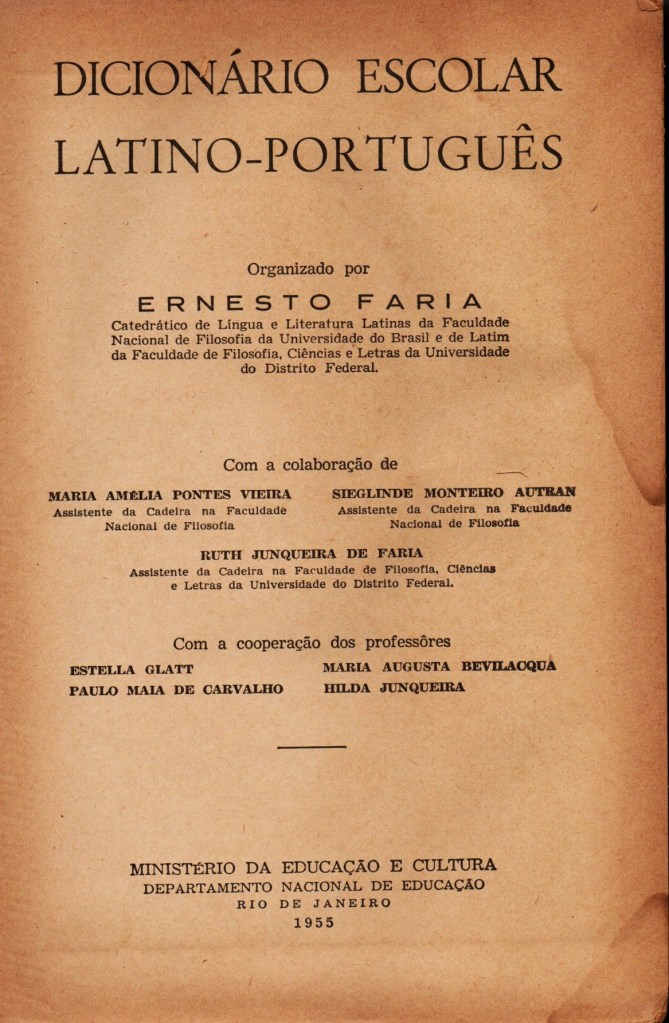
(I speak Portuguese, which came from Latin and in my youth, at high school, we studied Latin and from the dictionary of Latin, which I still keep, the definition is):
I)Practical meaning:
In abstract terms: Impulse, movement, variation
In concrete terms: Weight (determined by the movement and inclination of the scale)
II)Moral meaning:
Cause that determines a decision in a direction due to influence, motive
Portion, small quantity, small division, especially in terms of time, minute, instant
III)Figurative meaning:
Weight, importance, (of people and things)
Influence, motive, consequence

In English, (Webster’s Third New International Dictionary and Webster’s Collegiate) it means the following:
Moment Latin: momentum movement, particle sufficient to turn the scales, moment French: movére to move.
- 1: a minute portion or point of time: INSTANT
- 2 a: present time (at the present time he is working on a novel) b: a time of excellence or conspicuousness (he has his remarkable moments)
- 3: importance in influence or effect: notable or remarkable consequence
- 4: a cause or motive of action
- 5: a stage in historical or logical development
- 6 a: tendency or measure of tendency to produce motion esp. about a point or axis b: the product of quantity (as a force) and the distance to a particular axis or point b : the product of quantity (as a force) and the distance to a particular axis or point — INERTIA
- 7 a : the mean of the nth powers of the deviations of the observed values in a set of statistical data from a fixed value b: the expected value of a power of the deviation of a random variable from a fixed value
Relation between reality and moment
The relationship between reality and a moment is fundamentally about perception and existence. A moment is a snapshot in the continuous flow of time, capturing a specific instance within reality. Reality comprises an infinite number of moments, each representing a unique configuration of events, objects, and experiences. In philosophical and existential terms, each moment can be seen as a unique, singular point of experience that contributes to the broader tapestry of reality. Our perception and interpretation of these moments shape our understanding of reality. is fundamentally about perception and existence. A moment is a snapshot in the continuous flow of time, capturing a specific instance within reality. Reality comprises an infinite number of moments, each representing a unique configuration of events, objects, and experiences. In philosophical and existential terms, each moment can be seen as a unique, singular point of experience that contributes to the broader tapestry of reality. Our perception and interpretation of these moments shape our understanding of reality.
A “moment” can be seen as an abstraction that depends on the context in which it is used. Whether referring to time, physics, statistics, or another field, the concept of a moment captures a specific aspect or characteristic relevant to that context. It simplifies and isolates a particular instance or measurement for analysis or understanding, allowing for a more focused examination of complex phenomena. Thus, defining a moment is inherently tied to the context and the specific properties being considered.
I will expand more after some considerations.
Abstraction
An abstraction is a conceptual process where general concepts or ideas are derived from the use and classification of specific examples, literal meanings, or other data. In essence, abstraction involves simplifying complex systems by focusing on the most important aspects and ignoring irrelevant details. This can occur in various fields, such as art, mathematics, computer science, and philosophy, where it helps to manage complexity and facilitate understanding by creating models, theories, or representations that are easier to work with.
Probably the best explanation why Ozu Yasugiro choosed MU as an inscription to his grave.
Our approach
We are going to leave aside physics and statistics, after brief considerations and broadlly will discuss under the following contexts:
- As a minute portion or point of time: INSTANT
- As it is discussed in literature, specially novels
- Its notable or remarkable consequence under different contexts
- As a cause or motive of action
- As a stage in historical or logical development
Before going to these contexts, let´s briefly discuss it under physics and statistics for the sake of not ignoring it:
In Physics
There are two major areas where moment is used to define:
As Inertia
One is kind of simple and does not need too much discussion, it is the product of quantity (as a force) and the distance to a particular axis or point and the product of quantity (as a force) and the distance to a particular axis or point. The other one is torque.
The moment of inertia is a property of a body that quantifies its resistance to angular acceleration around an axis. It depends on the mass distribution of the object relative to the axis of rotation. The moment of inertia III is calculated as the sum of the products of each mass element mim_imi and the square of its distance rir_iri from the axis, expressed mathematically as I=∑miri2I = \sum m_i r_i^2I=∑miri2. It plays a crucial role in rotational dynamics, analogous to mass in linear motion.
A practical example of the moment of inertia is the difference between a solid disk and a hollow ring when rolling down a hill.
- Solid Disk: If a solid disk and a hollow ring have the same mass and radius, the solid disk will reach the bottom of the hill first. This happens because the solid disk has a smaller moment of inertia compared to the hollow ring. The mass of the solid disk is distributed closer to the axis of rotation, requiring less torque to achieve the same angular acceleration.
- Hollow Ring: The hollow ring, with its mass distributed farther from the axis, has a greater moment of inertia, making it more resistant to changes in its rotational state.
This difference in moments of inertia affects how each object accelerates under the influence of gravity, demonstrating how mass distribution influences rotational motion.
In real life you can you observe the moment of inertia in various man-made objects, particularly in engineering and design:
Aerospace Engineering: The distribution of mass in aircraft and spacecraft affects stability and control during flight.
Flywheels: Used in engines and machinery to store rotational energy. A larger moment of inertia helps maintain consistent rotational speed.
Bicycles and Motorcycles: Wheel design, including the distribution of mass, affects stability and handling.
Skates and Skateboards: The distribution of mass in wheels influences the ease of performing tricks.
As torque
The seconf large group which uses moment to define is torque. The moment of force, commonly known as torque, refers to the rotational effect produced by a force applied to an object. It is calculated as the product of the force (FFF) and the perpendicular distance (rrr) from the point of rotation to the line of action of the force, expressed as τ=r×F\tau = r \times Fτ=r×F. Torque is measured in Newton-meters (Nm) and indicates how effectively a force can cause an object to rotate around an axis.
It plays a crucial role in many everyday applications:
Door Handles: The force applied on a door handle at a distance from the hinges creates torque, making it easier to open the door.
Wrenches and Screws: Applying a force at a distance from a bolt’s center generates torque, allowing for the tightening or loosening of the bolt.
Car Engines: The engine’s torque determines the vehicle’s ability to accelerate. Higher torque provides better acceleration, especially at lower speeds.
Seesaws: A child sitting farther from the pivot point can balance a heavier child sitting closer by generating more torque.


One area which few people know that torque is crucial is in the placement of dental implants. When inserting an implant, the torque must be carefully controlled to ensure that the implant is securely anchored into the jawbone without causing damage. Adequate torque helps achieve primary stability, which is essential for the successful osseointegration of the implant. This means the bone will grow around the implant, firmly securing it in place. Excessive or insufficient torque can lead to complications such as implant failure or bone damage.

Einstein Relativity and Block Universe and moment
The block universe theory, often associated with the theories of Einstein and Hawking, posits that time is a dimension similar to space, and all points in time (past, present, and future) exist simultaneously in a four-dimensional space-time continuum. This theory is a direct extension of Einstein’s theory of relativity, which integrates space and time into a single, unified framework. In this view, time does not “flow” as commonly perceived; instead, it is a static dimension, and what we experience as the passage of time is our movement through this four-dimensional block.
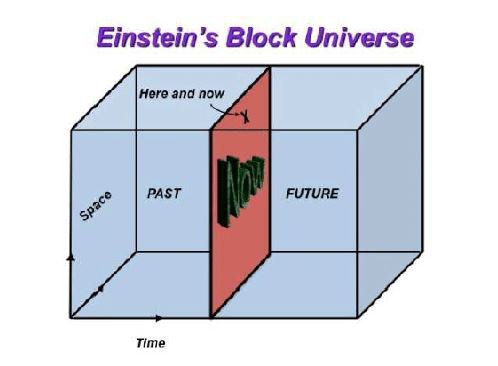
Time is fixed or in motion?
In the block universe theory, it is indeed us who perceive the flow of time while moving through a fixed, four-dimensional space-time continuum. In this model, every point in time—past, present, and future—exists simultaneously, and our conscious experience gives the illusion of time flowing. This concept differs from the common perception of time as a dynamic process, instead suggesting that all moments are equally real and permanent, and what we perceive as the passage of time is simply our journey through these different points in space-time.
In the context of Einstein’s and Hawking’s theories, where time is treated as a dimension similar to space, a “moment” can be understood as a specific point in the four-dimensional space-time continuum. Unlike the traditional view of time as a flowing river, in this framework, all moments—past, present, and future—exist simultaneously as different coordinates in space-time. Thus, a moment is a coordinate that defines a unique point in space-time, rather than a transient slice of an ever-moving timeline. This perspective aligns with the block universe theory, where the universe is seen as a fixed four-dimensional entity
Experimental tests of the validity of these ideas
The block universe theory, while a compelling interpretation of space-time, is primarily a philosophical and theoretical framework rather than a hypothesis with direct experimental tests. However, several experimental results indirectly support the foundations of this theory:
- Time Dilation: Experiments, such as those with atomic clocks on airplanes (Hafele–Keating experiment), confirm time dilation, a prediction of special relativity, suggesting that time can vary depending on relative motion.
- General Relativity: Observations of gravitational time dilation, where time runs slower in stronger gravitational fields, also support the idea that time is a dimension influenced by space-time curvature.
GPS satellites account for time dilation by incorporating relativistic corrections into their onboard clocks. These corrections are based on Einstein’s theory of relativity, which predicts that clocks in a stronger gravitational field (like those on Earth) run slower than those in a weaker field (like those on satellites). The GPS system includes both special and general relativistic effects: special relativity accounts for the satellites’ high velocity, and general relativity accounts for the difference in gravitational potential. Ground-based systems and receivers, such as iPhones, then use these corrected time signals to calculate accurate positions.
See why 1 second on the surface of the earth is a little bit more in the satellites
Maybe is something else
The block universe theory, which treats time as a static dimension, is one interpretation of the implications of relativity. While time dilation and gravitational time dilation support the interconnectedness of space and time, they do not explicitly prove that time is static rather than flowing. It is possible that these phenomena arise from yet-to-be-discovered principles or deeper aspects of physics. The block universe theory is a useful conceptual framework, but like all scientific theories, it is subject to revision or replacement as our understanding evolves.
There is a huge problem for the whole or to the framework of philosophical and religious ideas, in short, everything that civilization has ever thought of, which clash fatally with the notion of a block universe, should its authors be right. Dr. Gary A. Stilwell has an excellent discussion on this issue.
So much for Physics. Let’s discuss the possibilities that brought us here.
As an Instant
The measurement of a “moment” depends on the context:
- Temporal Context: Measured using units of time (seconds, minutes, etc.).
- Physics (Torque): Measured as the product of force and the perpendicular distance from the axis of rotation, typically in Newton-meters (Nm).
- Statistics: Moments (e.g., mean, variance) are calculated using mathematical formulas that involve summing powers of deviations from a central value, often measured in units related to the data set (e.g., kg, meters).
Each context uses specific units and methods suitable for the type of measurement.
We are particularly interested to the amount of the temporal context to limit a moment.
There is no strict, universally accepted convention for the duration of a “moment” in a temporal context. The term is inherently subjective and can vary based on context and perception. In casual use, it generally refers to a very brief period, often just a few seconds or minutes. However, in philosophical or psychological contexts, a “moment” can be seen as any distinct period of experience or consciousness, which may vary greatly in perceived length. The exact duration is therefore flexible and context-dependent.
Thinking about the longest accepted duration of a moment under any context, Chat GPT tells us that The concept of a “moment” typically implies a very brief duration, but its maximum length can vary based on context. In general, there is no universally accepted upper limit for the duration of a moment, as it is a subjective measure. However, in philosophical or psychological discussions, a moment might be considered as long as it encapsulates a single, unified experience or event. This could range from a few seconds to several minutes, depending on the intensity and complexity of the experience being described.
Types of context
The term “moment” is used in various contexts beyond those previously mentioned:
- Finance: In portfolio theory, “moment” refers to statistical measures (e.g., mean return, volatility).
- Mechanics: Moments in structural engineering relate to bending moments in beams.
- Music: A “moment” can denote a section or point in a musical composition.
- Language and Idioms: In expressions like “moment of truth” or “momentous occasion,” it signifies critical or significant events.
- Psychology: A “moment” can refer to a short instance of emotional or cognitive experience.
Philosophers, men of science, artists, which are famous for pursuing the depiction of moments
Philosophers
- Heraclitus:
- Known for his doctrine of change, Heraclitus emphasized that everything is in a constant state of flux, famously stating, “You cannot step into the same river twice.” His focus on the ever-changing nature of reality highlights the significance of individual moments.
- Edmund Husserl:
- The founder of phenomenology, Husserl focused on the structures of consciousness and the experience of moments. His work emphasized the importance of present experience and how moments of perception contribute to our understanding of reality.
- Henri Bergson:
- Bergson’s concept of “duration” explores the continuous flow of time and how we experience it in moments. He distinguished between objective, measurable time and the subjective experience of time as a series of interconnected moments.
Men of Science
- Niels Bohr:
- A key figure in quantum mechanics, Bohr’s work on the nature of particles and wave functions delves into the idea of moments in time. The uncertainty principle and the observation effect highlight how the act of measuring or observing affects the state of particles at any given moment.
- William James:
- Often referred to as the “Father of American psychology,” James explored the “stream of consciousness,” a concept that considers the flow of thoughts and sensations as a series of continuous moments.
- Daniel Kahneman:
- A psychologist and Nobel laureate, Kahneman studied the perception of happiness and memory, distinguishing between the “experiencing self” and the “remembering self.” His work underscores how moments of experience and moments of reflection shape our understanding of well-being.
Artists
- Claude Monet:
- A leading figure in the Impressionist movement, Monet sought to capture the fleeting effects of light and color in his paintings. His series of works, like “Water Lilies” and “Haystacks,” depict the same scenes at different times, emphasizing the changing moments.
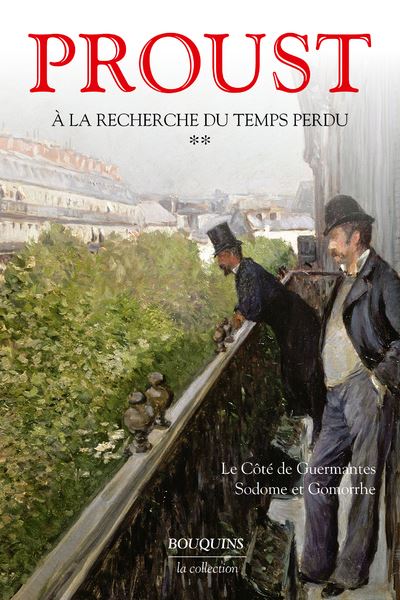
- Marcel Proust:
- Though a writer, Proust’s exploration of memory and time in “In Search of Lost Time” is a literary depiction of moments. He delved into how past moments can be vividly recalled and how they shape our present experience.
- Edward Hopper:
- An American realist painter, Hopper is known for his depictions of everyday moments imbued with a sense of stillness and contemplation. His works like “Nighthawks” capture the essence of particular moments in time and space.
- Jackson Pollock:
- A leading figure in Abstract Expressionism, Pollock’s “drip paintings” can be seen as capturing the moment of creation, with each drip and splatter representing a specific instant in the process of painting.

Writers and Poets
- James Joyce:
- Joyce’s use of stream of consciousness in “Ulysses” and “A Portrait of the Artist as a Young Man” captures the flow of thoughts and moments in the minds of his characters. I have already explored Jams Joyce and reality, but here, in the sequence, I will add specific considerations about his writings and moment
- Virginia Woolf:
- Woolf’s novels, such as “Mrs. Dalloway” and “To the Lighthouse,” use stream of consciousness to depict the inner lives of her characters, capturing the transient and fleeting nature of moments.
- T.S. Eliot:
- In his poetry, particularly in works like “The Waste Land” and “Four Quartets,” Eliot explores the nature of time and moments, blending past, present, and future in his meditative and reflective verses.
These individuals from various disciplines have contributed to our understanding of moments and how they shape our perception of reality, highlighting the universality and importance of this concept across different fields of human inquiry and expression.
Reality as a pile of moments
This assumption aligns with certain philosophical perspectives, particularly those that emphasize the subjective nature of time and the way we experience it. Here are some key points that support this view:
Philosophical Perspectives
- Presentism:
- Presentism is the philosophical theory that only the present exists. According to this view, the past and future are not real in the same way the present is; they exist only in our memories and anticipations. Therefore, only the present moment truly exists.
- Phenomenology:
- Edmund Husserl, a prominent phenomenologist, argued that our experience of time is a flow of moments. We perceive time through the succession of present moments, with the past and future being constructs of our consciousness.
- Eternalism:
- In contrast, eternalism posits that past, present, and future events are equally real. However, even in this view, our perception of time is still anchored in the present moment, with past and future being accessible only through memory and anticipation.
- Bergson’s Duration:
- Henri Bergson introduced the concept of “duration,” which contrasts with the scientific, linear view of time. Duration is the qualitative experience of time as a continuous flow of moments, emphasizing the subjective nature of temporal experience.
Scientific Perspectives
- Relativity Theory:
- Albert Einstein’s theory of relativity revolutionized our understanding of time and space. According to relativity, time is relative and not absolute; it can vary depending on the observer’s frame of reference. This implies that our experience of moments is influenced by our position and motion in the universe.
- Quantum Mechanics:
- In quantum mechanics, the concept of time can become even more complex. Some interpretations suggest that at the quantum level, the distinction between past, present, and future may blur, supporting the idea that only moments (quantum events) exist.
Psychological and Cognitive Perspectives
- Perception of Time:
- Cognitive psychology suggests that our perception of time is constructed by the brain, and we experience it as a series of moments. Our sense of past and future is derived from our ability to remember and anticipate, but our direct experience is always in the present moment.
- Mindfulness and Presence:
- Practices like mindfulness and meditation emphasize living in the present moment. These practices highlight how focusing on the present can alter our perception of time and reduce the influence of past regrets and future anxieties.
Conclusion
While traditional views of time consider past, present, and future as distinct entities, many philosophical, scientific, and psychological perspectives suggest that these distinctions are constructs of human perception. Instead, what fundamentally exists are moments—discrete experiences that we organize into a temporal framework.
So, it is correct to assume that, from a certain perspective, there is no objective past, present, or future, but rather a continuous series of moments. These moments are given meaning and located in time through our subjective experience and cognitive processes. This viewpoint aligns with various modern and classical understandings of time and perception.
It is correct to assume that our mechanism of perception is fundamentally based on the accumulation of moments. Here are some reasons why this perspective holds:
Temporal Nature of Perception
- Sequential Processing:
- Our brains process information sequentially, with each moment of perception building on the previous ones. This continuous flow creates a cohesive experience of reality, even though it is composed of discrete perceptual moments.
- Neuroscientific Basis:
- Neuroscientific research shows that our sensory systems and neural networks operate in a way that processes information in temporal sequences. For instance, visual and auditory stimuli are processed in successive stages, each lasting mere milliseconds, but creating a fluid perceptual experience.
Psychological and Philosophical Insights
- Present Moment Awareness:
- Psychological practices such as mindfulness emphasize the importance of being aware of the present moment. This aligns with the idea that perception is always rooted in the current moment, even as it integrates past experiences and anticipates future ones.
- Phenomenological Perspective:
- Phenomenologists like Edmund Husserl argue that our experience of reality is always tied to the present moment. Our consciousness is constantly synthesizing these moments into a coherent flow of experience, but each unit of perception is a moment in time.
Cognitive Mechanisms
- Memory and Experience:
- Our memory functions by encoding, storing, and retrieving information based on moments of experience. Even our long-term memories are constructed from sequences of moments that we have experienced.
- Episodic memory, in particular, is the memory of specific events and experiences, which are essentially collections of moments.
- Attention and Focus:
- Our attention shifts from moment to moment, allowing us to focus on different aspects of our environment. This selective attention mechanism means that perception is inherently tied to the moments we attend to.
Philosophical Implications
- Existential Reality:
- From an existential perspective, our understanding of being and existence is tied to the succession of moments. As Jean-Paul Sartre noted, “Existence precedes essence,” meaning our lived experience, moment by moment, defines our reality.
- Temporal Finitude:
- The temporality of human existence means that we are always situated in a specific moment in time. This finitude shapes our perception and understanding of reality.
Practical Considerations
- Technological and Therapeutic Applications:
- Understanding perception as a series of moments is crucial in areas like virtual reality (VR) and augmented reality (AR), where creating seamless experiences requires managing how moments are presented to the user.
- Therapeutic practices, such as cognitive-behavioral therapy (CBT), often focus on modifying moment-to-moment thoughts and behaviors to effect long-term change.
Conclusion
While our perception is indeed composed of moments that pile up to create a continuous experience, this is not a limitation but rather the fundamental nature of how we interact with and understand the world. Each moment is a unit of perception, and our consciousness strings these units together to form the fabric of our lived reality. This understanding bridges neuroscience, psychology, and philosophy, providing a comprehensive view of human perception.
James Joyce, moments and reality
Joyce published 4 novels, a play, a collection of short stories and three poetry collections.
Joyce wrote four fictional works set in Ireland: Dubliners (a collection of short stories), A Portrait of the Artist as a Young Man, Ulysses, and Finnegan’s Wake, (four novels)
Ulysses and moments
It is not entirely accurate to say that for James Joyce, the entire day depicted in “Ulysses” is considered a single moment. However, the novel does illustrate the idea that a single day can be deeply rich and complex, filled with numerous significant moments that contribute to the overall tapestry of human experience. Here are some points to consider:
Narrative Technique and Structure
- Stream of Consciousness:
- Joyce employs the stream of consciousness technique to delve deeply into the thoughts and feelings of his characters, capturing the multitude of moments that make up their internal and external experiences throughout the day. This approach highlights the richness of each individual moment within the day.
- Episode Structure:
- “Ulysses” is structured into 18 episodes, each focusing on different characters, settings, and events occurring on June 16, 1904. Each episode represents distinct moments in time, contributing to the overall narrative.
Thematic Exploration
- Everyday Life:
- Joyce’s focus on a single day underscores the significance of everyday life and ordinary moments. By magnifying the events of one day, he shows how each moment is filled with meaning and potential for insight.
- Temporal and Spatial Fluidity:
- Joyce plays with the fluidity of time and space, often blending past memories, present experiences, and future anticipations within the characters’ consciousness. This approach suggests that moments are interconnected and layered.
Philosophical Implications
- Epiphanies:
- Joyce is known for his use of epiphanies—sudden moments of insight or revelation experienced by his characters. These moments often occur within the broader context of the day, emphasizing the importance of individual moments within the continuum of time.
- Narrative Depth:
- By exploring the depth and complexity of a single day, Joyce illustrates how time can be experienced subjectively. Each moment within the day is significant and contributes to the characters’ development and understanding.
Artistic Representation
- Lyrical Realism:
- Joyce’s detailed and lyrical depiction of the events of June 16, 1904, elevates the ordinary to the extraordinary. This artistic choice reinforces the idea that each moment is part of a larger, meaningful whole.
Conclusion
While “Ulysses” is not about reducing an entire day to a single moment, it does reflect Joyce’s belief in the richness and significance of individual moments within a given period. The novel shows how a single day can encompass a vast array of experiences, thoughts, and emotions, each contributing to the intricate mosaic of human life. Therefore, it is more accurate to say that Joyce’s work emphasizes the profound depth and complexity of everyday moments rather than viewing the day itself as one singular moment.
Finnegans Wake and moments
“Finnegans Wake” by James Joyce is an even more complex and experimental work than “Ulysses,” and it offers a unique perspective on the concept of moments and time. Here are some key points that relate to “Finnegans Wake” and the idea of moments:
Nonlinear Narrative
- Cyclical Structure:
- “Finnegans Wake” is known for its cyclical structure. The novel ends mid-sentence, which is completed by the beginning of the first sentence of the book, suggesting a continuous, unending cycle of time and events. This structure reflects the idea that moments are interconnected and that time is not linear but rather circular.
- Fragmentation and Fluidity:
- The narrative is highly fragmented, with a fluid and dream-like quality. Moments in the book often blend and overlap, making it difficult to distinguish between different times, places, and events. This reflects the idea that moments are not isolated but part of a larger, interconnected whole.
Language and Symbolism
- Polysemy and Multilayered Language:
- Joyce uses a highly complex, polysemous language in “Finnegans Wake,” where words and phrases often have multiple meanings and references. This multilayered use of language mirrors the complexity of moments, each carrying multiple layers of significance and interpretation.
- Dream Logic:
- The narrative follows a logic akin to dreams, where time and space are fluid, and moments from different periods can coexist and influence each other. This dream-like structure emphasizes the non-linear and subjective nature of moments.
Themes and Motifs
- Recurrence and Rebirth:
- Themes of recurrence, rebirth, and the eternal return are prevalent in “Finnegans Wake.” The story of HCE (Here Comes Everybody) and the recurring motifs of fall and resurrection suggest that moments are part of a recurring cycle of life, death, and rebirth.
- Historical and Mythical Layers:
- Joyce interweaves historical and mythical references throughout the text, collapsing different times and events into a single narrative moment. This layering reinforces the idea that moments are not confined to a single point in time but are part of a continuous and interconnected historical and mythical fabric.
Character and Consciousness
- Collective Consciousness:
- The characters in “Finnegans Wake” often seem to embody collective archetypes and shared human experiences rather than individual consciousnesses. This collective aspect suggests that moments in the novel are shared, universal experiences rather than isolated incidents.
- Multiplicity of Perspectives:
- The narrative frequently shifts perspectives, blending the voices and experiences of various characters. This multiplicity reflects the idea that moments are perceived differently by different individuals, yet are part of a shared human experience.
Conclusion
In “Finnegans Wake,” James Joyce explores the concept of moments in a highly complex and non-linear fashion. The cyclical structure, fragmented narrative, and multilayered language all contribute to a portrayal of moments as interconnected, fluid, and part of a continuous cycle of time and experience. Rather than depicting moments as isolated or sequential, “Finnegans Wake” presents them as overlapping and interwoven, emphasizing the richness and complexity of human consciousness and history.
Dubliners and A Portrait of the Artist as a Young Man,
James Joyce’s treatment of the concept of a “moment” in his short stories, particularly in the collection Dubliners, and in his novel A Portrait of the Artist as a Young Man, is central to his narrative style. In these works, Joyce often explores “epiphanies,” moments of sudden insight or revelation experienced by his characters. These moments reveal deeper truths about the characters’ lives and their social environment, capturing the complexities and nuances of their inner worlds. Joyce’s focus on these fleeting yet significant moments highlights the importance of individual experiences in shaping one’s understanding of reality.


Dubliners
- Narrative and Language: Joyce uses a realist style with simple language to depict the lives of Dublin’s residents, capturing mundane yet profound moments that reveal deeper truths.
- Symbolism and Themes: Themes of paralysis, escape, and epiphany are explored through symbolic moments, such as the “dead” in the final story.
- Character and Consciousness: Joyce delves into his characters’ inner lives, using moments of epiphany to reveal their emotional and psychological states.
A Portrait of the Artist as a Young Man
- Narrative and Language: The novel employs a stream-of-consciousness style, evolving from simpler language to more complex as Stephen Dedalus matures.
- Symbolism and Themes: Moments of aesthetic and religious epiphany define Stephen’s journey toward self-realization and artistic identity.
- Character and Consciousness: Stephen’s consciousness is central, with his evolving awareness and moments of insight driving the narrative and his development as an artist.
In both works, Joyce’s focus on moments, whether mundane or profound, serves as a window into his characters’ inner lives and broader societal issues.
Marcel Proust À la recherche du temps perdu (In Search of Lost Time)
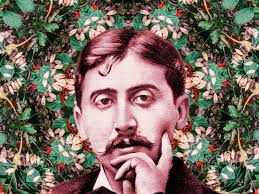
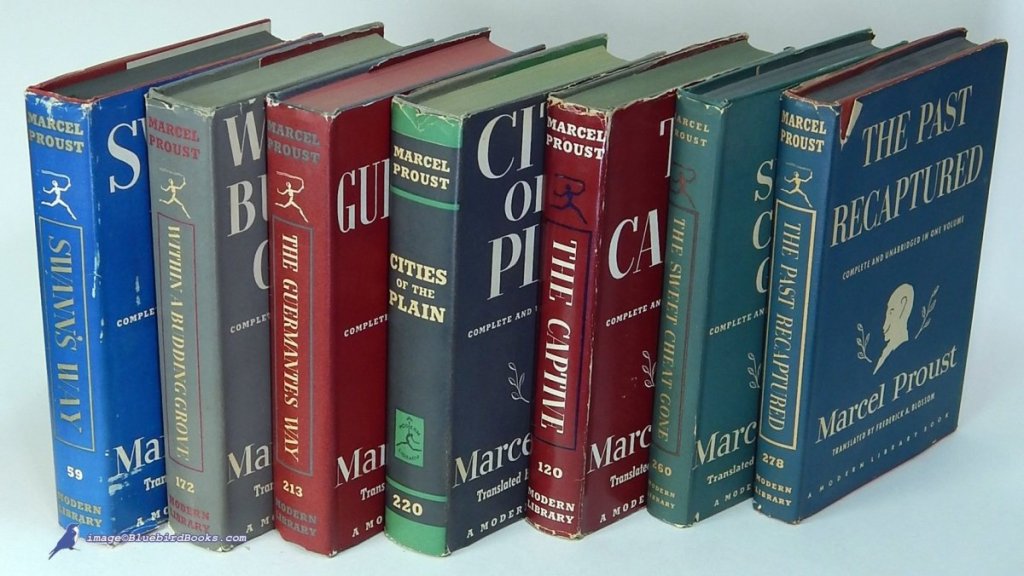

I don’t know how to say it, but for the interest I have in time, which is shown in my site blog “Man & Time”, which started with J.B,Priestley and evolved into a bottomless exploration of the theme and in literature, which is shown in Dante’s Inferno and James Joyce Encyclopedia, Marcel Proust is a long due candidate to be also explored.
The very name of his main work: À la recherche du temps perdu (In Search of Lost Time), is a screaming denunciation for the themes I have been exploring.
For the moment, let’s explore him briefly.
Proust came first, but by very little time. Proust was involved in writing and publishing from an early age. In addition to the literary magazines with which he was associated, and in which he published while at school (La Revue verte and La Revue lilas), from 1890 to 1891 he published a regular society column in the journal Le Mensuel.
Joyce began writing his stories in the early 1900s while still living in Ireland. He continued to work on the collection while living in Europe. He moved back to Dublin in 1909 to finally have his work published to no avail. It took twenty attempts, but Dubliners finally made it to publication in 1914.
James Joyce and Marcel Proust met once in 1922. The meeting occurred in Paris at a dinner hosted by Sidney and Violet Schiff, two literary patrons. Despite being two of the most influential modernist writers of their time, the encounter was brief and not particularly remarkable. Reports suggest that they had little to say to each other, possibly due to differences in personality and interests. The meeting has since become a famous anecdote in literary history, symbolizing a brief intersection of two great literary minds.
James Joyce and Marcel Proust are often mentioned together as leading figures of modernist literature, but their works developed largely independently. There is no strong evidence to suggest that Joyce was directly influenced by Proust. However, both authors shared an interest in exploring inner consciousness, memory, and the complexities of time, which were central themes in their respective masterpieces, Ulysses and À la recherche du temps perdu. Their works reflect the broader modernist movement’s preoccupations rather than a direct influence from one on the other.
Marcel Proust was deeply interested in the concepts of moments and reality. In À la recherche du temps perdu (In Search of Lost Time), he extensively explores how fleeting moments, often triggered by involuntary memories, can reveal profound truths about reality and the self. Proust’s work delves into the nature of time, memory, and existence, examining how our perception of reality is shaped by these ephemeral experiences. His focus on the subjective nature of time and the intricate layers of memory underscores his fascination with these themes.
Elaborating Proust the same way we did with Joyce, it looks like that:
Narrative and Language
In À la recherche du temps perdu (In Search of Lost Time), Marcel Proust employs a highly introspective and reflective narrative style. The language is intricate and lyrical, often delving deep into the protagonist’s thoughts and emotions. Proust’s narrative is characterized by long, complex sentences that mimic the flow of memory and consciousness.
Symbolism and Themes
Proust explores themes of memory, time, and identity. Symbolism is prevalent, with objects like the madeleine cake and places like Combray serving as triggers for involuntary memories, revealing deeper truths about the characters’ lives and the passage of time.
Character and Consciousness
The novel is intensely focused on the inner lives of its characters, particularly the narrator, Marcel. Proust’s treatment of consciousness is nuanced, capturing the fluid and often fragmented nature of human thought. Moments of introspection and self-awareness are central, as the characters navigate their memories and experiences, seeking to understand themselves and their world.
Moments and Epiphanies
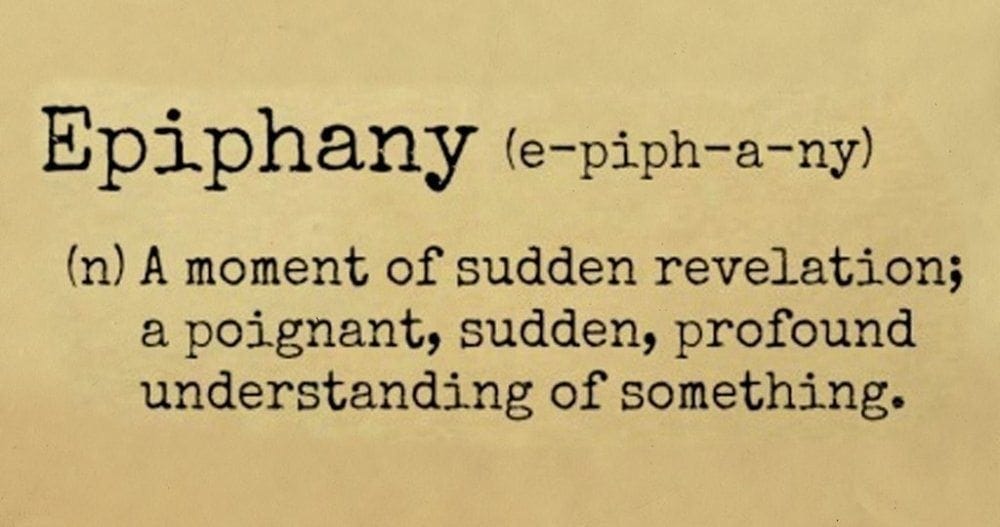
Similar to Joyce, Proust emphasizes moments of epiphany, where the narrator experiences sudden, profound insights, often triggered by sensory experiences. These moments are crucial in understanding the nature of memory and the self, as they connect the past and present in a continuous thread, highlighting the theme of the elusiveness of time and the reconstruction of past experiences.
In Proust’s work, these elements combine to create a rich, layered exploration of the complexities of human experience, emphasizing the power of memory and the passage of time in shaping identity and understanding.
Last, but not leas, perhaps Proust’s most famous quote is a libel for everything I’m trying to demonstrate here:
“The real voyage of discovery consists not in seeking new landscapes, but in having new eyes,”
If we can do that, we will have our moment, in the sense that achieving a particular goal or change in perspective will lead to a significant, defining experience or realization. It implies that “having our moment” is about reaching a point of success, clarity, or insight, as a result of overcoming challenges or achieving a new understanding. In this context, “our moment” represents a personal breakthrough and/or achievement.
Wrapping it up
I thought that this last paragraph, specially associated with the idea of Epiphany, would work as a conclusion, but my good friend Dr. Gary Stillwell pointed me out, after a careful revision, that I didn’t make it clear what at the end of the day is a moment.
I think that Proust nailed it and his famous phrase defines what is a moment.
Let’s dig it a little bit more:
When Marcel Proust said, “The real voyage of discovery consists not in seeking new landscapes, but in having new eyes,” he was emphasizing the importance of perception and perspective over mere physical exploration. Here are some key interpretations of what Proust was conveying:
1. Inner Perception over Outer Exploration
- Proust suggests that true discovery is about changing the way we see the world around us rather than just changing our surroundings. It’s about developing a deeper understanding and appreciation for what we encounter every day.
2. Mindfulness and Awareness
- This quote encourages mindfulness and being fully present in our experiences. By paying closer attention and being more aware of the details in our surroundings, we can find newness and wonder in what might otherwise seem mundane.
3. Personal Growth and Insight
- Proust’s statement can be seen as an invitation to introspection and personal growth. By adopting “new eyes,” we can gain insights into ourselves and our relationships, transforming our understanding and enriching our experiences.
4. Novelty in Familiarity
- The idea that novelty isn’t necessarily found in new places but in new ways of seeing suggests that familiar environments can be just as inspiring and revelatory as exotic locations if we approach them with fresh perspectives.
5. Artistic and Creative Vision
- For artists and creators, this perspective is crucial. It highlights the importance of creativity and the ability to see the extraordinary in the ordinary. Artists often find inspiration not by traveling far, but by observing their familiar surroundings in new ways.
References:
- Proust’s own writings, especially in “In Search of Lost Time,” where he explores themes of memory, perception, and the profound impact of seemingly trivial experiences.
- The broader philosophical context of the quote aligns with the ideas of mindfulness and changing one’s internal perspective to alter one’s experience of the world.
In essence, Proust’s quote is a profound reminder that the richness of life is not necessarily found in external changes but in the way we perceive and interpret our world. This shift in perspective can lead to deeper understanding, greater appreciation, and personal transformation.
A moment definition falls in the same category as that of the “The Hard Problem”
 O Sentido da Vida - The Meaning of life