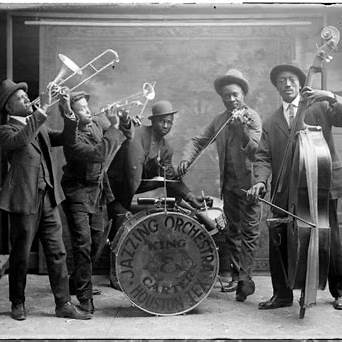
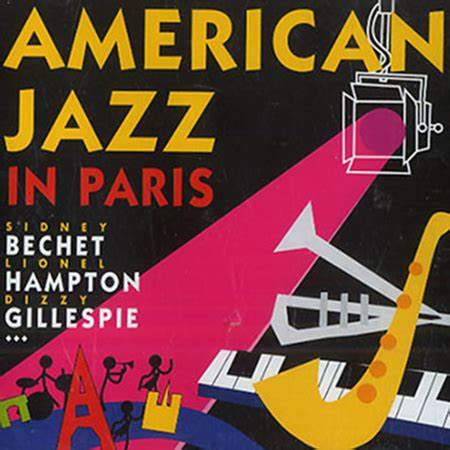
Paris has long been a beacon for American jazz musicians, offering a haven where their artistry could flourish, often free from the racial prejudices prevalent in the United States. This enduring relationship has significantly shaped both the city’s cultural landscape and the evolution of jazz itself.
Early 20th Century: The Introduction of Jazz to Paris
The bond between Paris and American jazz began during World War I, when the African American military band led by James Reese Europe introduced the genre to French audiences in 1918. Their performances captivated Parisians and laid the groundwork for the city’s burgeoning jazz scene.
The 1920s: The Jazz Age in Paris
The 1920s, known as the Jazz Age, saw an influx of American jazz musicians to Paris, drawn by the city’s acceptance and enthusiasm for the new musical form. Montmartre became the epicenter of jazz clubs, with venues like Le Grand Duc and Bricktop’s thriving. Artists such as Sidney Bechet and Josephine Baker found immense popularity, with Baker’s “Revue Nègre” in 1925 exemplifying the era’s vibrant cultural exchange.
World War II and the Post-War Revival
During the Nazi occupation in World War II, jazz was suppressed as “degenerate” music. However, clandestine performances persisted, maintaining the genre’s presence. After the war, American musicians returned to Paris, invigorating the scene. The inaugural Festival International de Jazz in 1948 featured luminaries like Dizzy Gillespie, and subsequent festivals showcased talents such as Charlie Parker and Miles Davis, reinforcing Paris’s status as a jazz hub.
The 1950s and Beyond: A Continuing Legacy
The 1950s and 1960s solidified Paris’s role in the jazz world. The Saint-Germain-des-Prés neighborhood became synonymous with jazz, hosting clubs that attracted both local and international artists. American musicians like Kenny Clarke settled in Paris, contributing to its rich jazz tapestry. The city’s embrace of jazz provided a platform for artistic freedom and cross-cultural collaboration, elements that continue to define its musical identity.
In summary, Paris’s relationship with American jazz is a testament to the city’s openness and appreciation for artistic innovation. This synergy has fostered a dynamic cultural exchange, leaving an indelible mark on the history of jazz.
Recent Highlights in Paris’s Jazz Scene
Miles Davis in France 1963 & 1964 album review – soul-searing performances
há 9 diasThe TimesQuincy Jones obituary: music producer for Jackson and Sinatrahá 25 dias
Most famous american jazz performers connected with the Paris scene
Chet Baker
Chet Baker, the renowned American jazz trumpeter and vocalist, had a significant connection with Paris, both through his performances and recordings.
Performances in Paris:
Baker performed extensively in Paris, especially during the 1950s and 1980s. Notably, he played at various Parisian jazz clubs and venues, captivating audiences with his distinctive trumpet style and vocal delivery. His performances contributed to the vibrant jazz scene in Paris, a city that embraced jazz music and its artists.
Recordings in Paris:
In 1955 and 1956, Baker recorded a series of sessions in Paris for Barclay Records. These sessions were later compiled into albums such as “Chet Baker in Paris” and “Chet in Paris.” The recordings featured collaborations with European jazz musicians and showcased Baker’s versatility and artistry. The “Chet Baker in Paris” sessions have been reissued, highlighting their enduring significance in his discography.
Later Years:
In the early 1980s, Baker returned to Paris, where he continued to perform and record. Live recordings from this period, such as “Chet Baker Trio: Live in Paris,” capture his performances at venues like the Petit Opportun jazz club. These recordings feature Baker in a drum-less trio setting, allowing his trumpet and vocal performances to shine.
Chet Baker’s association with Paris not only enriched his musical career but also contributed to the city’s rich jazz heritage, leaving a lasting legacy that continues to be celebrated by jazz enthusiasts worldwide.
For a glimpse of Chet Baker’s performances in Paris, you might enjoy this video:
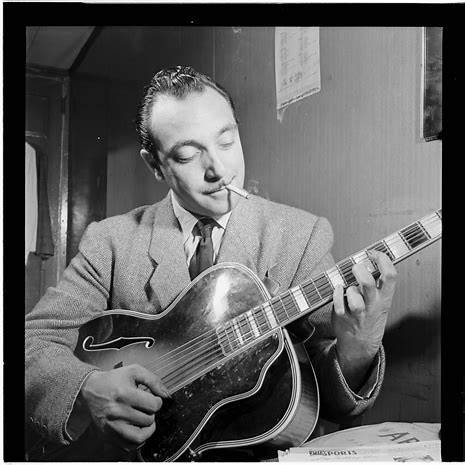
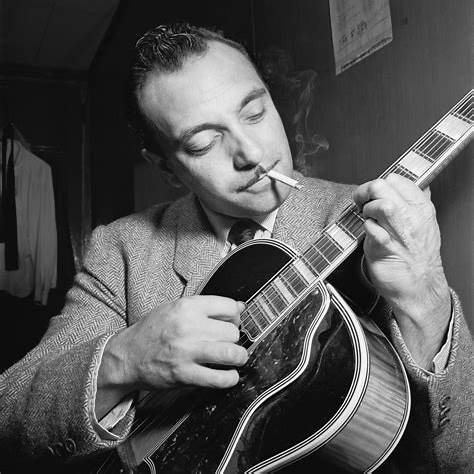
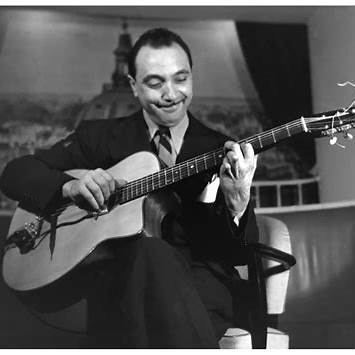
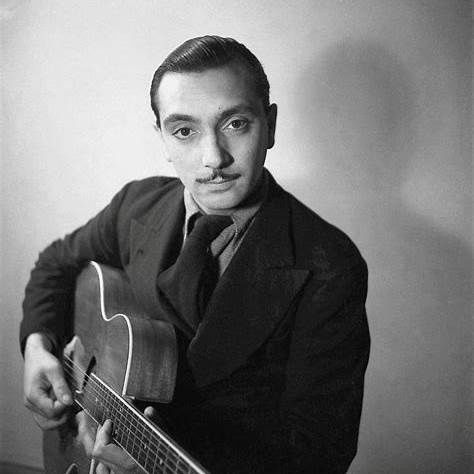
Django Reinhardt
Sucesso dele que eu gosto nesta performance:
Other famous jazz musicians are connected with Paris
Paris has long been a magnet for jazz musicians, offering a vibrant scene that has attracted numerous renowned artists. Beyond Django Reinhardt and Chet Baker, several other jazz luminaries have significant connections to the city:
1. Sidney Bechet
An American clarinetist and soprano saxophonist, Sidney Bechet was among the first prominent jazz soloists. He moved to Paris in the 1920s, where he became a central figure in the French jazz scene, performing extensively and influencing many local musicians.
2. Josephine Baker
An American-born French entertainer, Josephine Baker gained fame in Paris during the 1920s. Known for her performances at venues like the Folies Bergère, she became a symbol of the Jazz Age in Paris and was instrumental in popularizing jazz and African-American culture in Europe.
3. Louis Armstrong
The legendary trumpeter and vocalist Louis Armstrong performed in Paris multiple times, notably headlining the Paris Jazz Festival at Salle Pleyel in 1950. His performances were pivotal in solidifying jazz’s popularity in France.
4. Miles Davis
The influential trumpeter Miles Davis had a profound connection with Paris. He performed at the Festival International de Jazz in Paris in 1949 and collaborated with French musicians and filmmakers, including composing the score for Louis Malle’s film “Ascenseur pour l’échafaud” in 1957.
5. Charlie Parker
The pioneering alto saxophonist Charlie Parker performed in Paris during the late 1940s, including appearances at the Festival International de Jazz. His bebop style left a lasting impact on the French jazz community.
6. Thelonious Monk
The innovative pianist and composer Thelonious Monk performed in Paris, notably at the Festival International de Jazz in 1949. His unique approach to jazz piano was influential among European audiences.
7. Kenny Clarke
An American jazz drummer and bandleader, Kenny Clarke moved to Paris in 1956. He became a central figure in the Paris jazz scene, co-founding the Modern Jazz Quartet and performing with numerous European and American musicians.
These artists, among others, contributed to Paris’s rich jazz heritage, making the city a pivotal hub for the development and dissemination of jazz music throughout the 20th century.

