Japan Day 1 — Narita to Tokyo, May 6, 2026
Missing checked bag
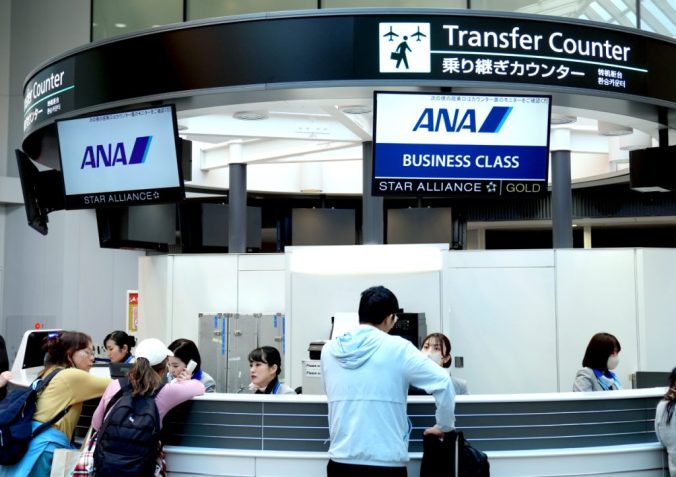
The trip began with a minor setback: a checked bag that didn’t survive the connection in San Francisco. Thirty minutes at the ANA counter at Narita filing a claim — and what could have been a frustrating start turned into something else entirely. The staff were precise, unhurried, and attentive in a way that made the problem feel handled rather than dismissed. A small lesson in how process discipline can turn a service failure into a recoverable experience.
The first dinner in Tokyo reinforced the same impression. Shoes off at the entrance, round after round of small dishes — fried chicken heart, an unidentified fish, several things that defied description — served at a pace that made even the unfamiliar feel orderly. Service here is not a transaction. It is something closer to dignity.
Day one: one lost bag, one recovered, one meal that raised more questions than it answered. A good beginning.
Japan Day 2 — Tokyo, May 7, 2026 –
Akihabara and Taito-ku
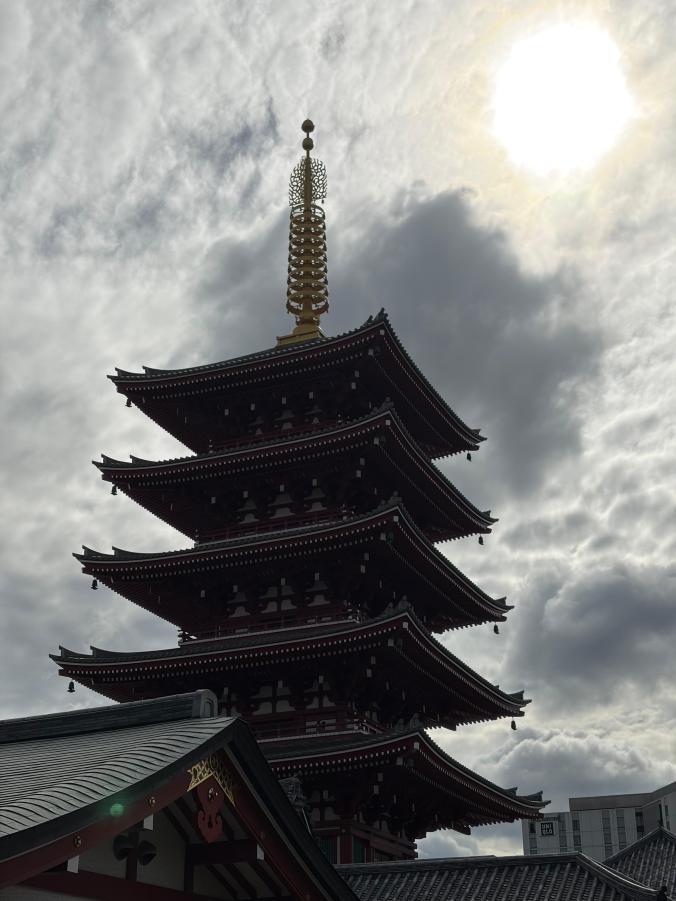
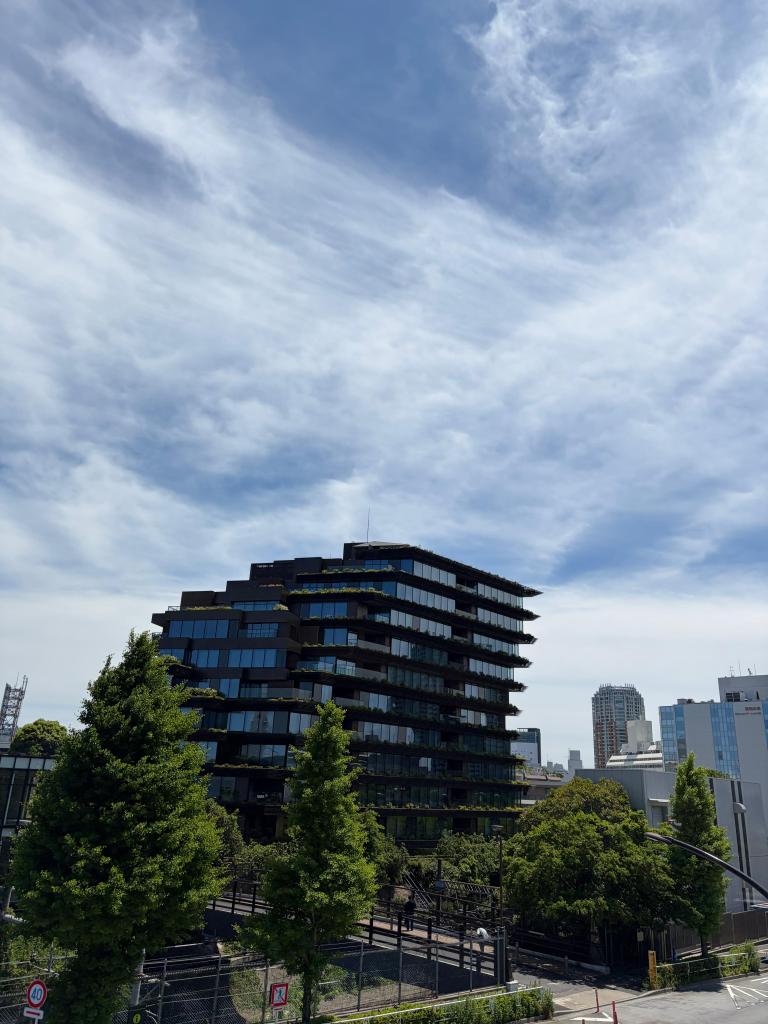
A morning split between two supply chain classes and an afternoon in Asakusa — and the two turned out to be the same lesson in different formats.
In SCHM3301, the concept was simple and powerful: a disruption at any single point in a supply chain cascades through everything downstream. SCHM2301 then zoomed in to the hands-on layer — how you actually execute within that chain when things go wrong.
Asakusa made it concrete. Sensoji Temple, 1,400 years old, pulls over 30 million visitors annually through a fixed corridor of vendors on Nakamise Street — small operators with stable rights, predictable inventory, and an anchor that generates demand they don’t have to create themselves. A textbook end-to-end supply chain, built around a bodhisattva.
The temple itself was genuinely beautiful — red lacquer, a five-story pagoda, layered roofs. At the main hall, the ritual was unfamiliar in the moment: coins tossed into the offering box, a bow, palms pressed together. Reading about it afterward reframed everything. The coin offering is not payment — it is kisha, giving with joy, where physically releasing something of value is the point. The gesture is not transactional. It is a small practice of detachment.
The Nakamise vendors — orderly, generationally stable, operating inside a formal system — offered their own quiet contrast: dignity built within the system, versus dignity built in the margins when the system offers no entry.
Day two: supply chains, sacred architecture, and a coin tossed into a box for reasons that turn out to matter.
Japan Day 3 — Akihabara and Taito-ku, May 8, 2026
Demographics as strategy, outsourced intelligence, and handmade noodles.
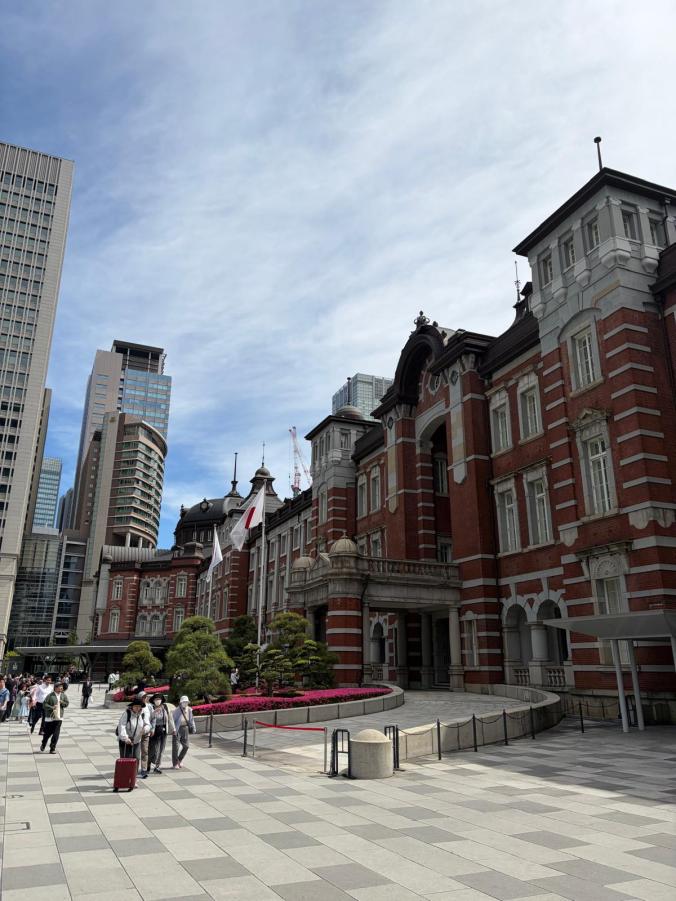
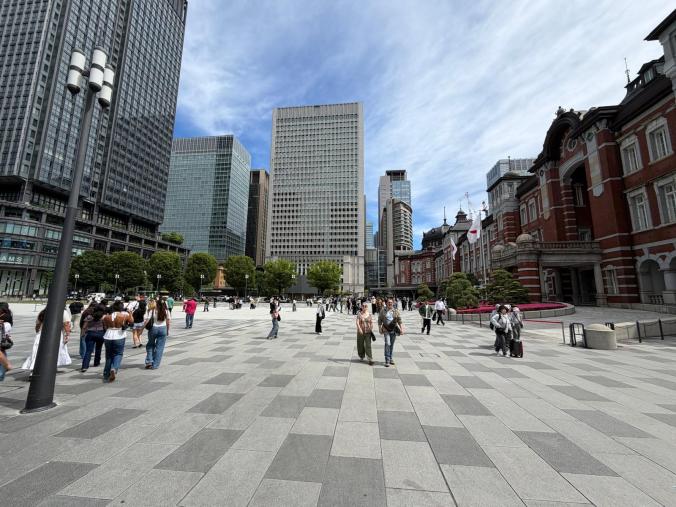
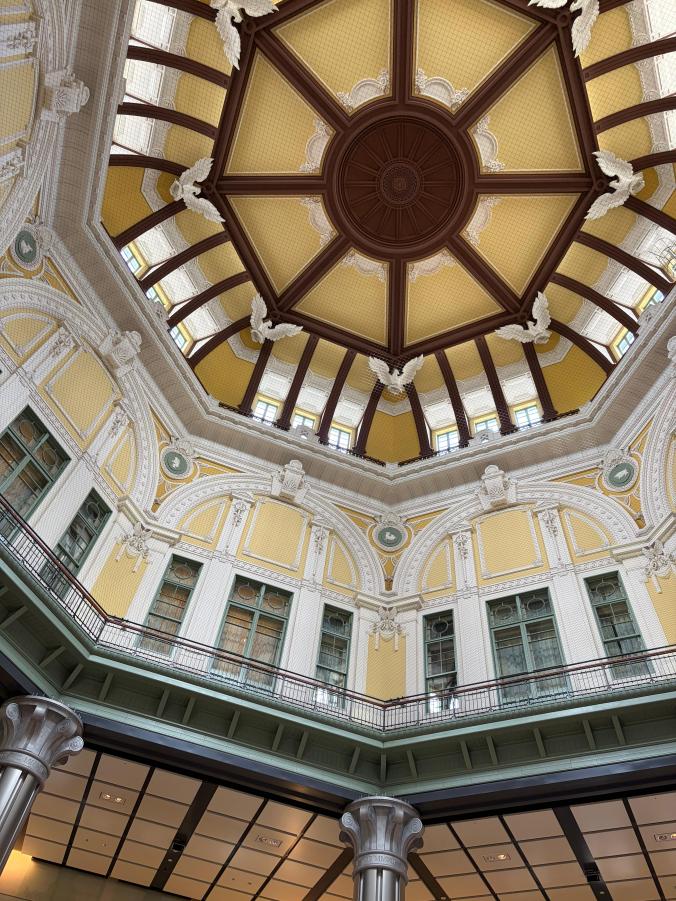
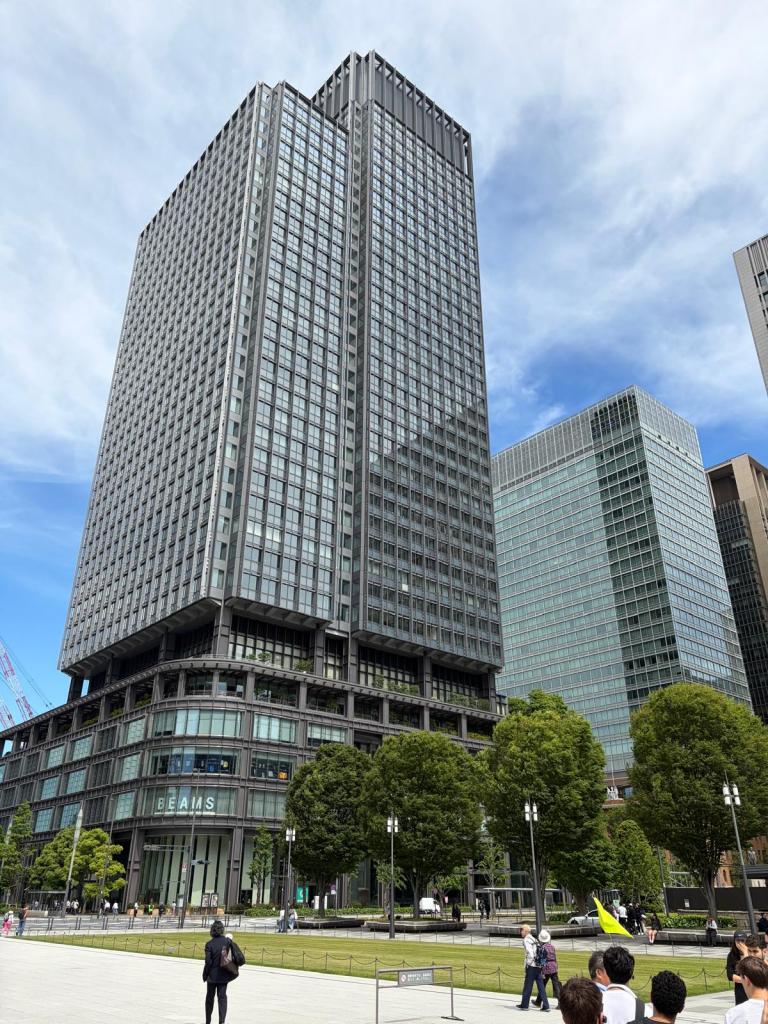
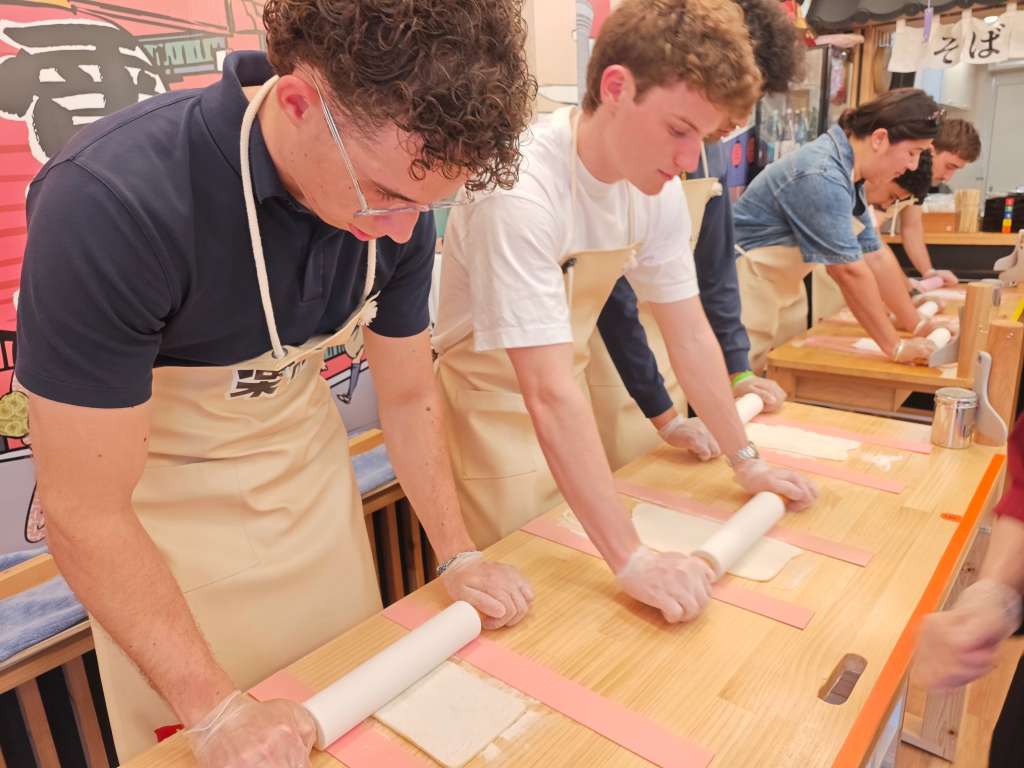
Two very different classrooms on day three — a corporate headquarters and a ramen kitchen — and both turned out to be about the same thing: what you do when the home market stops growing.
At Nippon Express headquarters the strategic problem was laid out with unusual candor. Japan’s population is shrinking. NX is already the dominant freight forwarder at home. Staying local means shrinking with the country. So the answer is India — $400 million in revenue targeted by 2028, roughly three times their 2023 baseline, with 103 offices, 60 warehouses, and dedicated semiconductor facilities already underway across 39 Indian cities.
The AI strategy surprised more than the India pivot. NX is building its entire AI integration through third-party partnerships rather than in-house. The initial instinct was that this was risky — AI integration is continuous, not a one-time installation. But the economics of in-house AI engineers reframed it: the partnership choice is more defensible than it first looks when you price the alternative.
The afternoon was ramen — more technically demanding than expected, with real precision required to roll the dough thin enough. The noodles came out well.
The Pachinko parallel was sharp: NX moving into India is the mirror image of Solomon‘s situation in Tokyo finance — a well-capitalized institution with credentials becoming the outsider in someone else’s market, and discovering how much friction that role carries regardless of what you bring to the table.
Day three: demographics as strategy, outsourced intelligence, and handmade noodles.
Japan Day 4 — Tokyo, May 9, 2026
A forest built by hand, a wedding in a shrine, and a crossing that never stops moving.
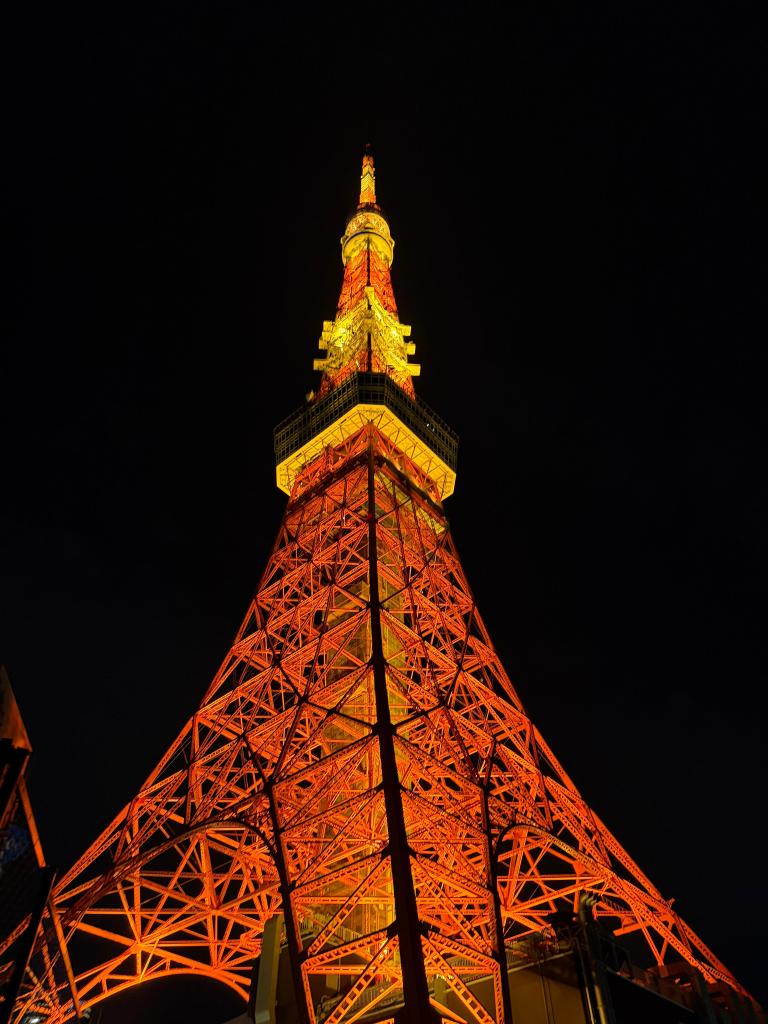
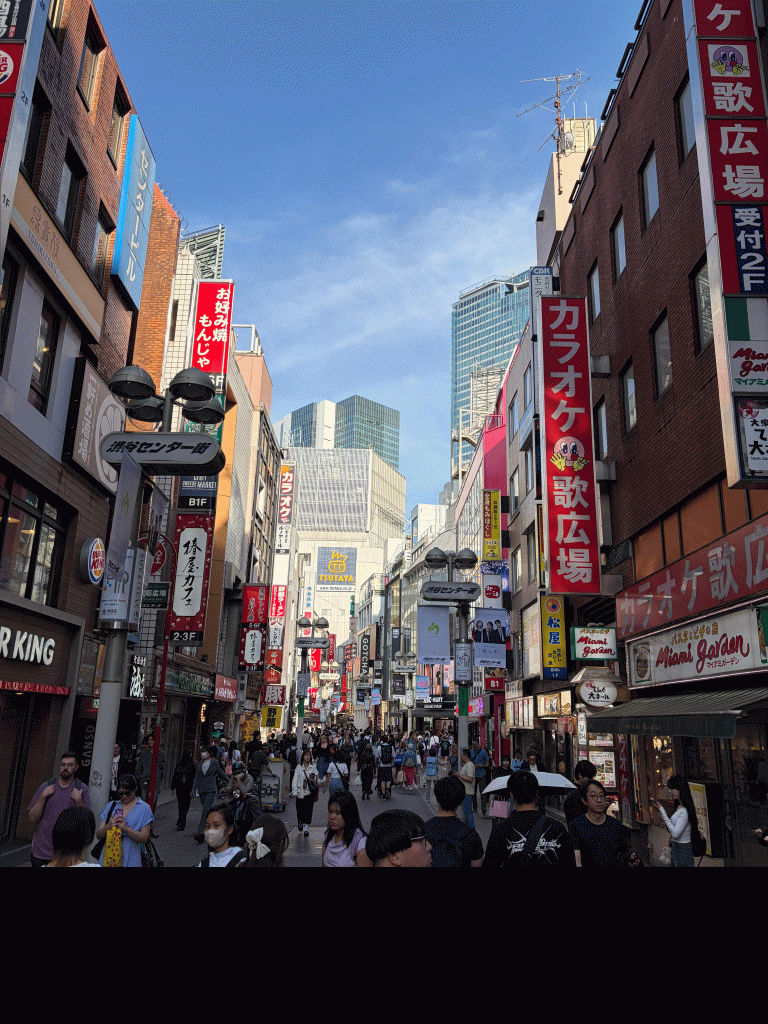
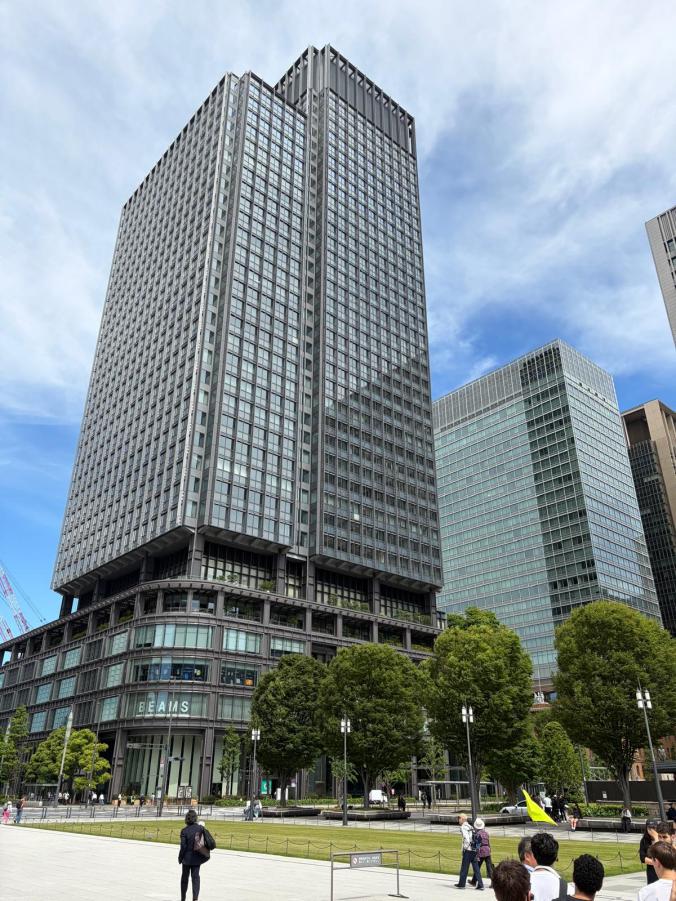
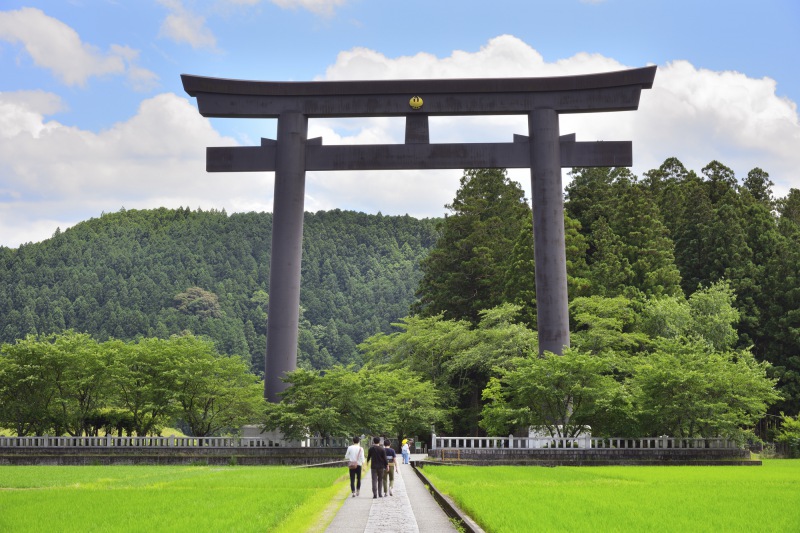
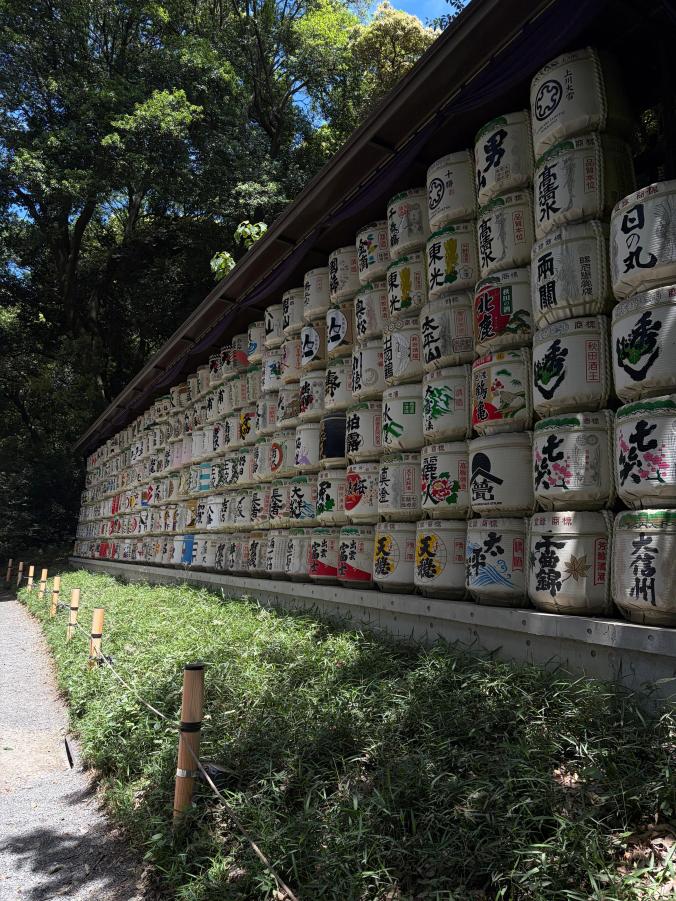
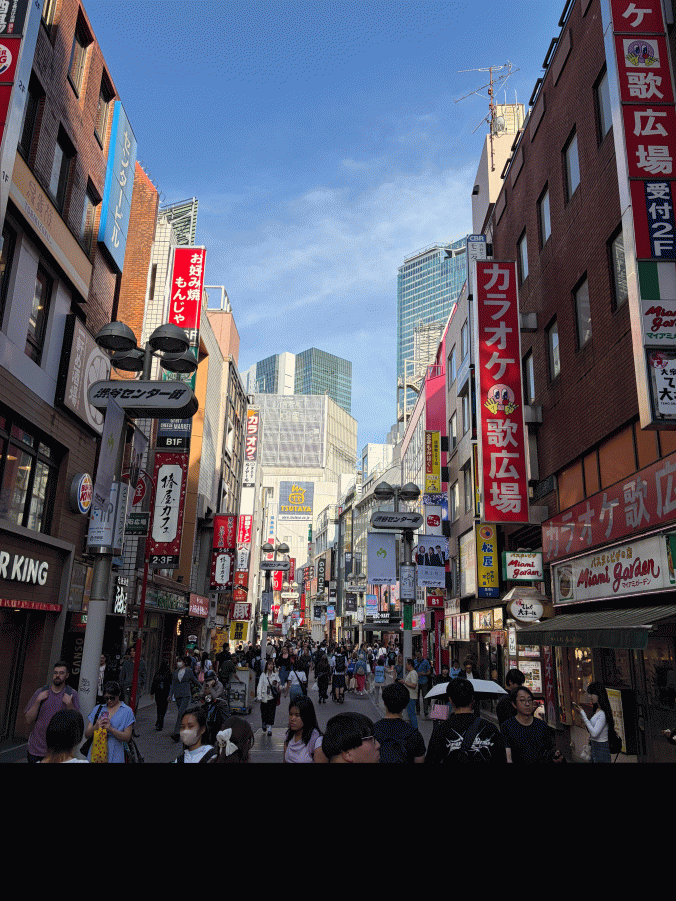
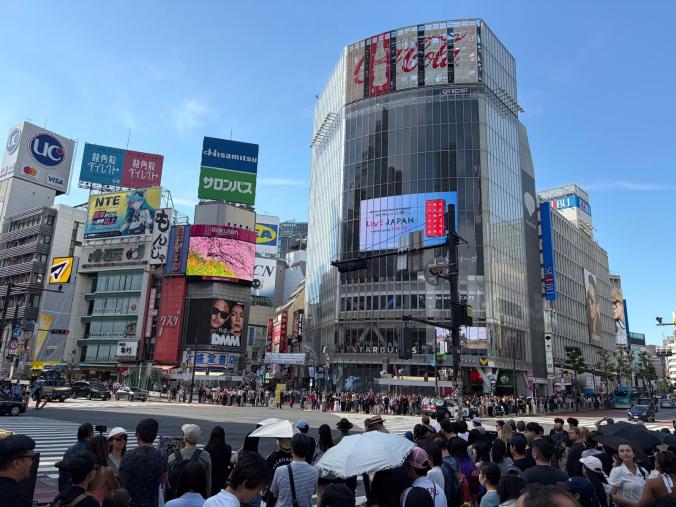
A full day across six locations, and the day organized itself around a single contrast: stillness and motion, ancient and immediate, the forest and the crossing.
Tochō was closed at the observation deck — one of the few days a year it happens — so the 243-meter twin towers were seen only from below. A minor disappointment that freed the morning for what turned out to be the day’s center of gravity.
Meiji Jingu is astounding. The forest surrounding the shrine was not found but made — 100,000 trees donated from across Japan in the 1920s, planted on a coordinated schedule, designed to feel ancient within a generation and permanent within two. Even nature here is the result of deliberate planning. The Great Torii stands 12 meters tall, weighs 13 tons, and was rebuilt in 1975 from a 1,500-year-old cypress after lightning destroyed the original in 1966 — which is why it now has lightning rods on its sides. History repaired and protected, not replaced.
A Shinto wedding was underway at the main hall — bride in white kimono, groom in formal dark robes, a priest leading, shrine maidens attending, police clearing the path. A place read until that moment as historical became, in one slow procession, simply a venue for a couple’s actual wedding day. The shrine came alive.
Michi-san walked the group through the ni-rei, ni-hakushu, ichi-rei ritual — two bows, two claps, one bow — the same deliberate gesture repeated by millions across centuries.
Shibuya at day’s end was the inverse: pure motion, no stillness, the full weight of a city moving through itself at every moment. The contrast with Meiji Jingu made Tokyo’s layering of tradition and modernity feel less like a paradox and more like a design.
The Pachinko thread ran quietly through the day. Meiji Jingu honors the emperor under whom Japan annexed Korea in 1910 — the event that sets the entire novel in motion. Walking through a shrine that commemorates that imperial system peacefully, on a Saturday afternoon, while tourists photograph the torii and newlyweds walk beneath it, is its own kind of complexity.
Day four: a forest built by hand, a wedding in a shrine, and a crossing that never stops moving.
Japan Day 5 — Ginza and Surroundings, May 10, 2026
Ginza and Surroundings
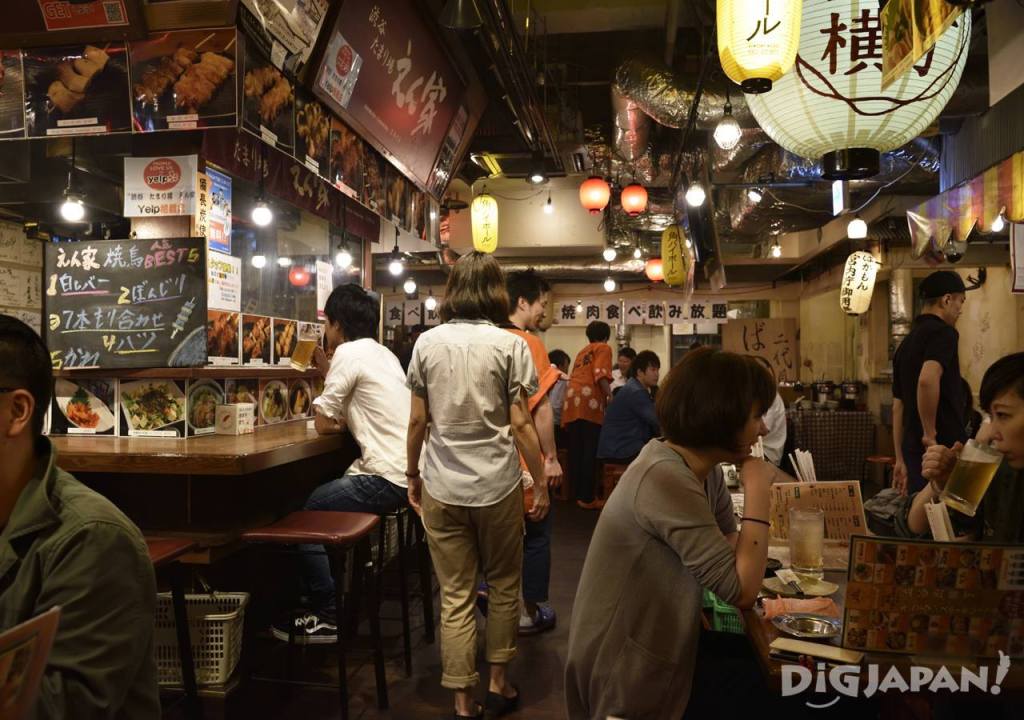
A free day — and the most revealing one yet, precisely because nothing was scheduled.
Ginza first: Onitsuka Tigers, purchased through a process that felt deliberately exclusive, with on-the-spot embroidery that strikes as gimmicky but is clearly doing exactly what it was designed to do. Brand positioning as ceremony.
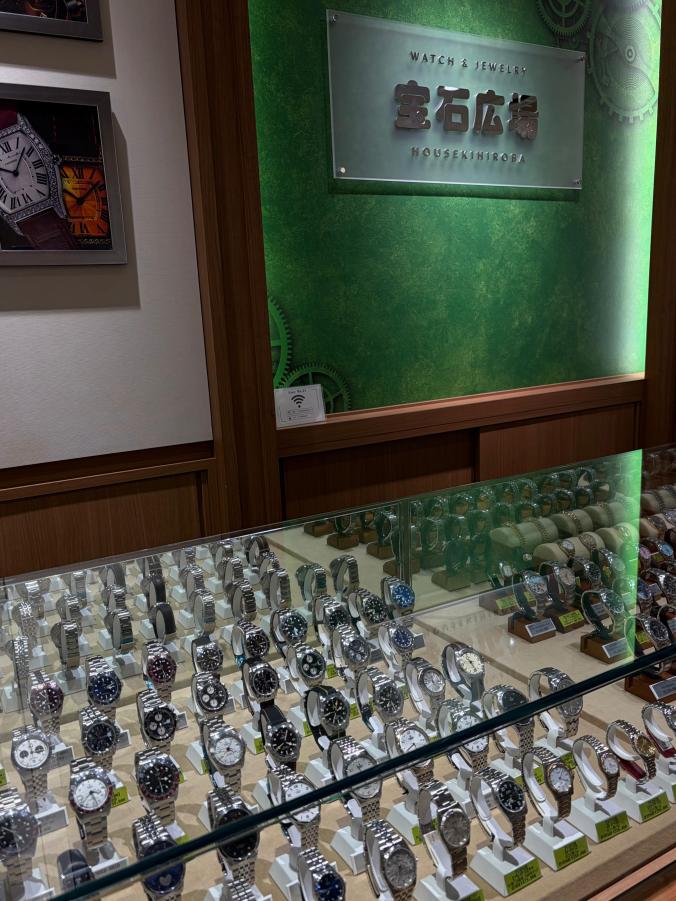
Don Quijote was the opposite end of the spectrum — every product imaginable, intense colors, loud music, pricing signage engineered like a casino floor to keep you moving and spending. A Casio watch and some toy cars perhaps for my father and brother. The operations problem embedded in the place is its own case study: maximum assortment, maximum visual chaos, maximum impulse conversion — the precise inverse of the lean inventory model from SCHM2301.
Lunch at a pork-only restaurant on the seventh floor of a shopping center, dimly lit, nearly empty, where the waitress let people stay almost an hour past finishing. Quiet patience as its own retail philosophy, working just as well as the chaos downstairs.
The evening run northeast toward Tokyo Skytree and gives the most useful read on the city so far. Pedestrians stopping at every crossing with no cars in sight. Walkers stepping aside for runners. The same precision that runs the train system showing up as baseline behavior on an empty street at dusk. And the city finally starting to map — not a series of disconnected excursions but a coherent geography with the hotel as anchor.
Then ANA, still calling. A hairline crack on the returned suitcase , apparently unacceptable to them. Multiple apologies, a hotel lobby tracked down, a ¥4,000 stipend offered at Narita on June 6th for a repair not asked for.
The Pachinko thread landed with precision: the same institutional machinery that produces a stipend for a stranger’s cracked suitcase also produces the registration card that marks Solomon as a foreigner in the country where he was born. Precision applied evenly, without regard for what it is being precise about.
Day five: two retail philosophies, one empty crossing, and a ¥4,000 apology for a crack nobody noticed.
Week’s Summary
Process as culture, discipline as dignity and as exclusion, and a forest built by hand in the middle of Tokyo to feel like it was always there.
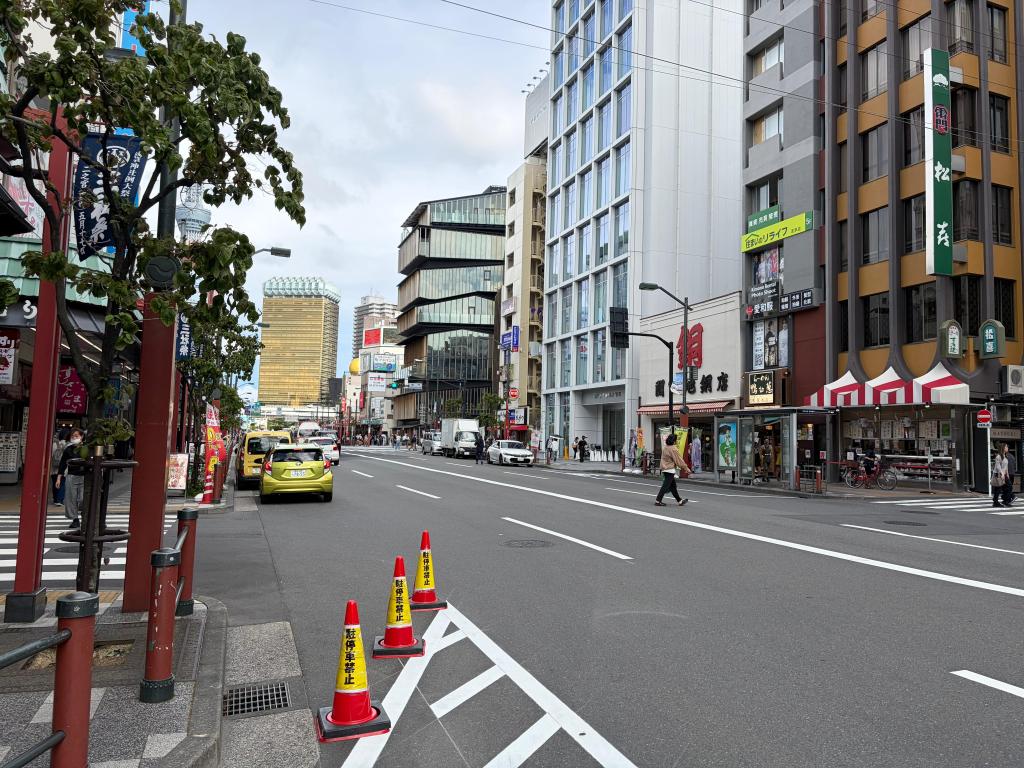
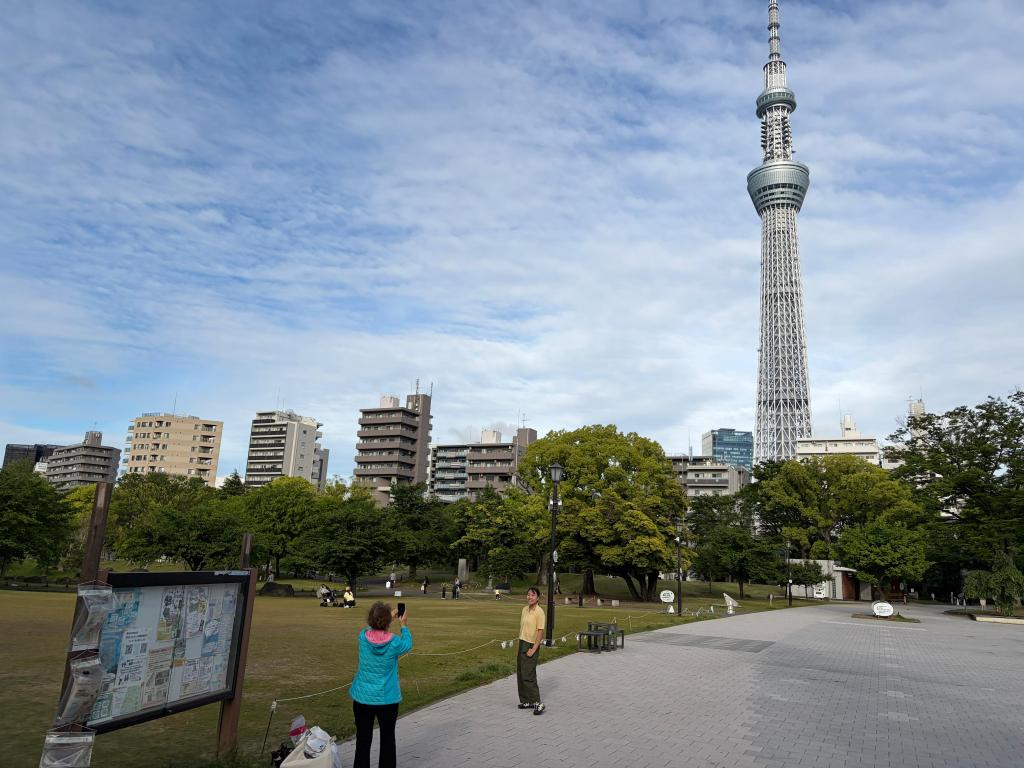
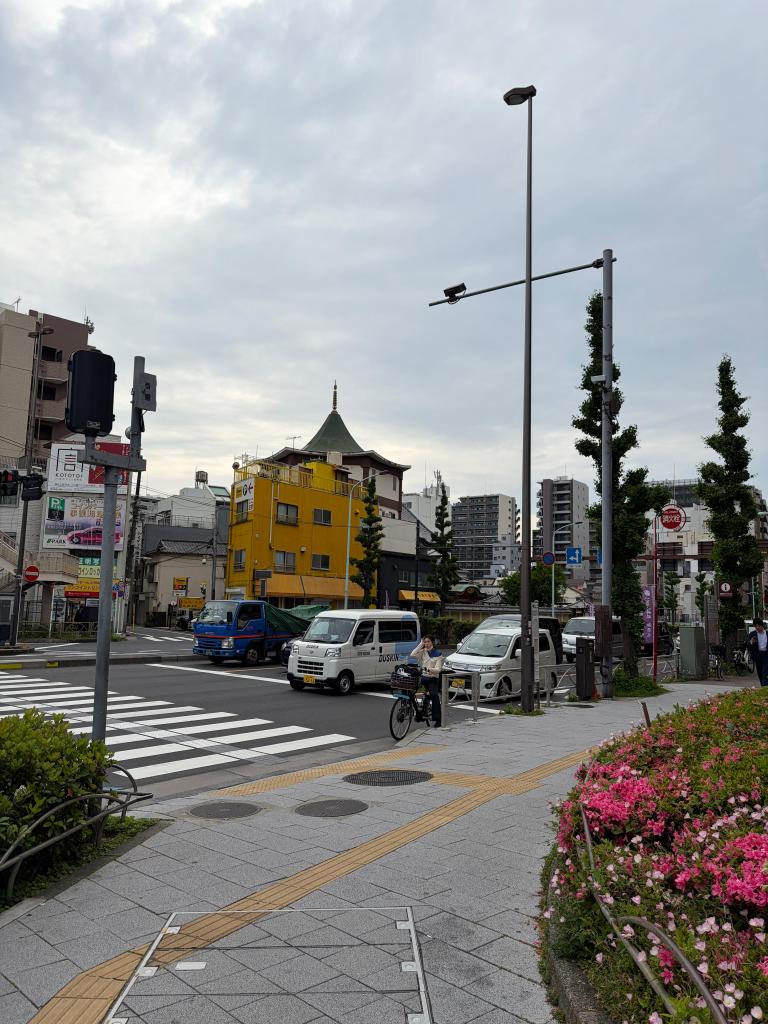
Five days in Tokyo, and a single question has emerged that will carry into week two: do Japanese standards actually travel, or does the cultural infrastructure that makes them possible at home stay behind when the company crosses the border?
The week’s anchor was the Nippon Express site visit — a company that has mastered domestic logistics to the point where staying local means shrinking with Japan’s declining population. The response is a tripling of India revenue targeted by 2028, with dedicated semiconductor warehouses already underway in Gujarat and Assam. A textbook case of geographic diversification driven by demographic pressure, connecting directly to the end-to-end supply chain logic of SCHM3301 and the operational execution layer of SCHM2301.
But the deeper theme running through the week was not strategy. It was discipline — and its double edge.
From Tokyo Station’s punctuality to the choreographed flow at Sensoji, the standardized prayer ritual at Meiji Jingu, ANA tracking down over a hairline crack in a returned suitcase, and pedestrians stopping at empty crosswalks on a Sunday evening run — Japanese society has codified collective behavior at an unusually high resolution. Process discipline as competitive advantage, and simultaneously as cultural pressure system.
Pachinko kept showing both sides. The same precision that produces Yangjin’s careful hospitality and ANA’s unsolicited ¥4,000 stipend also produces the alien registration card handed to Solomon at fourteen — born in Yokohama, marked as foreign by the same machinery that apologizes for cracked luggage. The system applies itself evenly. That is exactly the problem.
The 7-Eleven observation closes the week cleanly: same name, radically different operations, shaped entirely by what each market demands and what each culture supplies. Whether NX can export Japanese logistics excellence into markets that lack the cultural infrastructure that makes it possible at home is the question worth carrying into week two.
Week one: process as culture, discipline as dignity and as exclusion, and a forest built by hand in the middle of Tokyo to feel like it was always there.
Japan Week 2, Day 1 — Tsukiji, Hamarikyu, Sumida River
May 11, 2026
Three very different environments in one day, and the same principle running through all of them.
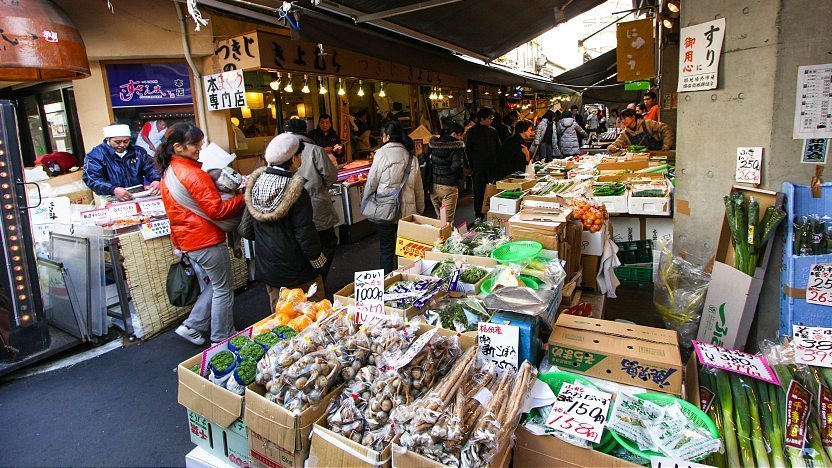
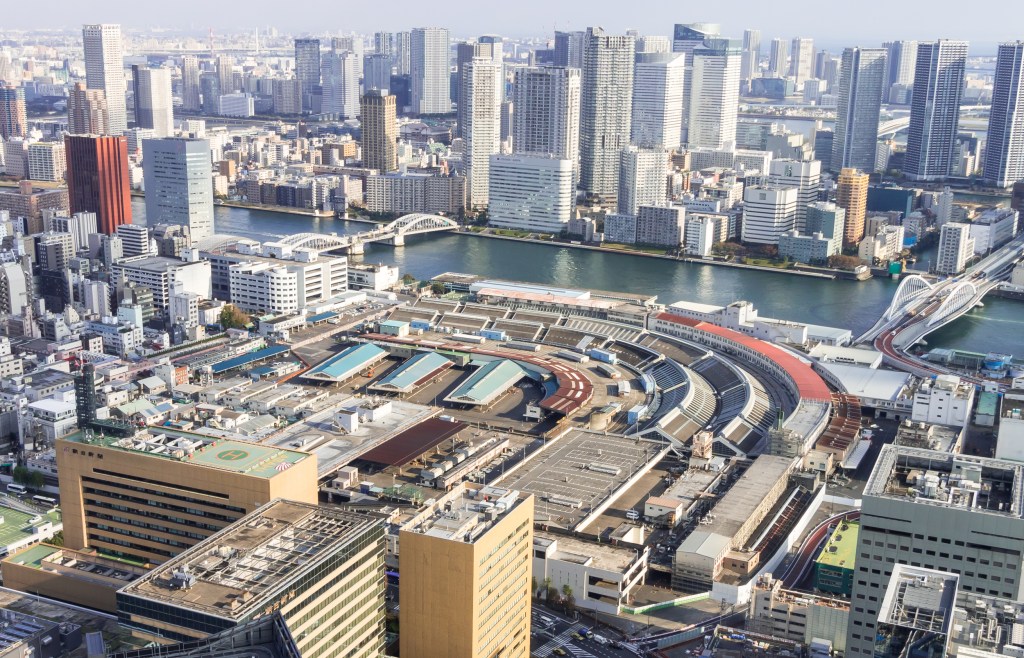
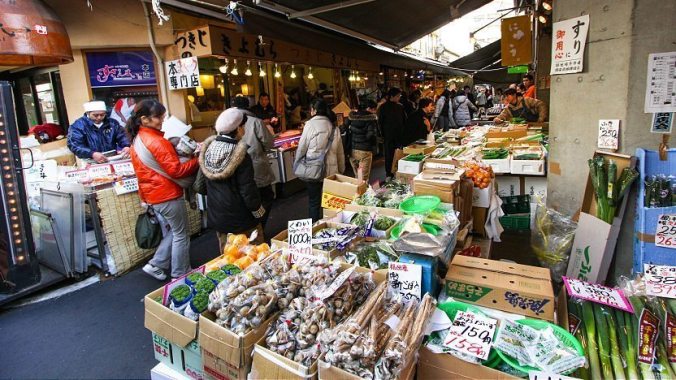
Tsukiji Outer Market was the supply chain stripped to its bones — no backroom, no branded packaging, no inventory hidden behind closed doors. You point, the vendor packs, the transaction happens on the same surface where the product arrived. Every square foot in use, every reputation on the line with every sale. The opposite end of the spectrum from the multi-tier distribution model mapped in SCHM3301, and more honest for it.
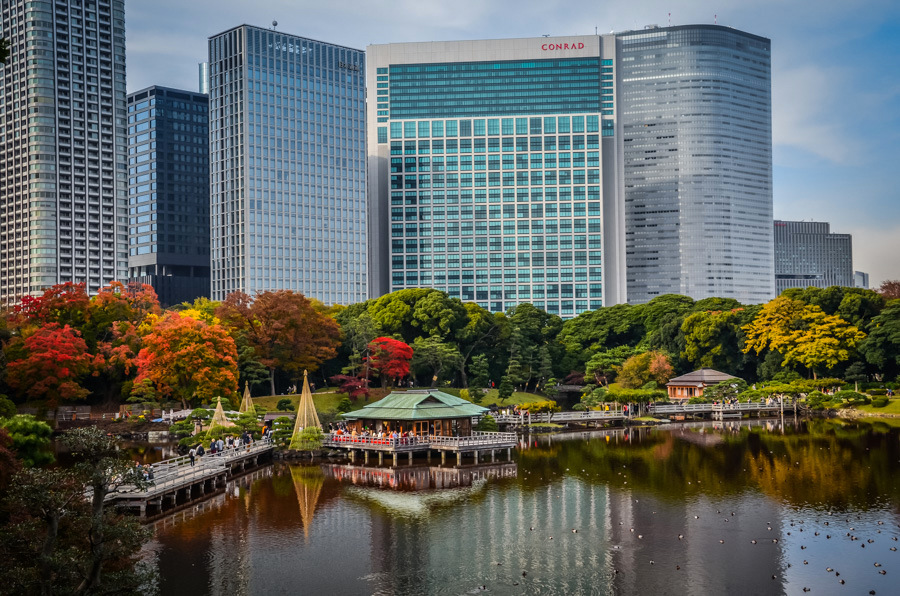
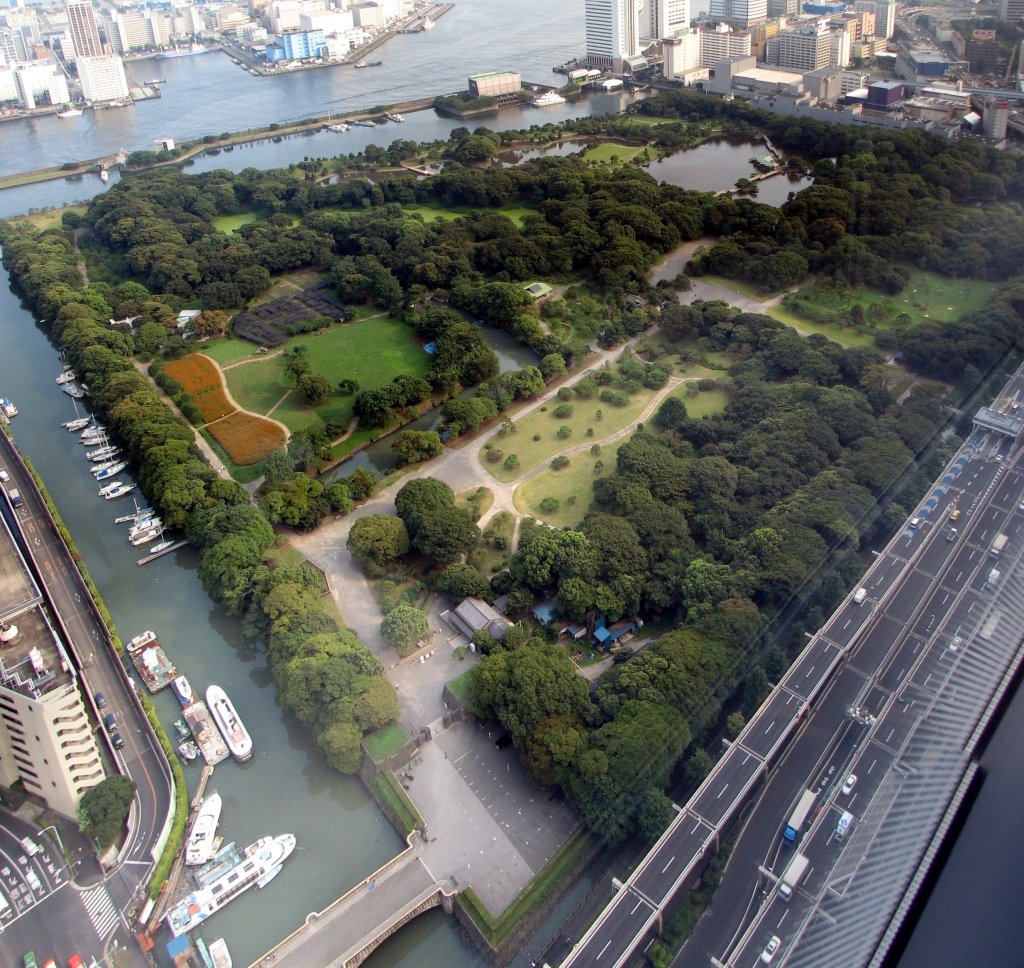
Hamarikyu Gardens was the surprise of the day. A centuries-old landscape engineered so precisely that Tokyo’s skyline becomes a backdrop rather than an intrusion — modernity framed by nature rather than competing with it. Unusually quiet, and notably different from American parks: no one sitting on the grass, no picnics, no casual sprawl. A space you visit with intention, not one you occupy.
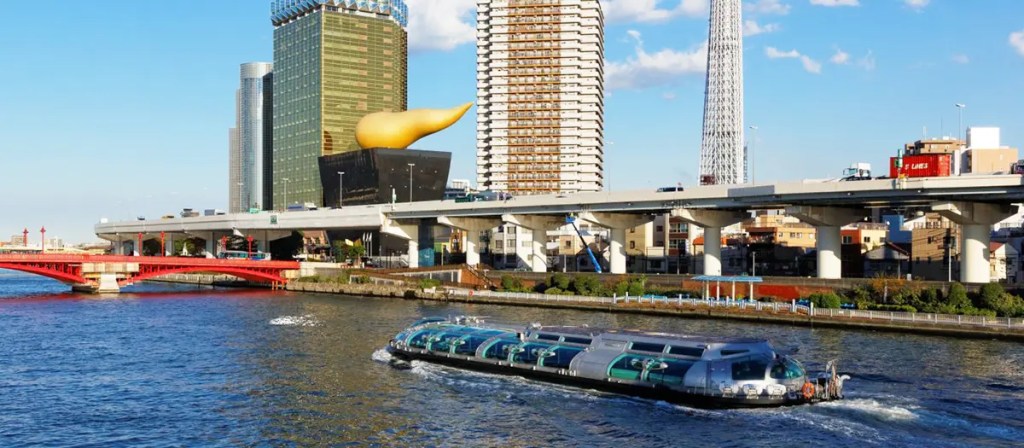
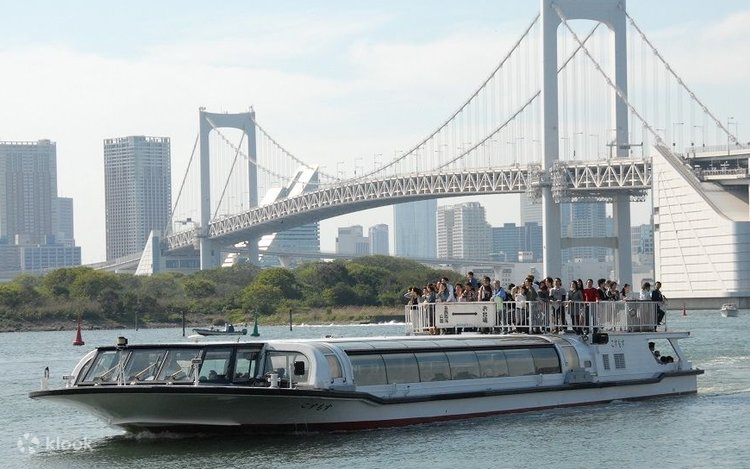
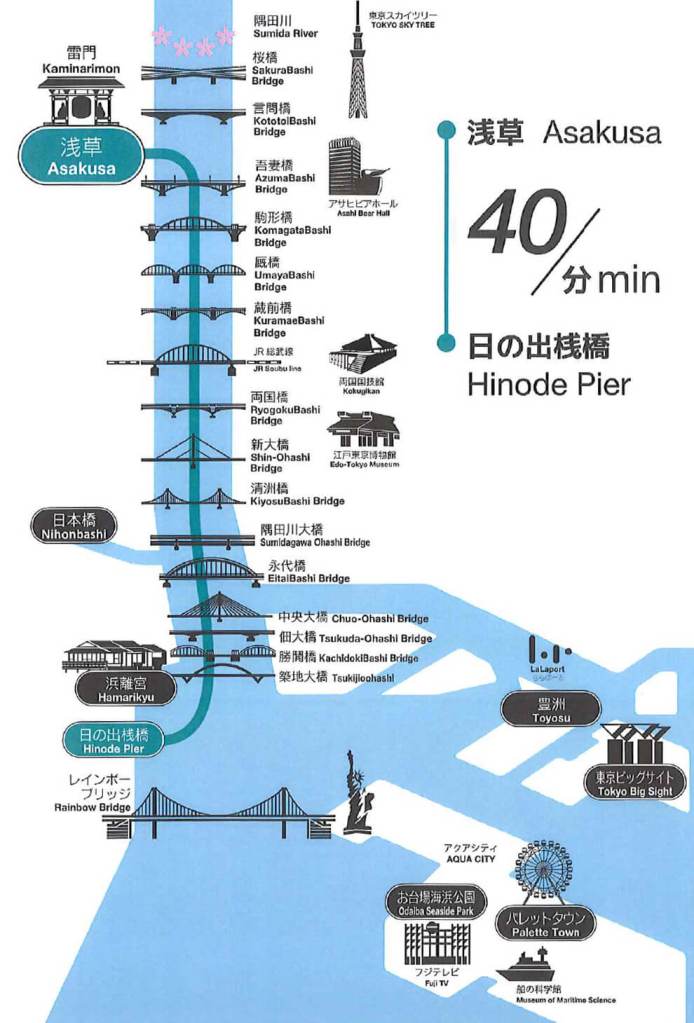
The Sumida River cruise on the Hotaluna — a sleek, futuristic boat — produced the day’s most honest observation: he dozed off. Not every scheduled experience delivers.
The gym afterward delivered more than expected. Every popular machine had a handwritten whiteboard waitlist with 30-minute caps. No staff enforcing it. Everyone rotated on time. The system worked because deviating would be socially expensive — hierarchy enforced not from above but by collective agreement. A wide age range, and almost everyone surprisingly strong for how lean they were.
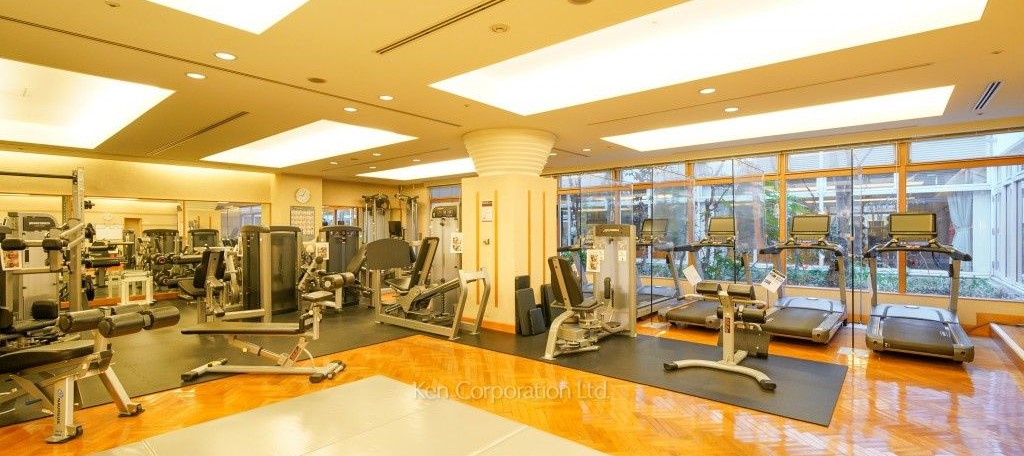
The Pachinko thread arrived at the gym: the same invisible coordination that makes a handwritten whiteboard function perfectly also determines who belongs where in Japanese society — and for Mozasu and others like him, those unwritten rules are as binding as any law, and far harder to challenge.
Day one of week two: a market with nothing to hide, a garden engineered for contemplation, a boat that lost me to sleep, and a whiteboard that held.
Japan Week 2, Day 2 — Classroom and teamLab Borderless
May 12, 2026
A formula, a revolution, and a professor who chose his words as carefully as his career.
Little’s Law opened the day: F = I / TH. Flow time equals inventory divided by throughput. Mathematically simple, universally applicable — factory output, hospital wait times, checkout lines, gym machine turnover, Tsukiji vendor queues. The formula gave a clean mathematical handle to something he had been seeing intuitively all week without knowing what to call it.
Michi-san’s history lesson reframed everything seen so far. The Tokugawa shogunate ruled Japan for over 260 years until pro-imperial samurai from Satsuma and Chōshū overthrew them in the Boshin War of 1868-69, restoring Emperor Meiji as head of state. What followed was not symbolic — it was a violent rupture with feudal order that produced everything that came after: the imperial cult, the colonial push into Korea in 1910, the alien registration system that runs through Pachinko’s entire plot. Meiji Jingu, visited days earlier as a beautiful shrine, now carries its full historical weight.
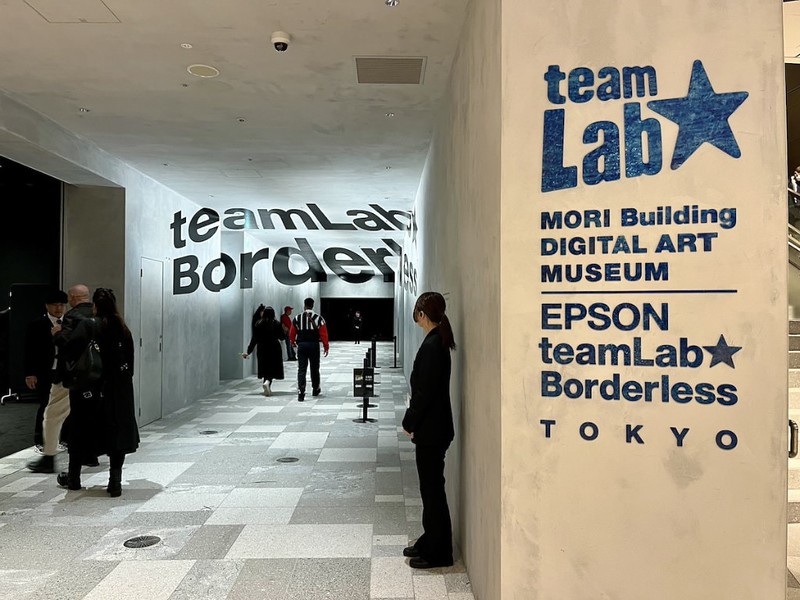
TeamLab Borderless was visually impressive but felt thinner than expected. Sometimes the reputation precedes the experience.

The gym held to its whiteboard system. Trust as infrastructure, again.
Dinner was the highlight. A Japanese economics professor — deeply informed on US politics, careful to frame every opinion with “in my opinion” so as not to misrepresent his country — offered a master class in not over-claiming. The offhand comment that academia was not his first career choice complicated the easy assumption that someone that sharp must have always known where he was going.
The professor’s deliberate care about how he represented Japan connected directly to Pachinko’s thread — characters constantly calculating how to present themselves to outsiders, because what you say carries weight beyond yourself. The same instinct, in a benign form.
Day two: one formula that explains almost everything, one revolution that explains the rest, and a professor who taught more by how he spoke than by what he said.
Little’s Law — F = I / TH — is something you would have recognized immediately from the factory floor anywhere. Gabriel is learning in a classroom what would be necessary for him to work on the factory floor. Different route, same territory.
Japan Week 2, Day 3 — Process Mapping and the Imperial Palace, May 13, 2026
May 13th., 2026
A framework for seeing waste, and a palace that embodies it.
Class 3 introduced process mapping — breaking any workflow into discrete steps and classifying each as action, delay, transportation, inspection, or storage. Critical actions are the ones that actually transform the product. Everything else — waiting, moving, re-checking — is waste. The example was a document requiring three signatures from different parties. Simple, universal, and suddenly visible everywhere.
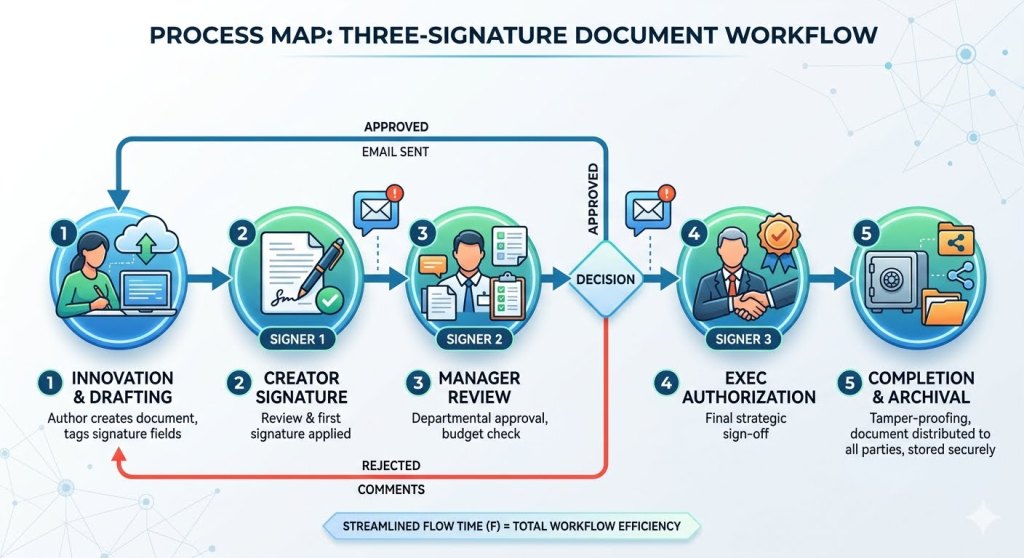
The concept landed with particular force because I have been seeing it all week without the vocabulary. Tsukiji vendors with no backroom. ANA’s precise intake form. The gym whiteboard. The lean logic was already there — process mapping gave it a name.


The Imperial Palace East Gardens carried the same engineered sightline quality seen at Hamarikyu — Tokyo’s skyline as deliberate backdrop, nature and modernity in careful negotiation. The actual palace remains inaccessible: an emperor still lives there.
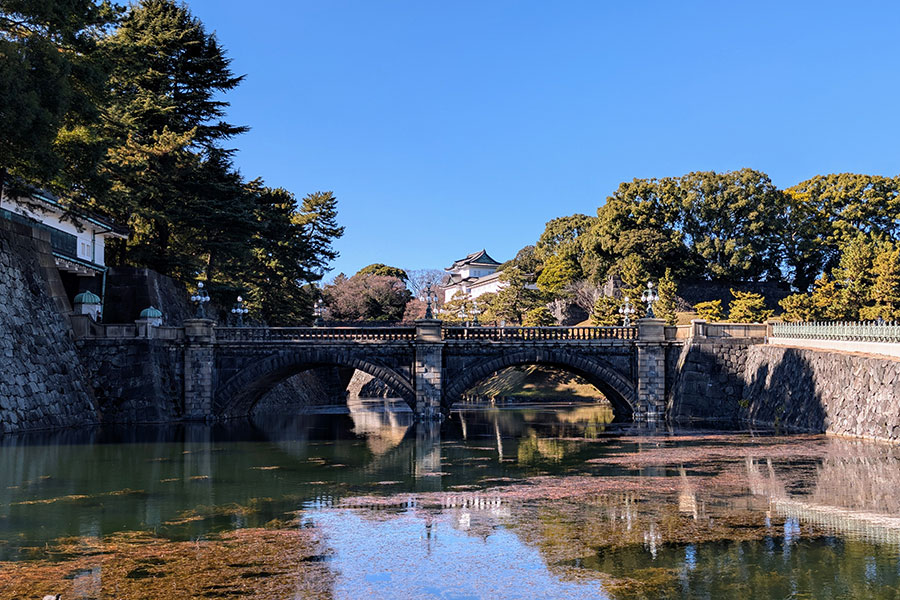
Walking through the gardens turned into a conversation about Japanese vending machines — how operators manage the unit economics of tiny footprints on rented land. The professor sharpened the point with a baseball stadium example: a booth two meters wide caps supply mechanically while demand stays high. Price follows. A constrained supply curve at the smallest possible scale.
The Pachinko thread ran through the palace itself. The East Gardens open to the public while the interior remains permanently closed captures something the novel keeps returning to — Japan’s most powerful symbols simultaneously on display and out of reach. Noa spends his life trying to enter forms of belonging that were never structurally open to him. The gate is visible. The door is not.
Day three: waste made visible, supply curves in two square meters, and a palace that shows you exactly where you cannot go.
Japan Week 2, Day 4 — DHL Japan Headquarters, May 14, 2026
May 14, 2026
The best session of the trip so far, and it was not about logistics. It was about conviction.
Tony Kahn’s presentation at DHL Japan headquarters in Higashi Shinagawa stood out less for its operational detail — Nippon Express went deeper there — and more for the quality of the person delivering it. A Western executive who chose Japan, believes in the company he represents and the country he adopted, and it showed in every answer.
The organizing principle of the entire presentation was the DHL Japan 2050 net-zero commitment. Not as a marketing frame but as an actual decision discipline — if everything has to ladder up to net-zero by 2050, you cannot pick solutions that solve today and create liabilities tomorrow. The example was sustainable aviation fuel made from used cooking oil, currently expensive and scarce, backed by a long bet that supply and scale will follow demand. The same long-horizon logic behind Nippon Express’s semiconductor warehouses in Gujarat — invest now in infrastructure for a market that does not yet fully exist.
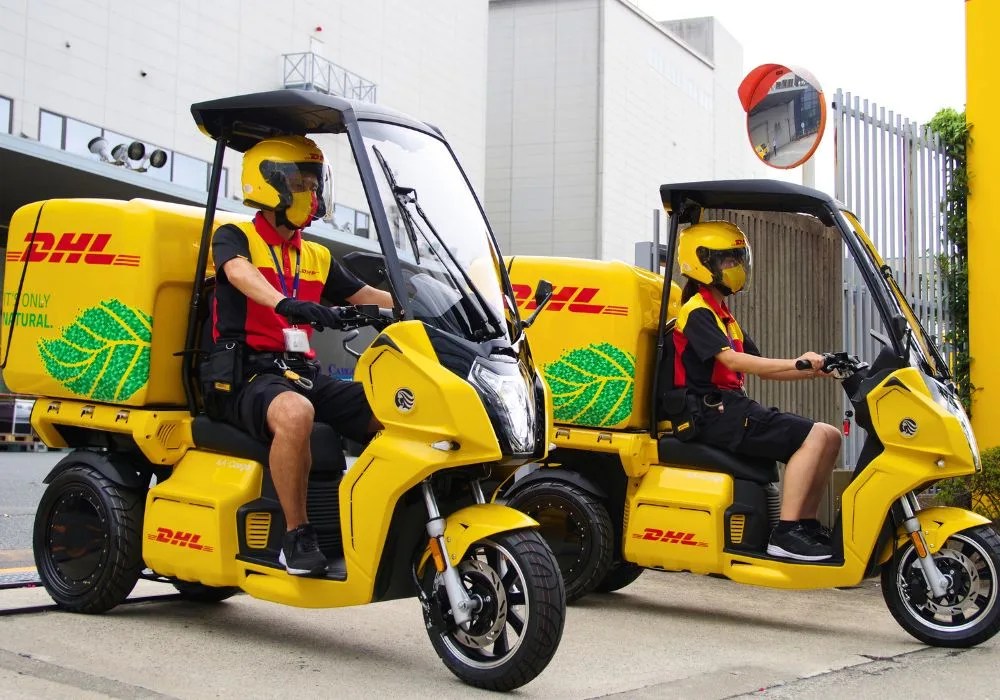

The Y2K analogy was the moment that landed hardest. When asked about AI displacing jobs, Tony pulled the frame back to a transition everyone thought would be catastrophic — and which instead produced Amazon, Airbnb, Starbucks at scale, and a generation of companies that did not exist before. Big technological transitions tend to expand the surface area for new business rather than shrink it. Coming from someone who lived through one of these transitions inside the logistics industry, it carried more weight than the same argument made in a classroom.
The Pachinko thread ran in reverse here. Tony — a non-Japanese executive running a major Japanese subsidiary — is the corporate inverse of the novel’s outsider dynamic. Accepted into the system on the strength of competence and commitment rather than excluded by the logic of belonging. A reminder that the hierarchies Pachinko maps are heavily defended, not absolute.
Day four: a 2050 commitment that disciplines every decision made today, a Y2K analogy that reframes AI anxiety, and a man whose conviction made the content matter more than it otherwise would have.
Japan Week 2, Day 5 — Risk Management and the Tokyo National Museum, May 15, 2026
May 15, 2026
Two sessions that reframed the whole week, and a museum that reframed Japanese history.
The morning’s heavier session was SCHM3301 on risk and crisis management — avoidance, transfer, mitigation, acceptance — with COVID-19 as the case study. The most striking example: companies that built their own transportation arms during the pandemic when commercial freight collapsed, then kept and monetized that capacity afterward. Crisis-driven capability turned into permanent competitive advantage. The research identifying seven main drivers of supply chain failure placed single-country dependency at the top — and the connection landed immediately: the CHIPS and Science Act, $52 billion committed to bringing semiconductor manufacturing onshore, is a national-level mitigation strategy against exactly that risk. The same playbook as Nippon Express building dedicated warehouses in India. When concentration risk gets named, capital follows the diversification.
The risk lecture also reframed lean operations. Just-in-time efficiency — Toyota’s signature contribution — is precisely what makes a supply chain fragile under disruption. The post-COVID move toward just-in-case inventory buffers and geographic redundancy is not a retreat from lean thinking. It is its necessary counterweight.
The Tokyo National Museum in the afternoon reframed something larger. Where American museums tend to feature firearms and conquest, the Japanese collection leaned heavily on clothing, fishing hooks, bows, hand-painted canvases, and tools for food preparation. A few katanas on display, but the organizing frame was how people lived, not how they fought.
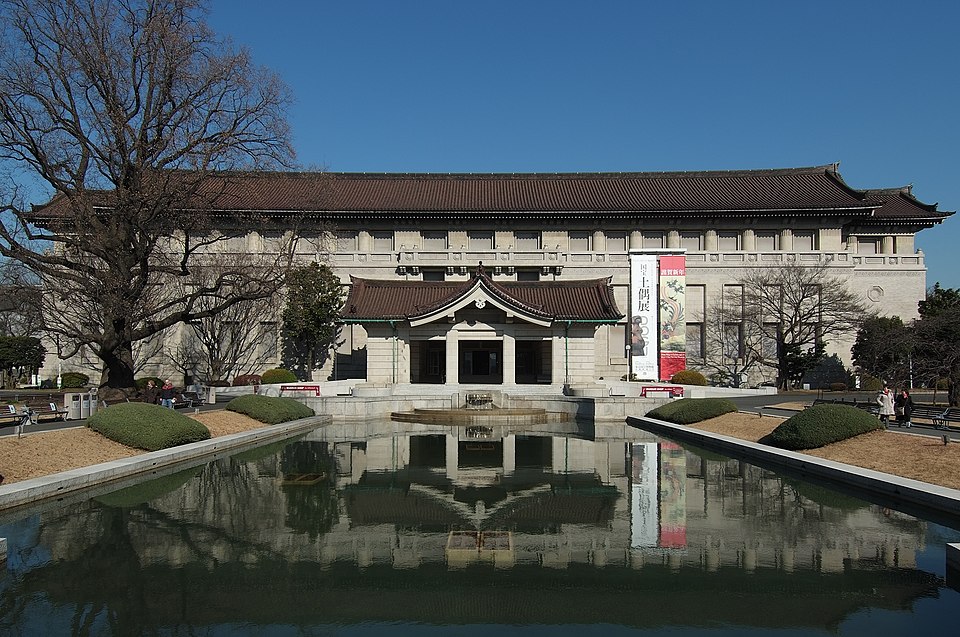
Although there is no permanent exhibit or official asset known as the “pachinko thread” at the Tokyo National Museum, since this museum focuses strictly on classical Japanese art, archaeological artifacts, samurai weaponry, and historic imperial treasures, you can can think of The Pachinko thread as generations of characters defined less by what they fought than by what they figured out how to make, sell, and live through. Yangjin’s boarding house. Sunja’s kimchi cart. Mozasu’s pachinko parlors. Endurance and craft as the real story, survival tools as the real artifacts.
Day five: concentration risk named at every scale from corporate to national, lean efficiency meeting its limits, and a museum that chose survival over conquest as the organizing principle of a civilization.
Japan Week 2, Day 6 — Kamakura and Enoshima Island
May 16, 2026
A full day outside Tokyo, and the most visually striking of the trip.
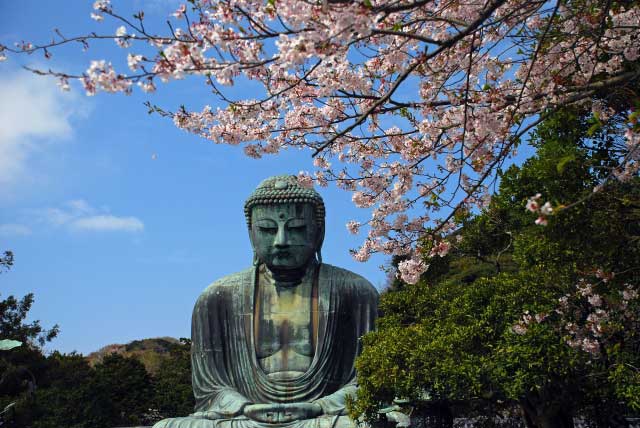
At Kōtoku-in and Hase-dera, what stood out was not the architecture but the offerings — fresh flowers, food, water, set out carefully at every altar including the most heavily visited. Someone puts them there daily. Not for tourists. That reframed every religious site visited so far: these are not historical preserves. They are active practices, maintained quietly by people doing the same things every day.
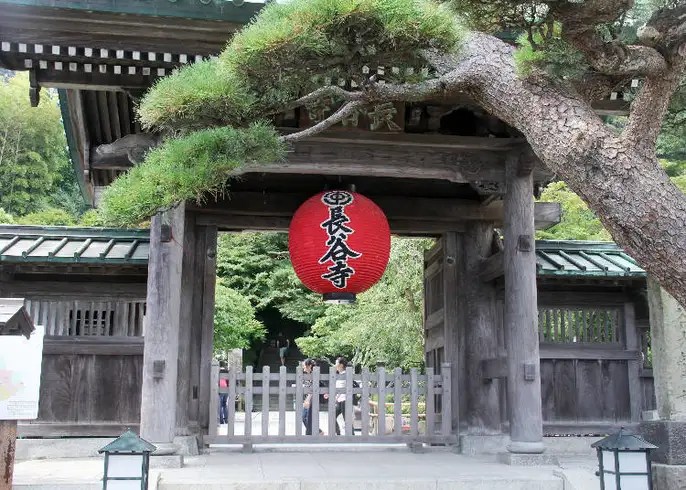
Enoshima was a different mood — beach town, forested hills, steep coastal landscape that reminded him strongly of Ubatuba in Brazil. The visual logic of ocean in front and mountains behind was the same. But the more interesting observation was economic: not a single 7-Eleven or Lawson on the entire island, unusual given how saturated those chains are everywhere else in Japan. The terrain explains it. Narrow, steep streets break the standard delivery model — smaller vehicles, more frequent trips, higher cost per unit, likely a network of local distributors rather than the centralized just-in-time system that dominates urban retail. The operational uneconomics of chains in that terrain has preserved a local-only retail ecosystem that has been pushed out almost everywhere else. A constraint that became a kind of protection.
The Pachinko thread ran through the offerings: ritual preserved not by institutions but by people quietly doing the same things every day — the same thread as Isak’s faith surviving imprisonment and displacement.
Japan Week 2, Day 7 — Mount Fuji Area, Kawaguchiko
May 17, 2026
A free day, a long calculation, and a clean economics lesson at altitude.
Nine and a half hours of travel for roughly three hours on the ground. The ropeway was closed. Apple Maps sent us up the wrong side of a mountain. We nearly got stuck before finding the actual trail. The answer to whether it was worth it: We doesn’t know when We’ll be in Japan again, so we went.
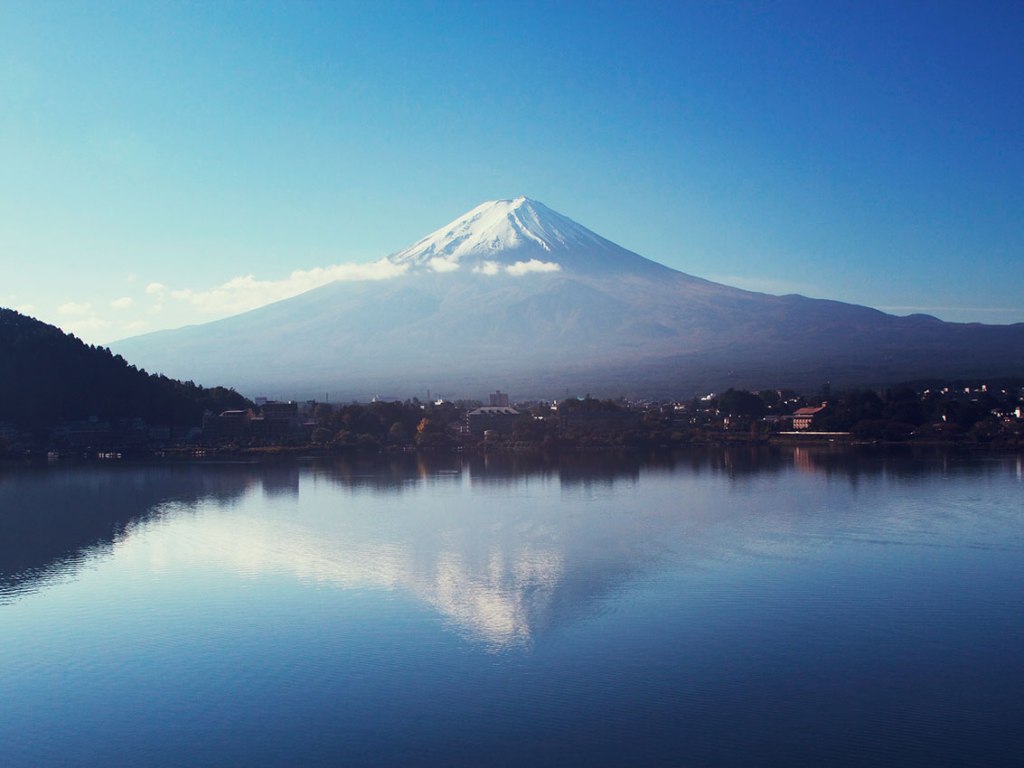
The economics of Kawaguchiko were the real discovery. Local shops charged significantly more than equivalent Tokyo options — low volume, high logistics costs, captive demand from tourists who have already invested three hours of travel and are not price-sensitive about lunch. The 7-Eleven charged the same as in the city. National distribution, consolidated procurement, pre-set price architecture across thousands of stores — the Kawaguchiko branch absorbs the higher last-mile cost as a rounding error against national volume. The chain can take the hit because the chain is the system. The family-run noodle shop next door cannot.
The most globalized conversation of the trip happened in this remote mountain town — a French tourist, soccer, food, and Tokyo experiences. Strange that the most international space in Japan turned out to be a tiny town built around one mountain view.
The Pachinko inversion landed here too: Kawaguchiko is a Japanese town quietly serving a foreign majority — the same insider-outsider tension running in the opposite direction from Sunja’s Ikaino.
Week 2 Summary
The week’s organizing insight arrived gradually and landed fully by the end: Japanese business culture — the deference, the long-horizon thinking, the process discipline — is not separate from operations strategy. It is the substrate that makes the strategy possible. Just-in-time manufacturing does not emerge from a culture that tolerates improvisation. Net-zero by 2050 commitments do not emerge from a culture that prioritizes the next quarter.
The DHL session with Tony was the week’s anchor. The 2050 commitment as decision discipline. The Y2K analogy reframing AI displacement. And a non-Japanese executive accepted into a major Japanese subsidiary on the strength of competence — the corporate inverse of Solomon’s blocked path at Travis Brothers. The hierarchy has not dissolved. The criteria for crossing has shifted from blood to competence, even if unevenly.
Risk management connected everything. Single-country dependency at the top of COVID supply chain failures. The CHIPS Act as national-level mitigation. Nippon Express in India. DHL’s SAF investment. All of them the same long-bet logic: when concentration risk gets named, capital follows the diversification.
The question carrying into week three: does this discipline scale down to family-run businesses — the kind seen on Enoshima and in Kawaguchiko — and how does generational succession work in those firms as Japan’s workforce shrinks?
Japanese business culture is the substrate rather than the decoration.
Two weeks in. The question getting sharper every day.
Japan Week 3, — Visit to Uniqlo
Uniqlo
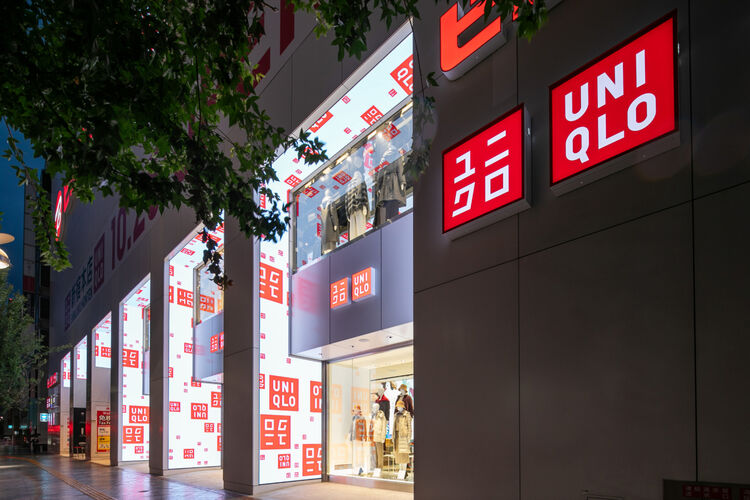
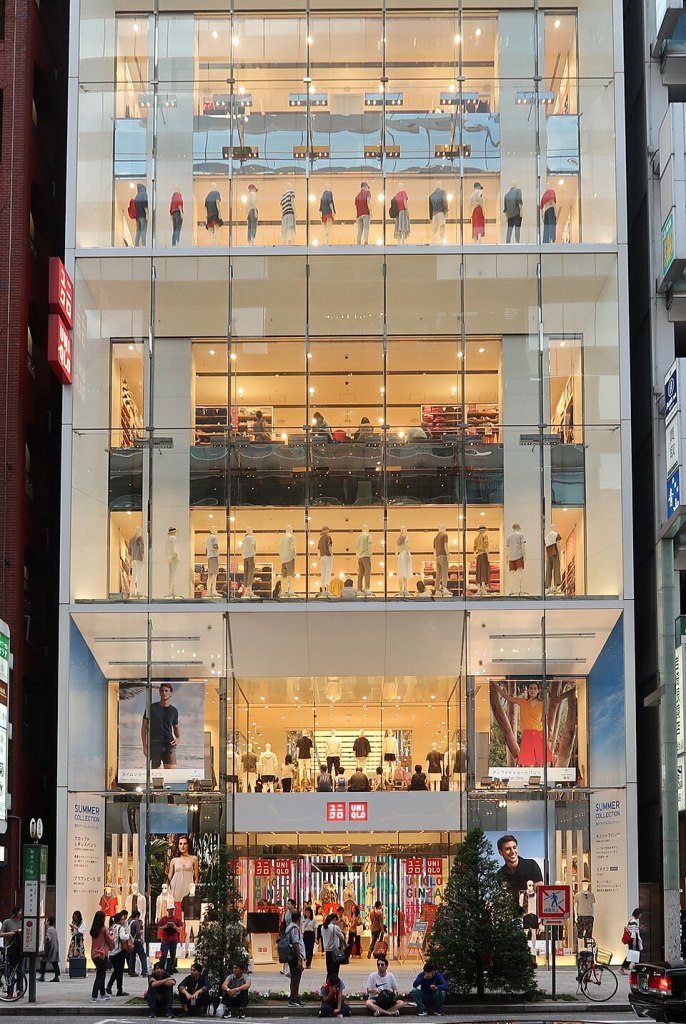
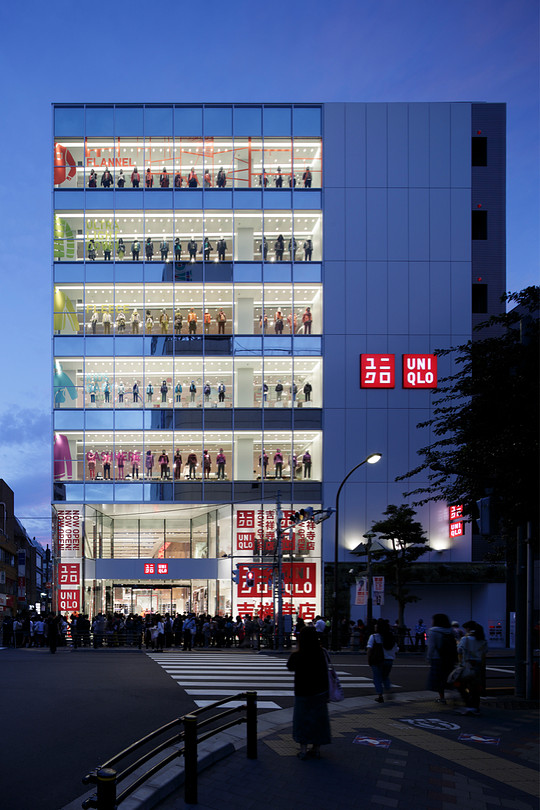
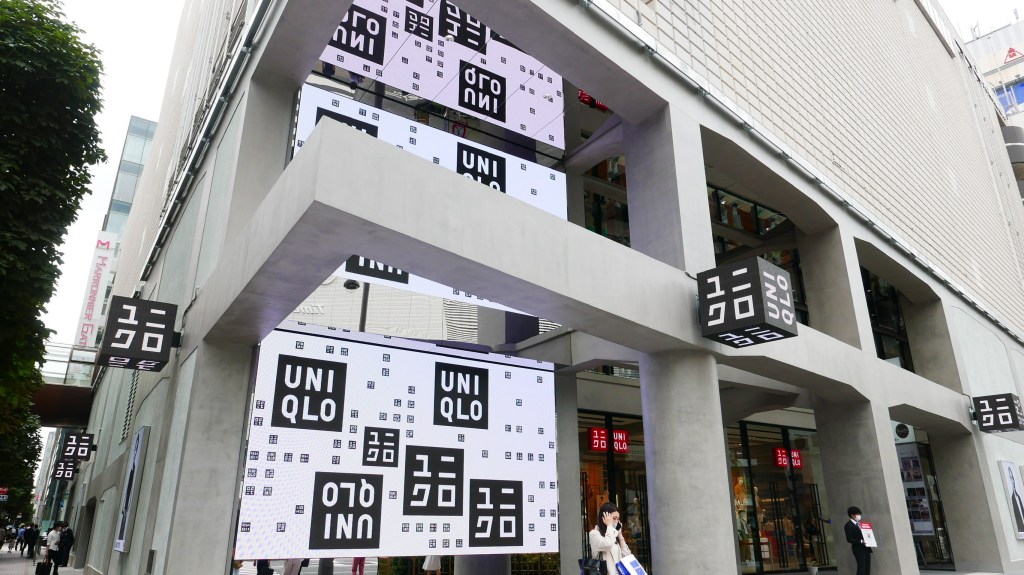
The Fitting Room is Where Sales Are Made — Not at Checkout
This week our assignment was to visit a Uniqlo store here in Tokyo and understand the customer journey firsthand. Using flow charts and applying the Theory of Constraints and Lean methodology, we mapped the entire in-store experience — from the moment a customer enters the store all the way to checkout.
Our core finding is deceptively simple: the fitting room queue is the single biggest constraint on retail sales — and most stores are doing almost nothing about it.
The Current Flow
A customer enters the store and spends about 7 minutes browsing before selecting items to try on. From there, a 1-minute walk to the fitting room area leads straight into the main problem: a queue of 8 to 12 minutes at peak hours. Those who wait get assigned a room, remove their shoes (Japan-specific), spend around 8 minutes trying on items, then exit to either checkout or leave the store. Those who don’t want to wait simply walk out — without buying anything.
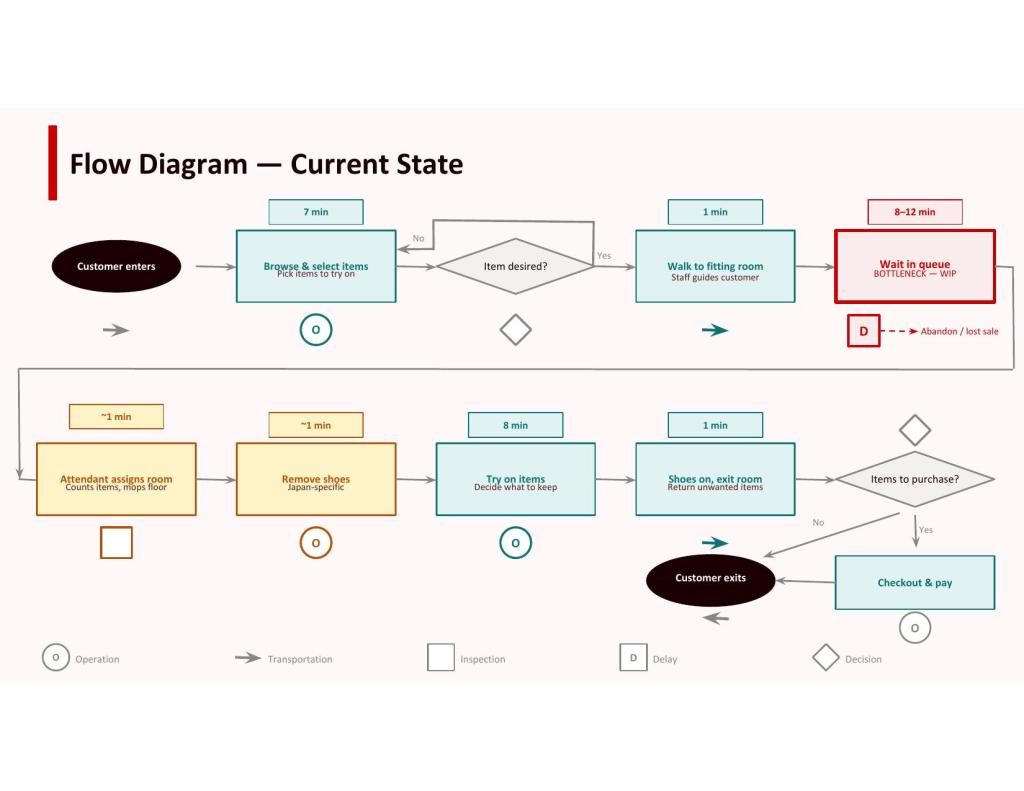
What We Found
The numbers are hard to ignore. Customers who use fitting rooms are 8 times more likely to purchase. 72% of those who enter a room complete a transaction. And customers who skip the fitting room are 2.5 times more likely to return items later.
At peak hours, a standard Uniqlo store with 6 to 8 rooms can only handle 45 customers per hour, while demand runs closer to 50. A visible queue of 5 to 9 people triggers an 8.4% walk-off rate — roughly 1 in 12 customers leaving without buying. Projected across 797 Japanese stores, that translates to nearly $33 million in annual lost revenue.
The Proposed Flow
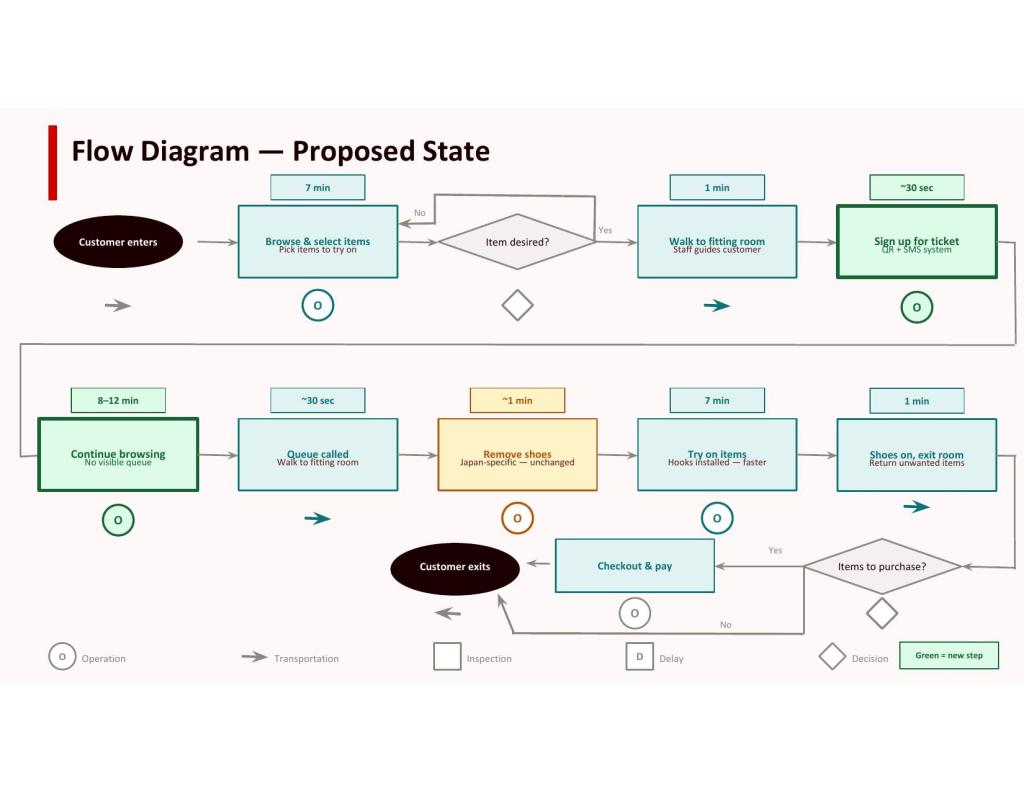
In the improved model, the visible queue disappears entirely. Upon arriving at the fitting room area, customers scan a QR code and receive an SMS when their room is ready. Instead of standing in line, they continue browsing the floor. When called, they walk directly to an available room. Hooks installed inside each cubicle eliminate the time lost sorting items from the floor, bringing cycle time down from 8 to 7 minutes. A dedicated attendant during peak hours clears rooms faster and manages the flow.
Expected Impact
These low-cost changes are estimated to reduce wait times by 67%, cut the abandonment rate by 60%, and raise fitting room throughput by 22% — from 45 to 55 customers per hour.
The broader lesson applies well beyond retail: fix the bottleneck before investing anywhere else. Small operational changes in the right place produce disproportionate results.
Brayden, Gabe, Julienne and Evie — SCHM2301, Tokyo 2026
Week 3, Day 1 — Tokyo to Nagoya Monday, May 18, 2026
Gabriel da Costa Campos
I start the week with a split morning before boarding the Shinkansen. Two hours of class, two very different lenses.
The first hour is inventory theory — Economic Order Quantity and Total Annual Cost, the standard math for finding the order size that minimizes holding costs plus ordering costs. Clean, tractable, satisfying in the way that a well-formed equation is satisfying.
The second hour is mergers and acquisitions strategy: what drives companies to acquire each other, what a partnership or joint venture actually involves, and what it really takes to integrate two organizations into something that functions afterward. The instructor is direct about it — the strategic logic of a deal and the operational logic of integrating it are two entirely different problems, and most of the difficulty lives in the second one.
The M&A discussion lands closer to home than expected. The clearest examples in my head are JPMorgan absorbing Bear Stearns in 2008 and the T-Mobile / Sprint merger, but the one I keep returning to is Applied Materials acquiring ASMPT-NEXX — the company where I did my last co-op, in the Panel Business Unit. The deal was announced May 4. Going through the framework we discussed, I find myself thinking through which roles survive and which don’t. R&D engineers in advanced packaging are almost certainly protected — that capability is exactly what AMAT paid for. The exposure sits on the operations side: finance, HR, procurement, IT, certain manufacturing-ops functions that AMAT already runs at scale. The redundancies are predictable once you understand what was acquired and why.
What the class framework gave me is a way to think about M&A from the inside out rather than from the outside in. It is not just a transaction. It is a process redesign — a deliberate decision about which jobs are core to the acquired capability and which jobs are now duplicated.
The Shinkansen to Nagoya is on time and quiet. Nagoya itself is noticeably different from Tokyo: less oriented toward visitors, fewer English speakers, more expensive, a different pace. The contrast is useful. Japan’s outward-facing internationalism is not evenly distributed — it is concentrated in specific cities, each with its own local logic about who belongs and who is passing through. That is a thread that runs through Pachinko as well, and it applies not just between Japanese and foreigners but between Japan’s own cities.
Week 3, Day 2 — Nagoya: How Toyota Reverse-Engineered America
Tuesday, May 19, 2026
Toyota Commemorative Museum of Industry and Tehcnology
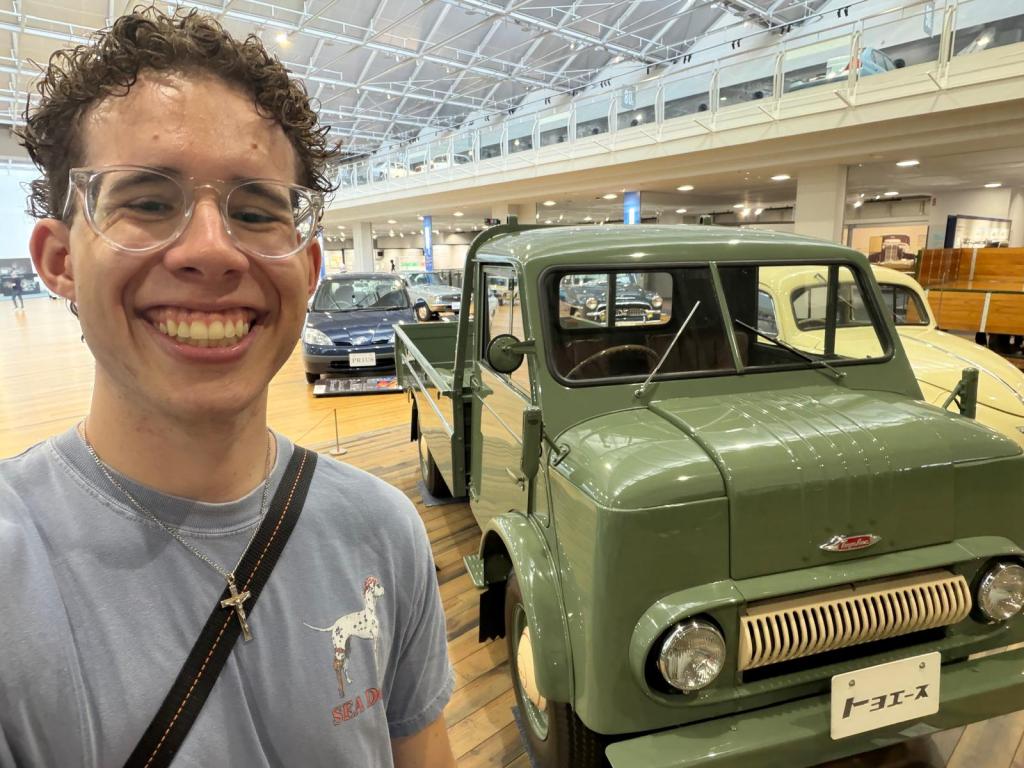
Free morning, then the Toyota Commemorative Museum of Industry and Technology in the afternoon. It turns out to be one of the best site visits of the trip.
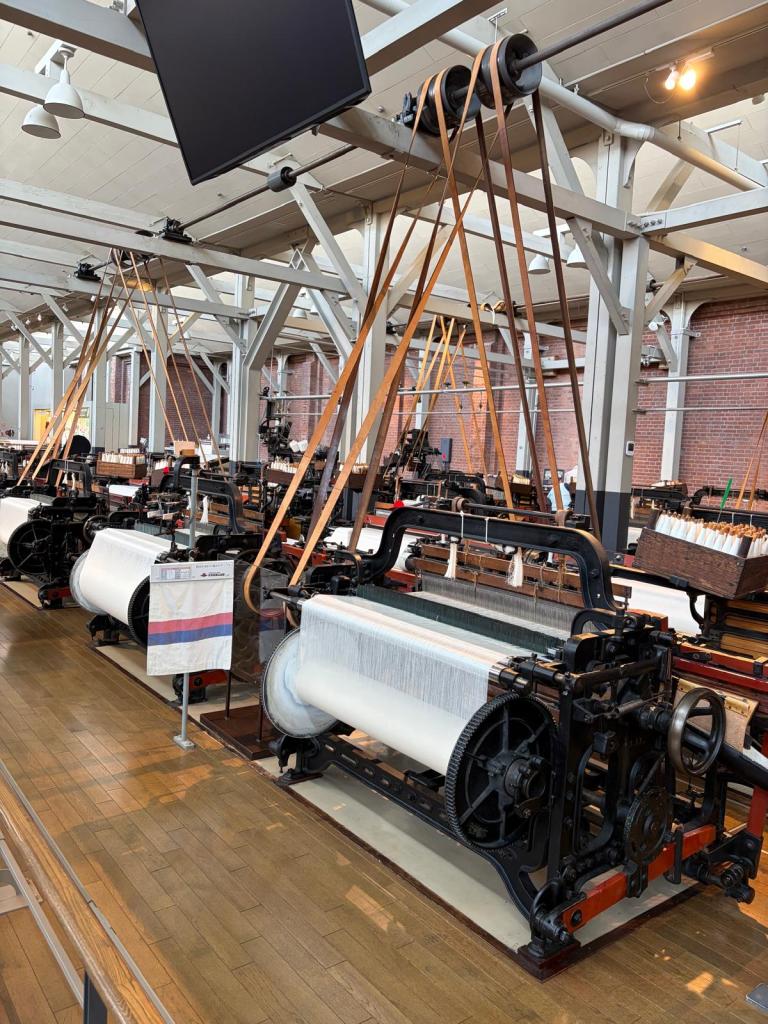
The museum is located on the original site of the weaving factory of Sakichi Toyoda, founder of the Toyota group.
The museum starts with Sakichi Toyoda’s textile loom business in the 1920s, then traces his son Kiichiro’s pivot into automotive in 1933 — funded partly by selling loom patents to the British firm Platt Brothers for £100,000. What Kiichiro did with that money is the part that sticks. He didn’t just buy a 1933 Chevrolet and try to copy it. He disassembled it, sketched and measured every part, then bought a 1934 DeSoto and another Chevrolet the following year as additional reference vehicles. The point was never to clone the product. It was to understand how American firms built cars at scale.
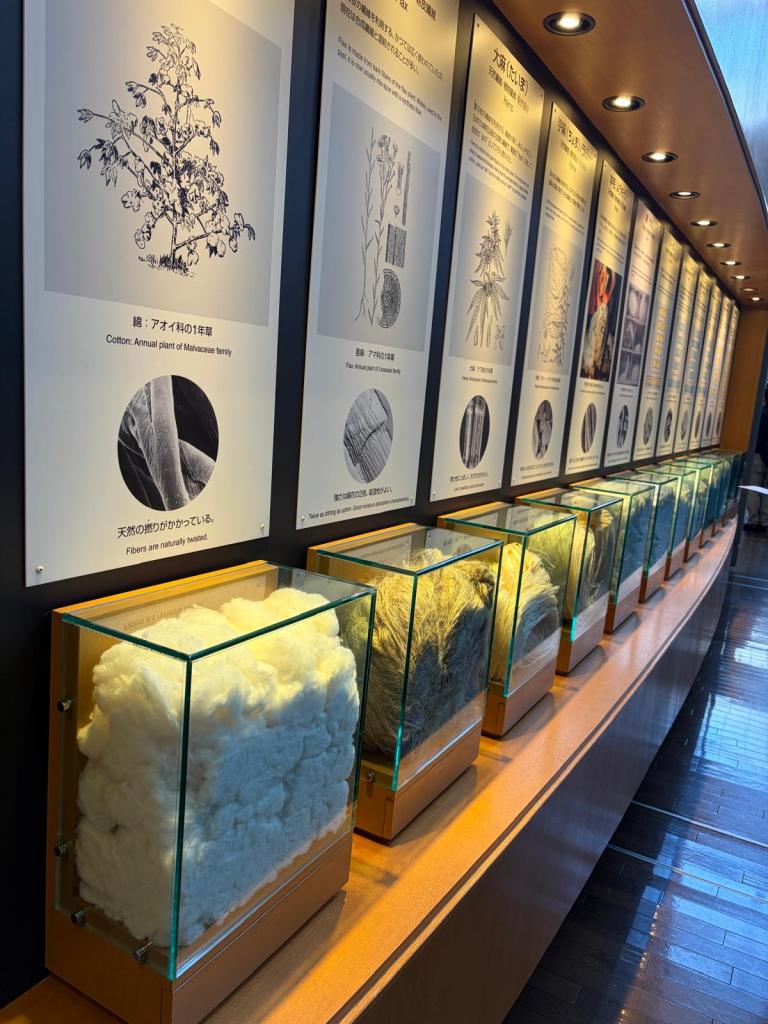
The distinction matters. Kiichiro’s stated principle was that to make good cars, you must first make good machines. Process capability is the actual asset. The cars are downstream. Everything Toyota became — the Production System, just-in-time, the lean philosophy that underwrites every operations framework we’ve covered — traces back to that original decision to reverse-engineer the process rather than the product.
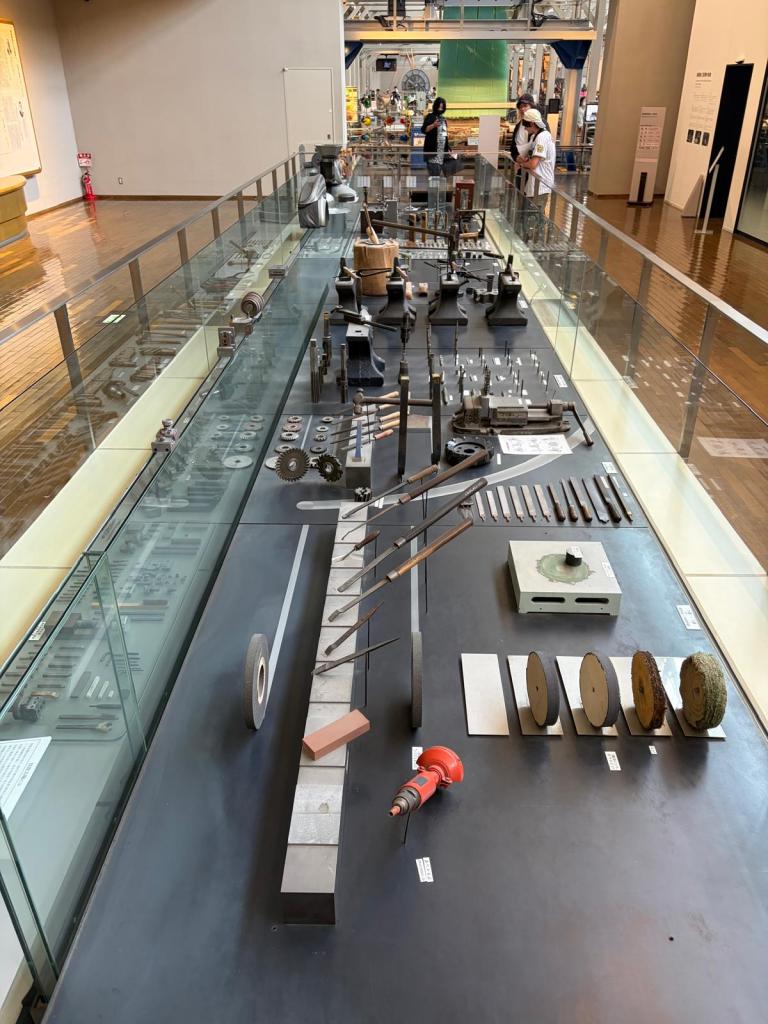
Materials testing laboratory
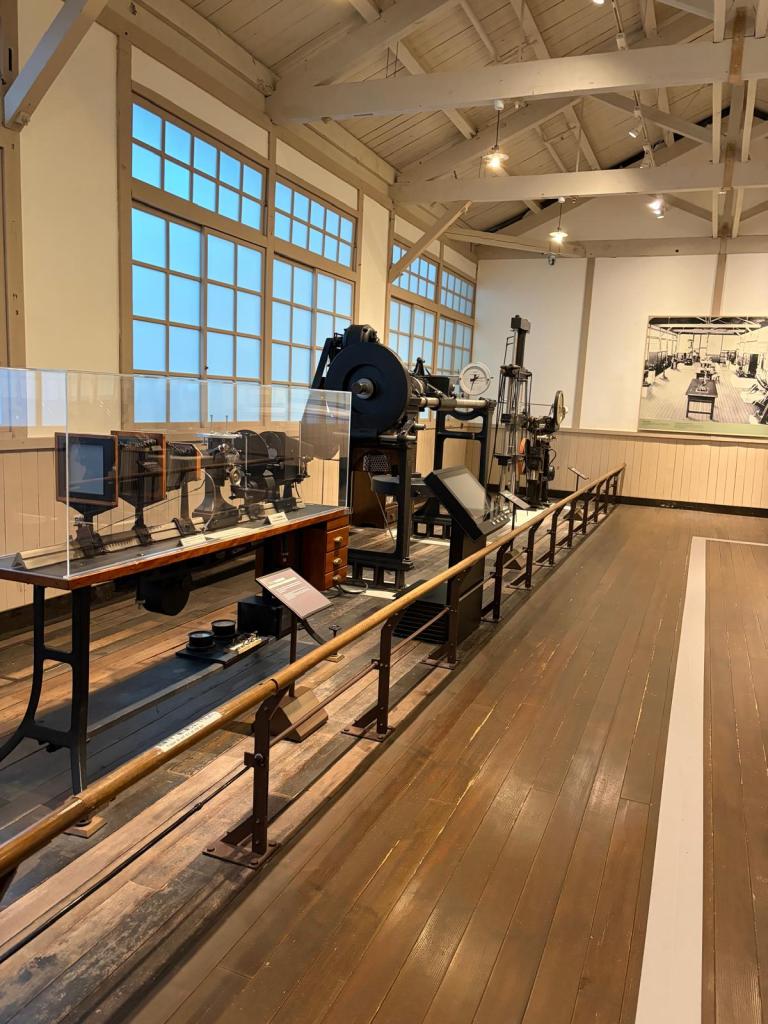
The post-WWII section of the museum makes the same point from a different angle. Allied occupation regulations sharply limited Toyota’s production capacity, and as those restrictions were gradually lifted, the cars on display got cleaner, more refined, more deliberate. Every feature looks engineered with a specific purpose — either a production constraint being resolved or an end-user need being answered. There’s nothing decorative about it.
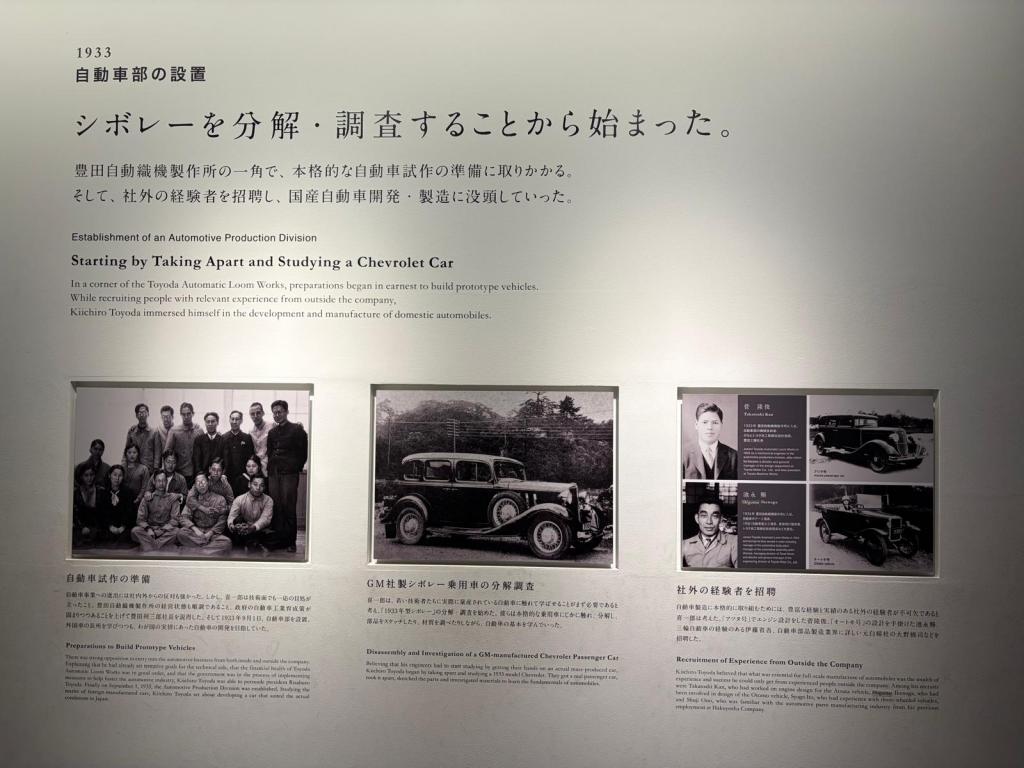
I look up the market data afterward, and it’s stark. Toyota’s first US car, the Toyopet Crown, sold 287 units in 1958 — the same year Ford sold roughly a million and Chevrolet had moved 1.7 million units three years earlier. Detroit had no structural reason to take Toyota seriously, and they didn’t. By 1967 Toyota was already the third-best-selling import brand in the US. Within two decades the same Big Three that had ignored the Toyopet were losing massive share to the Corolla, the Corona, and the Camry. The incumbents weren’t beaten by a better-looking sedan. They were beaten by the production system underneath it — exactly the layer Kiichiro had been building since 1933 while nobody in Detroit was watching.
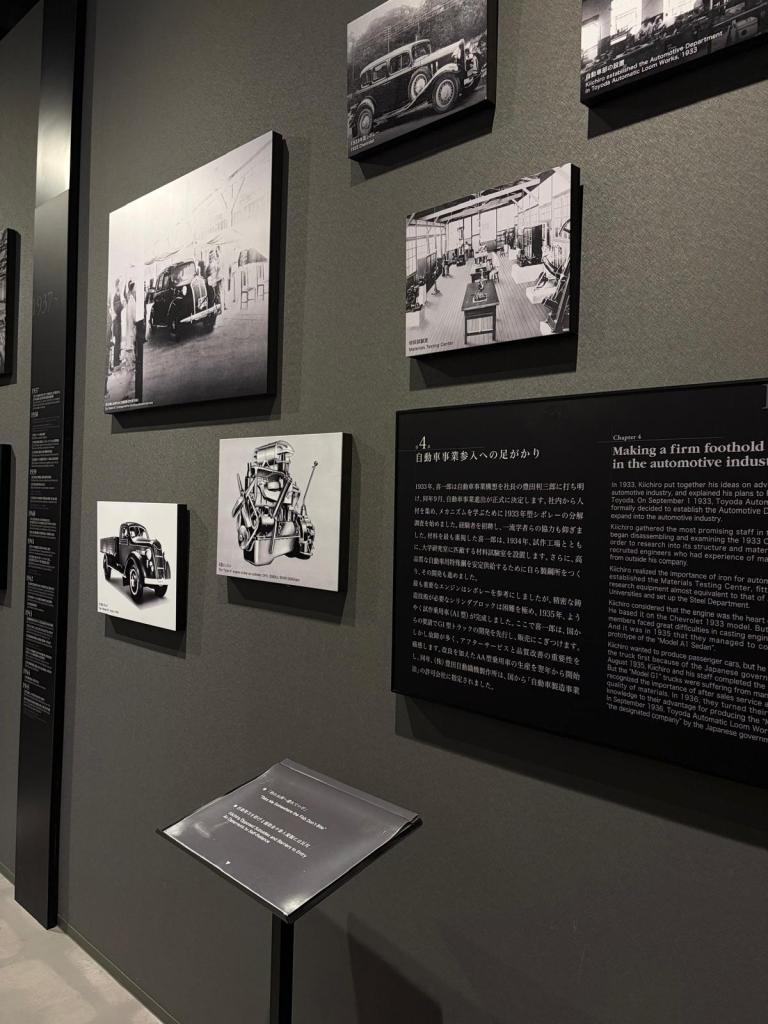
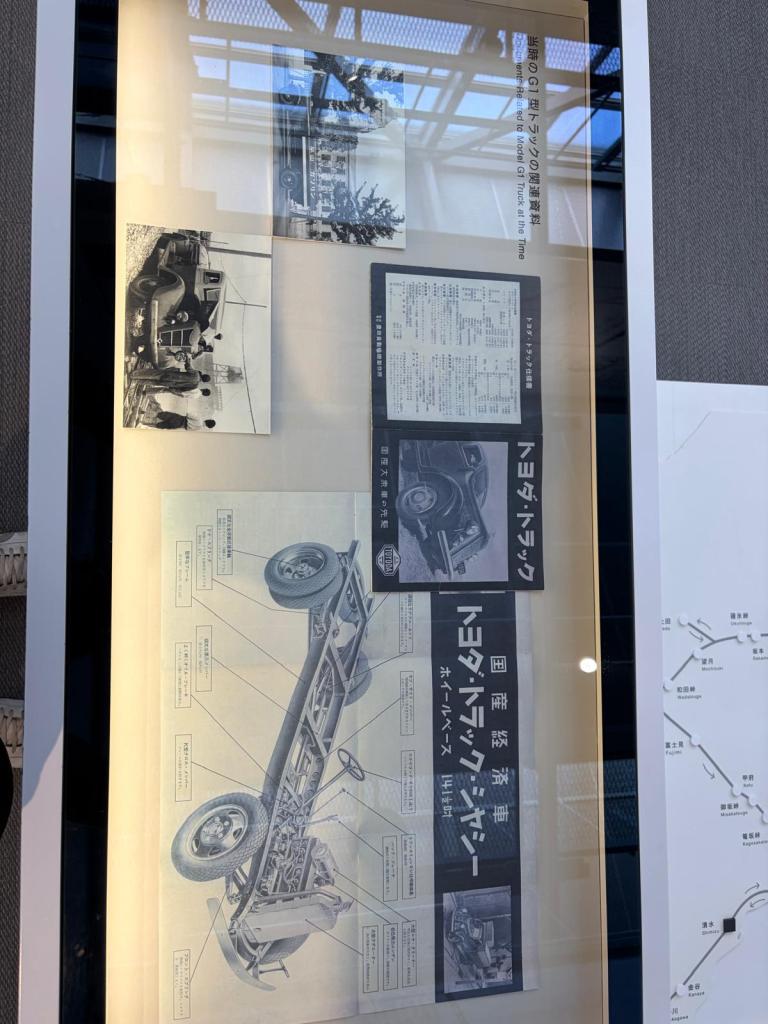
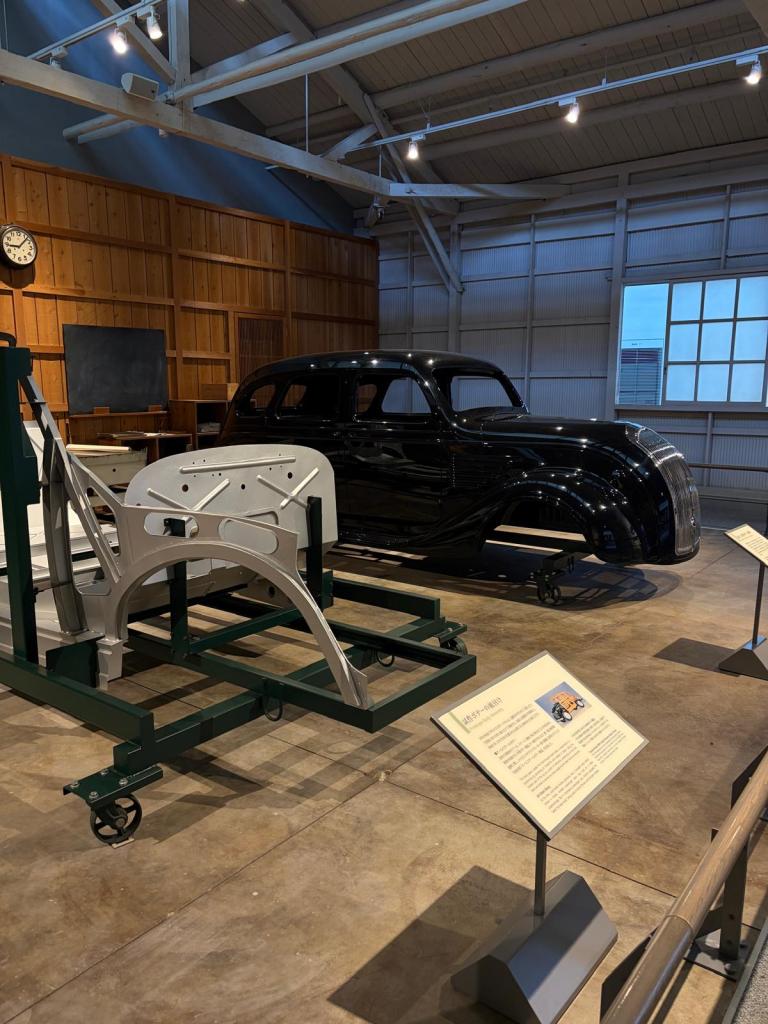
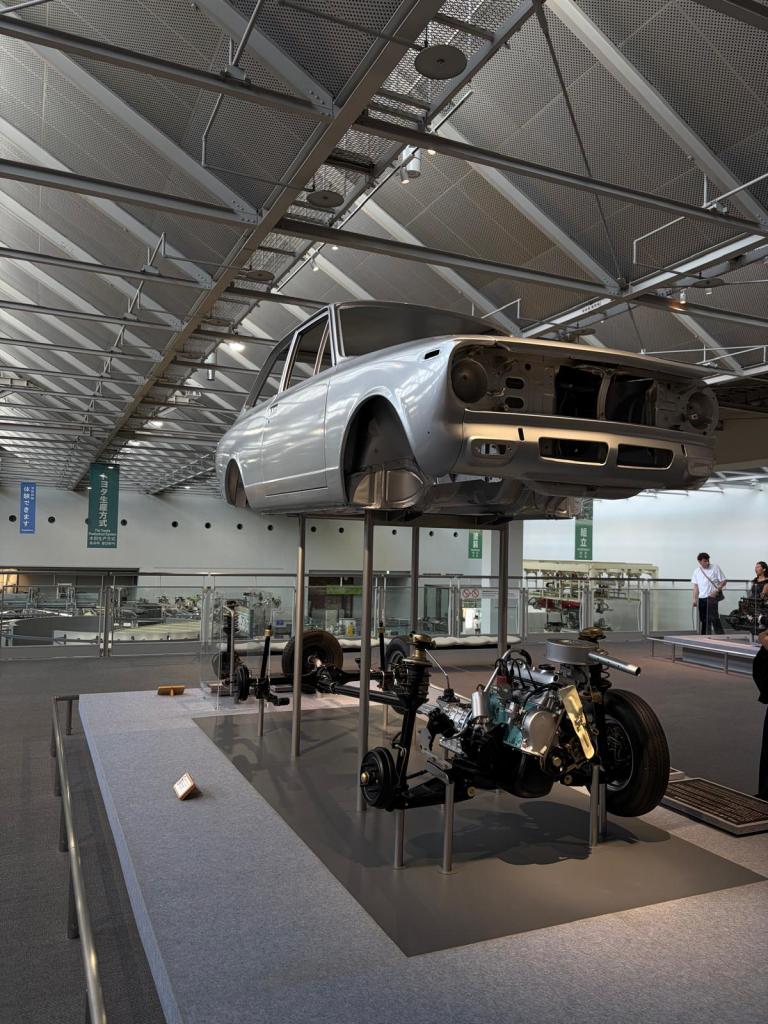
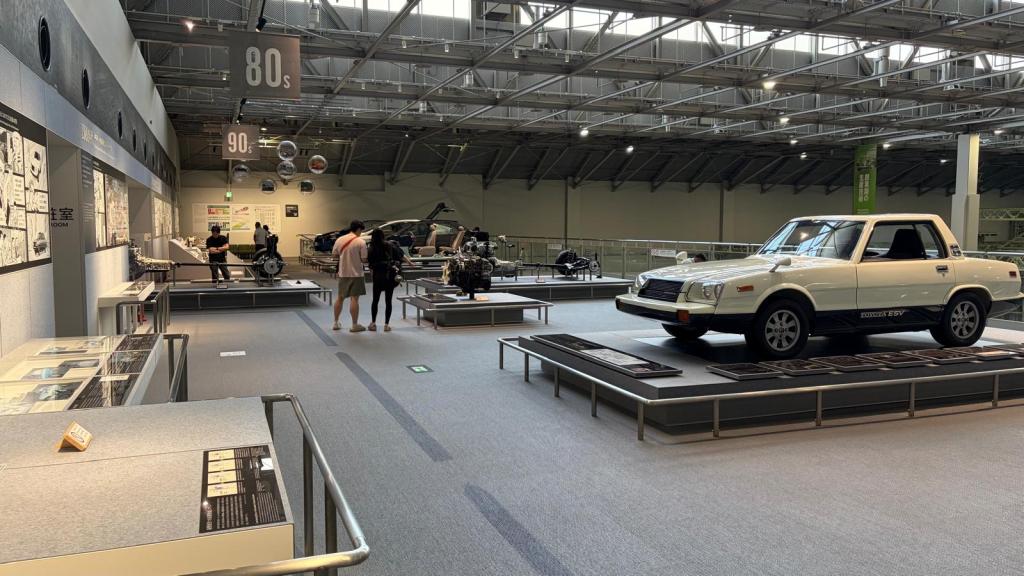
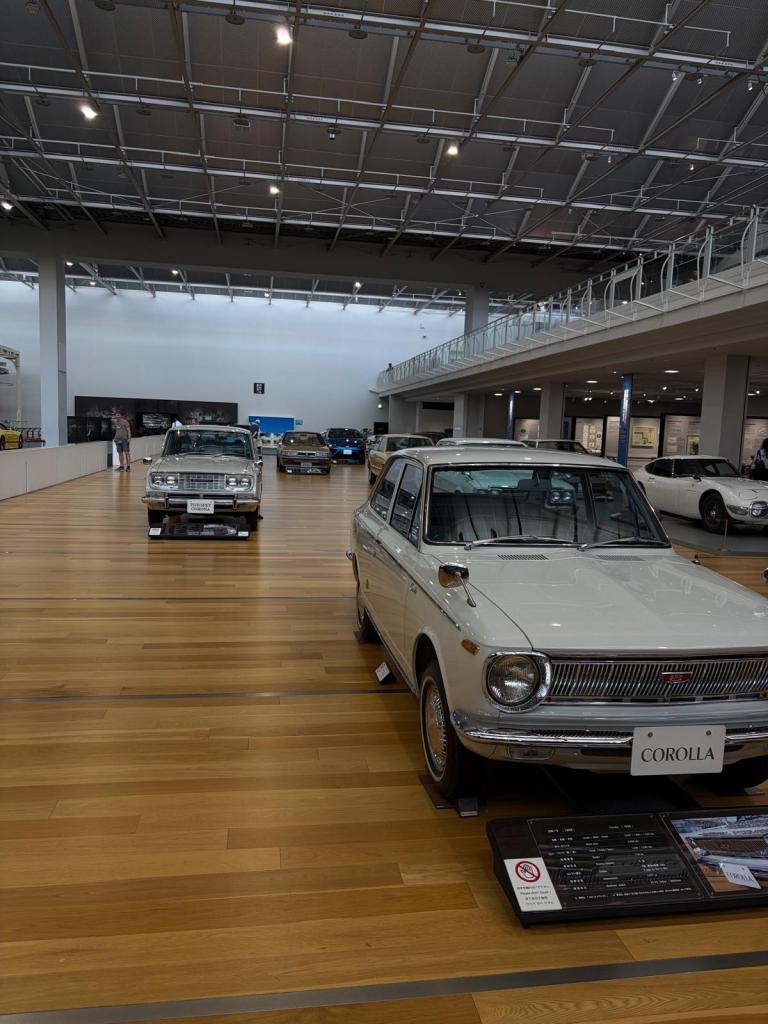
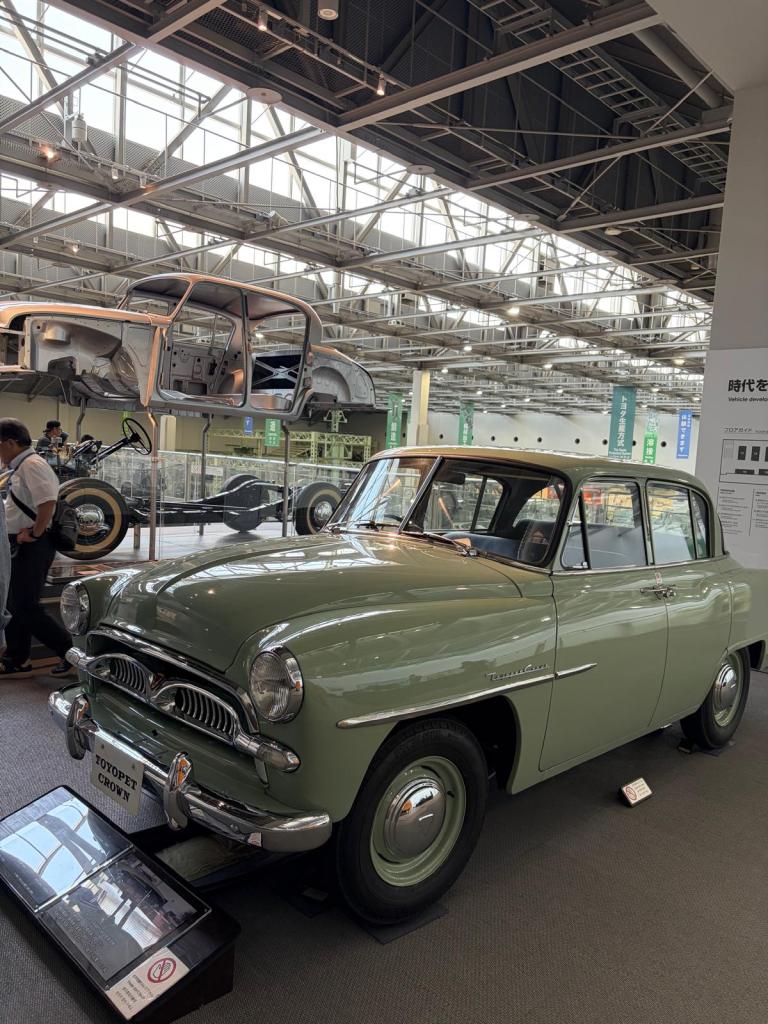
The factory floor exhibits — loom machines, original metal-stamping equipment — make the scale of the operation visible in a way that numbers alone don’t. How a country that small came to dominate an industry that competitive is the question the museum is quietly answering the whole time.
One moment from the cultural exhibits stays with me. Kiichiro resigned in 1950 to take personal responsibility for layoffs during the postwar production crisis. He bore the cost of a collective failure. That ethic — a leader absorbs what the institution cannot — is still embedded in Japanese corporate culture. Pachinko shows the inverse: Korean characters inside Japanese institutions constantly bearing costs assigned to them by structures that never take responsibility in return. Same setting, opposite direction of accountability.
Week 3, Day 3 — Kyoto: What the City Gave Up to Look Like This
Wednesday, May 20, 2026
Morning Shinkansen from Nagoya to Kyoto, check-in at the Oakwood Hotel Oike in Nakagyō, then a half-day guided tour through Yasaka Shrine, the Sannen-zaka approach, and Kiyomizu-dera Temple.
First impression of Kyoto: green. Trees everywhere, mountains visible in almost every direction, the city noticeably lower and quieter than Tokyo. Restaurants run slightly more expensive. I try to find a municipal gym nearby and discover they’re all pushed further out from the center. The reason turns out to be worth understanding.
Kyoto runs under the country’s strictest urban preservation regulations. Building heights are capped at 31 meters across much of the core. There are designated Aesthetic Areas around major landmarks, and entire streetscapes are protected as Preservation Districts for Groups of Traditional Buildings. The central wards, including Nakagyō where the hotel sits, are effectively frozen in form. That’s why there’s no gym nearby. It’s also why there are fewer chain businesses, fewer high-rises, fewer of the modern amenities that density normally generates. Kyoto has deliberately traded buildable square footage for historical continuity, and the trade-off is real and ongoing.
Tokyo runs on density and verticality. Kyoto has given up both on purpose. Standing on the terrace at Kiyomizu-dera later in the afternoon, looking out over the city, is when the policy becomes fully visible: the skyline doesn’t have skyscrapers cutting through it. That’s not an accident. It’s the result of decades of regulatory decisions that cost the city something every year and keep producing that view.
The tour itself is excellent. Yasaka Shrine and the Sannen-zaka approach are part of the Higashiyama Preservation District, where narrow lanes and wooden machiya townhouses have been protected since the 1970s. Kiyomizu-dera, founded in 778 CE and a UNESCO World Heritage Site, sits on the slope of Mount Otowa. The long wooden corridor leading toward the main hall is the moment that sticks most — everyone instinctively drops to a whisper without anyone saying a word. The architecture does the work. The lighting, the spacing, the materiality of the wood underfoot all cue a specific behavior, and everyone responds to it without being instructed. That’s one of the things that makes traveling here feel surprisingly navigable even when the rules aren’t written anywhere: the built environment teaches its own etiquette.
The operations connection is direct. Kyoto’s preservation framework is a textbook case of supply chain design being constrained by policy rather than economics. Chain retail, hotel high-rises, and large fitness facilities all have the demand signals to locate downtown. The regulatory environment forces them outward regardless. That’s the same dynamic that shapes supply chain decisions whenever non-market constraints — tariffs, environmental rules, labor law, zoning — override the cost-optimization logic and have to be treated as fixed parameters rather than variables.
Week 3, Day 4 — Kyoto: Trade-offs All the Way Down
Thursday, May 21, 2026
Two hours of class in the morning, Nijō Castle in the afternoon, and an Anytime Fitness afterward that turns out to be its own kind of case study.
Chapter 12 covers supply chain performance evaluation, and it’s the most directly useful classroom content of the week. The framework: cost-to-serve, lead time variability, inventory turns, fill rate, supply base concentration — and how each gets weighted differently depending on strategy. The core point the professor keeps returning to is that supply chain improvement is a series of trade-offs, not absolute optimizations. There is no objectively best supply chain. There is only a supply chain that is well-aligned with a chosen strategy, and one that isn’t. Improving on one dimension — speed, say — will worsen another, usually cost or resilience. Naming those choices explicitly is the actual work.
That framing immediately organizes everything we’ve seen at the site visits. The decisions Nippon Express and DHL were each making aren’t about finding the optimal answer; they’re about which trade-off each company has decided is acceptable given its strategy. The COVID-era supply chain failures fit the same structure: not bad luck, but the downstream cost of optimization choices that looked rational until the assumption underneath them broke.
Nijō Castle lands more on the historical layer than the visual one. After a week of temples and shrines the aesthetic is starting to blur, and my first impression is underwhelmed. Then I read more afterward. The castle was built in 1603 by Tokugawa Ieyasu, the same shogunate Michi-san walked us through earlier in the trip, and it’s also the exact room where the final shogun returned power to Emperor Meiji in 1867 — the formal end of 264 years of Tokugawa rule. That reframes the building from another temple-style complex into a specific, datable inflection point. The space itself isn’t particularly remarkable. What happened in it is.
The nightingale floors are worth noting separately. The corridors are engineered to chirp loudly underfoot when stepped on, so no intruder could approach the shogun’s chambers undetected. It’s the same design instinct visible elsewhere in Japan — behavior shaped by the built environment rather than enforced after the fact. The corridor at Kiyomizu-dera quieted everyone without a sign. The nightingale floor stops an assassin without a guard. The architecture does the governance work.
Anytime Fitness afterward is the cleanest example yet of how globalized chain operations look essentially identical across borders. The equipment layout, the lighting, the membership interface — nearly indistinguishable from a US location. The clientele is also mostly non-Japanese-looking, which suggests the gym isn’t just importing a physical environment; it’s importing a subculture that travels with the brand. A complete environment, packaged and replicated.
The walk there confirms what I’d already noticed about Kyoto’s retail character: the city tilts heavily toward designer stores and higher-priced goods. The preservation laws that push utilitarian businesses outward also shape what fills the space that remains.
Week 3 Day 5 — Friday Kyoto, Kyoto Seika University
Date: May 22, 2026
Location: Kyoto, Kyoto Seika University
Today’s Activities: Free morning at the gym and exploring the area, then an afternoon visit to Kyoto Seika University for a guided session with Jennifer, student interaction, and a campus tour.
Observations: Kyoto Seika is built around creative majors: media, photography, music, and manga, which I didn’t know was a degree program anywhere. The student body had a noticeable international tilt; a good number were Chinese students who’d moved to Japan, and one of them had spent a stretch of his life in Chicago. The overarching pattern I picked up talking to them was that what they study is genuinely what they like, in a very direct way. I’d ask what they liked to do, and they’d say music, or photography, or animation, and that would be the major. It’s cut and dry. Jennifer, who led the visit, also had a memorable story. She grew up outside Chicago, found Japan to be the place that actually let her grow into herself, and has since built a life here with a husband and a kid.
Reflections: The student conversations stuck with me because they ran on a different premise than how I approach my own degree. EE was a decision shaped by interest plus career strategy plus what would compound over time. Their answers were closer to interest first, full stop. I’m not sure one model is better, both seem to produce serious people, but the cleanliness of “I like X so I study X” makes me wonder how much American university culture has tangled passion and career hedging into the same decision. Jennifer’s story was the other piece I keep coming back to. We’re both people who moved abroad as kids and built lives in a different culture (Brazil-to-US for me, US-to-Japan for her), but she chose her destination as an adult and made it stick, which is a different kind of move than being relocated as a child. It was the first time on this trip I’d talked to someone whose path mapped that closely onto mine in shape, if not direction.
Connections: Light tie-in here; nothing from today maps directly onto supply chain content, and forcing one would feel artificial.
Cultural Insights: The international students at Seika and Jennifer’s life in Kyoto sit in a different register than Pachinko’s Korean characters, who were stuck in Japan as a legacy of colonial displacement and never had the option to fully belong. The contrast is generational and structural: Sunja, Noa, and Solomon were shaped by a Japan that closed doors on them by design, while the students I talked to chose Japan as a place that opened doors, with manga and creative work as legitimate entry points rather than the pachinko parlors Mozasu had to settle for. The same country that excluded one wave of migrants now actively recruits another.
Week 3, Day 6 — Nara: Sacred Deer and the Cost of Preservation
Saturday, May 30, 2026
Nara is deer. A lot of deer. The animals are fascinating until the sheer volume of them becomes overwhelming — at some point the park stops feeling like a cultural site and starts feeling like a very organized petting zoo that got out of hand.
The cultural framework around them is worth understanding. The deer are considered sacred messengers of the kami at Kasuga Shrine and cannot be hunted. The leading cause of death is vehicle accidents. Of roughly 140 deer deaths recorded in the year through July 2025, 36 were traffic-related and another 30 from disease. For comparison: American drivers hit somewhere between 1.5 and 2.1 million deer annually, killing roughly 440 people in the process, while hunters legally take another 6.3 million white-tailed deer each year. The same species, under completely different legal and cultural frameworks. Tradition wins on paper in Nara. Modernity wins on the road. The 36 traffic deaths per year is what the gap between the two actually measures.
I start thinking about the economics of maintaining a place like this — the temples, the parks, the deer foundation running annual population surveys, all publicly maintained at a level no equivalent US site approaches. The data afterward is sharper than I expected. Japan’s travel and tourism sector contributed roughly 7.5% of GDP in 2024, around 44.6 trillion yen, with inbound visitors hitting a record 36.9 million and spending 8.1 trillion yen, up 53% year on year. France draws around 100 million annual visitors and tourism accounts for roughly 9% of French GDP — so Japan hasn’t reached that scale, but the growth rate is steeper and the weak yen has been part of the engine.
What that means operationally: tourism in Japan now functions as a strategic export sector, and preservation infrastructure — temples, deer parks, protected streetscapes — is an economic asset being actively maintained as such, not just a cultural inheritance being passively kept alive.
Lunch is a smaller but telling moment. The restaurant is well-organized, the service structured, but the menu combines fried chicken, ramen, and sushi — three cuisines that don’t normally share a kitchen. Superficially all Japanese, functionally more American in its eclecticism. The same country that engineers silence into a temple corridor serves a completely casual menu two kilometers away. Both are Japan. Neither cancels the other.
Week 3, Day 7 — Sunshine Beach: What the National Average Hides
Sunday, May 31, 2026
Free day. I take a 50-minute trip out to Sunshine Beach south of Lake Biwa — a small, quiet town with a beach that’s essentially grass and patches of sand along the lake’s southern edge rather than a typical ocean shoreline. Calm, tourist-free, not another foreigner in sight all day.
The waiters at the restaurant speak English. That surprises me enough to look up the national data afterward. Japan ranks 96th out of 123 countries on the 2025 EF English Proficiency Index, classified as very low proficiency, placing it 17th among 25 Asian countries surveyed. By that average, conversational English in a small-town lake restaurant shouldn’t exist. And yet I keep encountering it.
The explanation I land on: proficiency is job-segmented rather than uniformly distributed. Service workers in tourist-adjacent areas have a direct economic incentive to develop the skill even when the broader population doesn’t. The national average obscures a much sharper distribution underneath — which is also a reminder that national averages obscure a lot in general. Any model that uses a country-level number without asking what the distribution looks like beneath it is working with incomplete information.
The beach town pricing makes a related point from a different angle. Despite being a destination, prices run at normal Kyoto-equivalent levels. The town is close enough to the city that logistics costs stay flat, so there’s no distance premium to recover in the unit price. The Fushimi Inari vending machine logic, running in reverse.
The rest of the day goes to the SCHM3301 financial modeling project. The frame that proves most useful: the distinction between hard numbers — audited financials, contracted prices, measured throughput — and soft numbers — forecasts, estimates, vendor-supplied projections. Every model rests on both. The quality of the model depends on knowing which inputs are which and how much weight each deserves. Applied backward across the whole trip: Nippon Express’s $400 million India target, DHL’s net-zero-by-2050 commitments, Apple’s 3-million-unit Vision Pro forecast — all financial models, all only as reliable as the assumptions underneath them.
Week 4 Summary
This week, I visited the Taiko drum classroom in Higashiyama-ku, the Tea Ceremony with Kimono Wearing in Kyoto, Osaka (Shitennō-ji, Tsutenkaku, Kuromon Ichiba Market, Umeda Sky Building), Fushimi Inari Shrine, the Port of Kobe, Nara (Park, Kasuga Taisha, Tōdai-ji, Mount Wakakusayama), and Sunshine Beach south of Lake Biwa on my free day. The most impactful experience was the Port of Kobe site visit, where the China-vs-US trade volume gap (China imports and exports 3 to 5 times more than the US, which is second) reframed how I think about Japanese logistics dependency.
The most personally resonant moment, though, was learning at Shitennō-ji that Kongō Gumi, the world’s oldest documented company at 1,428 years, was founded in 578 AD by Shigemitsu Kongō, a Korean carpenter invited from Baekje because Japan didn’t yet have miyadaiku capable of building Buddhist temples. The first project the company ever completed is the temple I walked through. This connects directly to our SCHM2301 work on Chapter 13 demand forecasting (the Apple Vision Pro case, where Apple’s 3M-unit target met 390K actual shipments in 2024 and 80K in 2025) and SCHM3301 risk management content, since Kongō Gumi survived 1,400 years of physical disasters but couldn’t survive a single capital-structure mistake during the 1989 asset bubble.
A recurring theme this week was how resilience and barriers to advancement coexist in Japan, often inside the same institutions. Taiko’s deliberate physicality, where every motion is choreographed and the discipline is the form, parallels the small-act endurance Pachinko portrays through characters like Yangjin and Kyunghee. The Port of Kobe’s 1995 earthquake recovery, which cost the port more than two years of operations and permanent market share to competitor ports, is the kind of decades-long persistence story the news cycle doesn’t capture but that defines how Japanese institutions actually rebuild. Mozasu in Pachinko embodies the same arc on a personal scale, rebuilding his family’s economic standing over 30 years of running pachinko parlors while the country pretended that work didn’t count.
On how resilience is expressed in Japanese culture, workplaces, or communities: Resilience here looks more like sustained discipline than dramatic effort. Taiko teaches it through controlled motion. The tea ceremony, refined over 400 years by formal schools, teaches it through ritual repetition. Kongō Gumi expressed it through 40 generations of one family’s craft continuity. The pattern is the same across all of them: meaning is preserved through small, repeated, formalized acts rather than through grand gestures
On contemporary examples of groups facing obstacles similar to Pachinko: The service workers at Sunshine Beach who spoke fluent English despite Japan ranking 96th out of 123 on the EF English Proficiency Index point to something Pachinko dramatizes structurally: opportunity in Japan tends to cluster in specific occupational lanes rather than spread evenly. The novel’s Korean characters were funneled into pachinko parlors because other lanes were closed; today, immigrant workers and lower-status occupational groups still operate within similarly narrow channels, even when the explicit legal barriers have softened.
On how individuals and organizations navigate barriers to advancement: Through specialization and inherited continuity. Kongō Gumi survived by becoming the irreplaceable expert in a niche craft (temple construction) that the formal system needed but couldn’t replicate. The pachinko industry in Pachinko operates by the same logic in reverse: a marginalized group dominates an industry the majority disdains but can’t dislodge. The mechanism is the same; control the lane you can be in, deeply enough that nobody can take it from you.
One question I have heading into the final week is how Japanese small and family businesses, the kind that built 1,400 years of continuous craft expertise, are navigating both demographic decline and the consolidation pressure that finally broke Kongō Gumi in 2006. If the country’s deepest competitive advantage is generational specialization, and the next generation isn’t there to inherit it, what’s the long-arc plan?

