
I have a problem here, because Midrash cannot be separated from Esotericism, especially Jewish Kabbalah, from which the Tarot appropriated symbolism for its practices.
I have an aversion to all of this because it seems to me primarily a product of ignorance and superstition, and it also seems to me to be the worst kind of lie which exists, since it is a half-truth, where truth is more necessary than ever, especially for metaphysics and the perception of reality.
The half-truth is perhaps half of the greater truth we aspire to know, which refers to metaphysics and its ancient form, esotericism, which sheds immense light on what is at stake, on what we need to understand, especially the perception of reality.
Although I may have been a bit harsh, it’s necessary to understand the Tree of Life in Jewish Kabbalah, and essentially I think what I put there should be present when all of this is considered.
The fact is that the Tree of Life, Kabbalah, comes from Genesis 2:9 and Midrash from Genesis 1:26:
Genesis 1:26
“Let us make mankind in our image, in our likeness,” and let them rule over the fish in the sea and the birds in the sky, over the livestock and all the wild animals, and over all the creatures that move along the ground.
Genesis 2:9
Yahweh God made all kinds of trees grow out of the ground—trees that were pleasing to the eye and good for food. In the middle of the garden were the tree of life and the tree of the knowledge of good and evil.
Since the issue here is Midrash, let’s first look at the official Jewish opinion on this:
Midrash explained by a Jewish doctor of theology.
Use automatic translation.
In addition to Emet (Truth), Chesed (Mercy/Compassionate Love), Tzedek (Justice), and Shalom (Peace/Harmony), Jewish tradition teaches that the image and likeness of God (tzelem Elohim) includes other essential , equally profound attributes that were “installed” in human beings as potentials to be developed.
1. The central idea: the divine image as a “set of attributes”
Classical Jewish theology rejects the idea that “the image of God” is physical appearance.
It asserts that we were created with qualities or capacities that reflect aspects of the Creator.
The four attributes of Psalm 85:11 — Emet, Chesed, Tzedek, Shalom — frequently appear as a “ fundamental quartet ”.
Emet (Truth), Chesed (Goodness), Tzedek (Justice/Righteousness), and Shalom (Peace) are central Hebrew concepts in Judaism, often discussed together, especially in Psalm 85:11, which speaks of the meeting of Goodness and Truth, and the kiss of Justice with Peace, representing a vision of divine harmony and ideal human interaction. Midrashic narratives personify these terms as divine attributes, discussing how they interact when God considered the creation of humanity, highlighting their essential roles in building a just and peaceful world.
Meanings of the terms:
Emet (אֱמֶת) : Truth, faithfulness, reality.
Chesed (חֶסֶד ): Kindness, mercy, compassion, loyalty.
Tzedek (צֶדֶק): Justice, righteousness, equity, integrity.
Shalom (שָׁלוֹם): Peace, fullness, completeness, tranquility.
Fundamental Jewish concept: Psalm 85:11
The phrase “Chesed ve’Emet nifgashu, Tzedek v’Shalom nashaku” ( Goodness and Truth meet; Justice and Peace embrace ) is central to the joint understanding of these terms.
It suggests that when goodness and truth intertwine, they give rise to a world where justice and peace flourish.
Midrashic interpretation (Genesis Rabbah):
In some Jewish teachings, these four attributes appear as divine messengers or qualities that debate God’s decision to create human beings, showing their fundamental importance in creation and human endeavor.
Chesed and Tzedek relate to human actions, while Emet and Shalom address essence, with differing viewpoints on whether humanity, prone to conflict (lacking Shalom), should have been created.
Together, these words represent a profound spiritual and ethical framework for living a life of integrity, compassion, and justice, seeking true peace and fulfillment in the world.
The Midrash, the Talmud, and medieval literature (especially Maimonides) expand this into a much larger set of attributes and characteristics.



2. Other traditional attributes of Imago Dei
(A) Binah — Understanding / Ability to discern
The ability to distinguish, analyze, compare, reflect on, and interpret symbols.
In Judaism, it is seen as a divine spark.
“God breathed into man the breath of life—and he became a speaking being.”(Genesis 2:7 — rabbinic interpretation: speaking being = thinking being)
Language and reason are considered divine attributes.
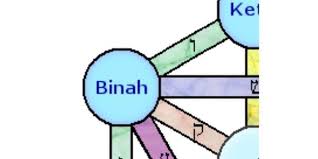
Binah (or Biná ) is the third of the ten Sefirot (divine emanations) in Kabbalah, representing Understanding, the Capacity for Discernment, Analysis, and Concretization , acting as the “Great Mother” that forms and limits the infinite force of Chokmah (Wisdom), allowing the manifestation of the universe and ideas. It is profound perception, intuition, the analysis of situations for judgment, and is responsible for giving form and structure.
Characteristics and Meaning:
- Understanding (Comprection): The ability to deeply understand, analyze, and judge.
- Discernment: The ability to distinguish, perceive timing, intentions, and purposes.
- Formation: Contrasts the infinite force of Chokmah , imposing limits to create form and allow life.
- Mother (Amma): Known as the “Great Mother” for incubating and shaping creative force.
- Intuition: Associated with trust in inner understanding and signs.
Binah is where abstract wisdom ( Chokmah ) becomes comprehensible, analyzable, and concrete, being the source of discernment, intuition, and the ability to give form to things, essential for development and manifestation in the world.
(B) Da’at — Moral consciousness / Relational knowledge
It’s not about “knowing things,” but about knowing oneself to be responsible .
The Midrash says that man was created in the image of God because: “Just as God distinguishes between good and evil, so too can man choose.”
This also establishes free will (bechirah chofshit).
Da’at (knowledge, wisdom) in Kabbalah and other traditions, when associated with moral consciousness or relational knowledge , refers to practical, intuitive, and experiential wisdom that goes beyond purely intellectual knowledge ( Chokmah/Sophia ) or logical understanding, revealing the essence of things and the connection with good and evil through the relationship with others and with the Divine, guiding ethical action and the wisdom of living in harmony, a “knowledge of the heart” fundamental to the construction of character and righteousness.
Da’at as Relational and Moral Knowledge
- Experiential Knowledge (vs. Theoretical): While other levels of knowledge focus on “knowing what,” Da’at is “knowing how” to live, a knowledge that arises from experience and relationship, revealing the true meaning and value of things, especially in the moral and ethical realm.
- Moral Conscience: It is the inner voice that judges actions, an intuitive “knowing” of good and evil that guides the individual, allowing them to take responsibility for their choices, based on their connection with others and with values.
- Mediation between Intellect and Action: Da’at is the point where theoretical understanding (intellect) meets feeling and will, transforming into practical wisdom to act correctly and build an ethical life project.
- Knowledge of the “Self” and the Other: This implies knowing oneself and others at a deep level, fundamental for building healthy and just relationships based on mutual respect and truth.
- The Divine Voice Within: From a more spiritual perspective, Da’at is where divine law resonates, allowing the individual to “know” the path to good, guided by God, as part of His image and likeness.
Da’at is not just knowledge, but a knowledge that is felt, lived, and related to, forming the basis for moral awareness and the ability to act ethically and fully in life.
(C) Rachamim — Visceral compassion (deeper than Chesed)
Chesed is active, compassionate love.
Rachamim comes from rechem = womb.
It is instinctive compassion, maternal fiber, visceral.
It is an explicit divine attribute, repeated in Exodus 34:6.
In human beings, it means: the capacity to suffer with others.
Rachamim (רַחֲמִים) is a Hebrew word meaning mercy and deep compassion , derived from the root rechem (womb), evoking a visceral and protective love, like that of a mother for her child, being the basis for unconditional love and restoration.
Key points:
- Origin: It comes from rechem , which means womb or maternal lap, symbolizing a love that nourishes, welcomes, and generates life.
- Deeper Meaning: It is not just forgiveness, but a love that comes from the heart, a compassion that defends what is good and protects the vulnerable, even in moments of despair.
- Biblical Usage: It is the most commonly used Hebrew word to describe Divine Mercy in the Old Testament, representing God’s tenderness and care.
- Family Connection: This can also refer to family ties and the connection between parents and children, the love and protection inherent in this relationship.
Rachamim is the personification of the deepest and most unconditional love, a force that welcomes, sustains, and restores.
(D) Netinat Lev — Capacity for repentance and return (Teshuvá)
The Talmud states: “Teshuvah (repentance) was created before the world.”
This means that human beings only exist fully because they are capable of starting over .
No animal has this type of moral self-review.
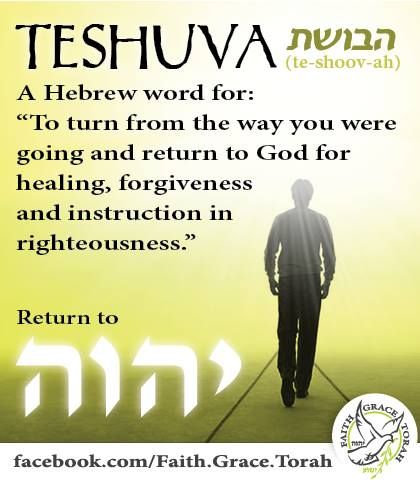
Teshuvá ( תשובה ), in Hebrew, literally means “return”Repentance, in the Jewish context, refers to a profound process of repentance, self-transformation, and return to God’s path or righteousness, going beyond simple remorse to include behavioral change and reconciliation. It is a central concept in Judaism, especially during the Ten Days of Teshuvah (between Rosh Hashanah and Yom Kippur), symbolizing the opportunity to correct mistakes and restore the soul, representing a wholehearted return to divine purpose.
Key aspects of Teshuvah:
- Return: The central idea is to return to a state of purity or to God, from where the person has strayed.
- Repentance: It involves recognizing the wrongdoing, feeling regret, confessing (before God), and, crucially, changing behavior.
- Self-transformation: The goal is a lasting ethical and spiritual change, not just a fleeting feeling of guilt.
- Practical application: This involves concrete acts of correction, seeking justice and righteousness, and may involve reconciliation with others.
- Baal Teshuvah: One who does teshuvah is called a baal teshuvah, which means “master of return,” describing someone who, through experience, reaches a deeper level of commitment.
Teshuvah is an invitation to a complete and sincere return, a journey of spiritual and ethical renewal, fundamental in the Jewish tradition.

(E) Yetzirah — Creativity
God creates the world — man creates culture.
The Midrash says: “Everything that God created, He left incomplete for man to complete.”
Creativity is seen as co-participation in the divine work .
Yetzirah (יְצִירָה) in Hebrew means “Training” or “Creation”, referring to the process of giving form to primordial matter, being one of the Four Worlds in Kabbalah ( Olam Yetzirah ), the realm of emotions and the formation of angels and souls, and also the name of the ancient and enigmatic Jewish mystical text, the Sefer Yetzirah (Book of Formation), which describes the creation of the universe through the letters of the Hebrew alphabet and the sefirot.
In Context:
- The Four Worlds (Kabbalah): Yetzirah is the third world, coming after Beriah (Creation) and before Assiah (Action), where what was created on higher levels takes on body and form, with emotions predominating ( sefirot from Hesed to Yesod).
- Sefer Yetzirah (Book of Formation): A fundamental esoteric text detailing how God created the cosmos using the 22 Hebrew letters and the 10 sefirot (numbers/principles), serving as a guide for meditation and understanding the secrets of creation.
- Literal Meaning: The word can also refer to any created object or the act of creating itself (such as a work of art), highlighting the idea of shaping and giving structure.
In summary, Yetzirah is a central concept in Jewish mysticism linked to the formation, structure, emotion, and manifestation process of the divine in the universe, both at the cosmological level (the Worlds) and at the textual level (the Sefer Yetzirah ).
They gave rise to the four classical elements of Western Philosophy: Water, Fire, Earth, and Air.
(F) Kedushá — Capacity to sanctify time and action
God sanctifies the seventh day — man sanctifies it through rituals, ethics, and care.
The classic rabbinical question is: “How can a human being, who is limited, create holiness?”
Answer: “Because God gave man a portion of his own capacity for consecration.”
Kedusha (קדושה) means holiness, separation, or consecration in Judaism, a central concept referring to dedication to God and elevation above the mundane, appearing both as a concept (the idea of being holy) and as a prayer (the recitation of verses about the holiness of God) during religious services, especially in the Amidah, symbolizing the union of the people with angelic praises:
- To be set apart for God: This means being distinct from the ordinary, consecrated to God, not just being separate, but set apart for a divine purpose, being “wholly other”.
- Elevation: The idea of rising to a higher spiritual level, using the mind and thought in a divine way.
- Origin: It derives from the Hebrew root kadosh (holy), present in the Torah, as in “You shall be holy, for I, the Lord your God, am holy” (Leviticus 19:2).
The Kedushah Prayer:
- Angelic Prayer: This is a special prayer recited when there is a minyan (quorum of 10 adults), containing the same verses that the angels sing to God (Isaiah 6:3 and Ezekiel 3:12).
- Meaning: It strengthens the connection between human prayer and heavenly praise, transforming the service of prayer into an act of sanctification.
- Practice: When reciting “Holy, Holy, Holy,” the faithful stand on tiptoe, symbolizing aspiration and elevation, imitating the angels.
Difference in terminology:
- Do not confuse with Kiddush (blessing over wine on Shabbat/holidays) or Kaddish (prayer for the dead).
In short, Kedusha is the pursuit of holiness, separation, and dedication to God, expressed both in a lifestyle concept and in specific prayers that celebrate divine majesty.
(G) Achrayut — Responsibility / Care
It derives from acher (the other).
Man is created in the image of God because:
“Just as God sustains the world, so man sustains his neighbor.”
“Achrayut” is generally translated as “responsibility,” although its connotations are subtly different. It is widely used throughout the Jewish world.
In Orthodox communities, “achrayus” is colloquially used to refer to the religious responsibility one has to improve or rectify a given situation.
In modern Hebrew, “achrayut” is a word frequently used in political and military circles, denoting the responsibility of commanders for the successes and costs of their decisions.
(H) Tiferet — Harmony between opposites
In Kabbalah, God is the unity that integrates antagonistic forces.
Man, created in his image, is called to:
- balancing reason and emotion,
- justice and mercy,
- truth and peace,
- courage and humility.
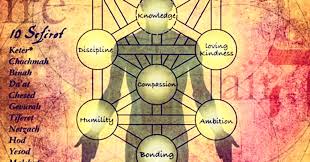
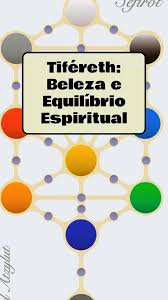
Tiferet (or Tiphareth ), in Kabbalah, means “Beauty” It represents the point of balance and harmony in the Tree of Life, merging opposites such as goodness ( Chesed ) and discipline ( Gevurah ) to create compassion, beauty, and the true image of God in man, being associated with the Sun and self-knowledge. It is the sephirah that reflects divine glory in a comprehensible way and the center of human spiritual experience.
Main Meanings and Concepts:
- Beauty and Harmony: Its literal translation is beauty, representing the harmony resulting from the union of opposing forces.
- Balance: Combines Chesed (love/benevolence) and Gevurah (strength/severity) so that Divine Light can be received without overburdening created beings, fostering mercy and compassion.
- Center: It occupies the center of the Tree of Life, acting as a mirror of the whole and a point of connection between the upper and lower sefirot.
- Self-awareness: In human beings, it is linked to clarity, self-confidence, and a balanced perception of oneself, serving as a path to self-knowledge and enlightenment.
- Correspondences: Symbolized by the Sun (giver of life and light) and the Hebrew letter Shin (ש).
Tiferet is where divine, loving, and restraining energies merge to create a beautiful and sustainable reality, manifesting God’s glory in an accessible way and reflecting the individual’s highest “Self,” which is a microcosm of the universe.
Tiferet (or Tiphareth ), in Kabbalah, means “Beauty” It represents the point of balance and harmony in the Tree of Life, merging opposites such as goodness ( Chesed ) and discipline ( Gevurah ) to create compassion, beauty, and the true image of God in man, being associated with the Sun and self-knowledge. It is the sephirah that reflects divine glory in a comprehensible way and the center of human spiritual experience.
Main Meanings and Concepts:
- Beauty and Harmony: Its literal translation is beauty, representing the harmony resulting from the union of opposing forces.
- Balance: Combines Chesed (love/benevolence) and Gevurah (strength/severity) so that Divine Light can be received without overburdening created beings, fostering mercy and compassion.
- Center: It occupies the center of the Tree of Life, acting as a mirror of the whole and a point of connection between the upper and lower sefirot.
- Self-awareness: In human beings, it is linked to clarity, self-confidence, and a balanced perception of oneself, serving as a path to self-knowledge and enlightenment.
- Correspondences: Symbolized by the Sun (giver of life and light) and the Hebrew letter Shin (ש).
In Essence:
Tiferet is where divine, loving, and restraining energies merge to create a beautiful and sustainable reality, manifesting God’s glory in an accessible way and reflecting the individual’s highest “Self,” which is a microcosm of the universe.

3. Imago Dei has a broader set of features.
In addition to the four attributes of Psalm 85:11, Jewish tradition recognizes that the image and likeness of God includes:
| Attribute | Description |
|---|---|
| Emet | Truth / righteousness |
| Chesed | active compassionate love |
| Tzedek | Justice, responsibility |
| Shalom | Peace, harmony |
| Binah | Understanding, discernment |
| Da’at | Moral conscience |
| Rachamim | Deep compassion |
| Yetzirah | Creativity |
| Kedushah | Capacity to sanctify |
| Teshuvá | Return, new beginning |
| Achrayut | Responsibility for others |
| Tiferet | Integration of opposites |
These attributes form the Jewish view of what makes a human being human.
How is this put into practice?
I extract this from ” Dressing the Moral Body ” by Rabbi Nilton Bonder: Truth and its Garments
In the text of Genesis, God says: “Let us make man!” (Gen 1:26). The Midrash speculates on this plural form – “Let us make” – questioning who God is addressing or consulting in this statement. One explanation is that God might be arguing with the Attributes of Creation.
Rabbi Shimon said: “When the Creator decided to create humankind, the angels formed two factions: one saying, ‘Yes, let it be created!’ and the other saying, ‘No, let it not be created!’ That is why it is written (Psalm 85:11): ‘Mercy and Truth clashed; Righteousness and Peace kissed each other.’ Compassion said, ‘Let humankind be created because it will spread acts of compassion!’; Truth said, ‘Let it not be created because it will be a heap of falsehoods!’; Righteousness said, ‘Let it be created because it will be capable of discerning with righteousness!’; Peace said, ‘Let it not be created because it will proliferate discord!’”
Faced with this situation of indecision, what did the Creator do? The Creator took Truth and threw it to the ground. The angels were stunned: ‘Sovereign of the Universe, why do You despise that which is Your Seal and Your Seal?’
God answered: ‘Let truth rise from the ground!’ As it is written (Psalm 85:12): ‘Truth will spring up from the earth, and righteousness will look down from heaven.’ (Midrash Rabbah, Genesis 8:5)
In this exegesis of the creation of humankind, consciousness is a faculty that comes at the cost of Truth. The characteristics of consciousness are rejected by both Truth and Peace because they are antagonistic. The price for the creation of consciousness is the abdication of Truth. Peace remains, but without its coupled force with Truth, it will always be temporary. There will be no permanent Peace until Truth is rescued and reinstated, sprouting from the ground and emerging from the exile to which it has been subjected.
The greatest attribute of consciousness is discernment. It allows both the arguments that establish justice and the identifications that institute empathy and compassion. These attributes of Justice and Compassion are privileged with the creation of the conscious species. However, this same consciousness can only exist by clothing, covering the truth. Because the Self, in essence, does not exist, truth would obscure the possibility of imagination and the images that constitute it. Without images, it is not possible to see oneself because there is no “self.” Death, which is the undoing of all these compositions of images, is for this reason called emet , the truth, in the Jewish tradition.
When truth springs from the ground, our presence is threatened. More than that, the phrase from the Psalm “Emet Me-arets Titsmach” (Truth will spring from the earth!) forms the word emet with its initials. Perhaps it is no coincidence that it is the same ground that swallows our bodies, and from there we rediscover the truth in all its nakedness. Only death will have the capacity to fully restore Truth.
Dubnov’s Maggid, one of the great storytellers of the Hasidic tradition, presents the question of Truth thus:
One of the “Garments” of Truth
The story, presented in the play “The Immoral Soul” by the same author, tells of a very poor woman who seeks out a Rabbi to assess whether the chicken she intends to prepare for her children meets the dietary norms of tradition. She is received by the Rabbi’s wife, who asks her to wait while she consults her husband. The Rabbi examines the chicken and consults his books, then examines it again and consults his books once more, finally determining that the chicken does not meet the traditional standards. Then the Rabbi’s wife approaches the woman and informs her that the chicken is perfectly safe to eat. Hearing what his wife says, the Rabbi approaches her as soon as she leaves: “Why didn’t you tell her the truth as I did?” The woman replied immediately: “Because you looked at the chicken and then at the books, then at the books and then at the chicken and said it wasn’t suitable! But I looked at the chicken and then at the woman, then at the woman and then at the chicken and said it was fine!”
There is a variation of this story where the Rabbi, realizing the situation and seeing that the hen is unsuitable, asks his son to go to the market and buy a chicken that meets the conditions and replaces it without the woman noticing.
_________________________________________________________________________________________________________
So much for Midrash.
Let’s try to reconcile Midrash and Kaballah and explain why they became mixed up and how to put all that in such perspective that each one gets its own:

