
I was shocked by the film about the alleged relationship between the poet Thorkild Bjørnvig and Karen Blixen. I was even more shocked when I looked up the original text that originated the film’s script. The movie can be seen at Amazon Prime, as of this date July of 2023.
It seems impossible to me that a spirit of the caliber that created Babette’s Feast could contain what is portrayed in the story and in the film. Before starting it up, I present a summary of the Babette’s Feast:
“Babette’s Feast” is a short story written by Karen Blixen (also known as Isak Dinesen), originally published in 1950 as part of the collection “Anecdotes of Destiny.” The story revolves around themes of sacrifice, art, selflessness, and the transformative power of beauty and indulgence.
The central concern in “Babette’s Feast” can be understood through the following key themes:
- Sacrifice and Selflessness: The story portrays the selfless sacrifices made by the two elderly sisters, Martine and Philippa, who have given up their personal desires and opportunities for the sake of their religious community. They prioritize the well-being of others over their own happiness, which leads to a life of simplicity and self-denial.
- Art and Creativity: Babette, a refugee from political turmoil in France, brings her exceptional culinary skills to the community. Her artistry in cooking becomes a metaphor for the creative expression and the potential for beauty to enrich and elevate human lives.
- Transformation through Indulgence: The extravagant feast that Babette prepares for the community represents a moment of indulgence and sensory pleasure that contrasts with the ascetic lifestyle of the villagers. Through this feast, Babette’s art and generosity transform the participants, momentarily freeing them from their rigid beliefs and inhibitions.
- The Power of Beauty: The exquisite food and the sensory experience of the feast awaken dormant emotions and desires within the villagers, reminding them of the joy and beauty of life.
- Redemption and Grace: Babette’s act of preparing the feast is also an act of personal redemption. The feast serves as a vehicle for grace, symbolizing the potential for spiritual and emotional transformation.
Overall, “Babette’s Feast” explores the themes of sacrifice, art, indulgence, and the potential for human connections to be deepened through shared experiences. The story highlights the tension between self-denial and self-indulgence, and it emphasizes the capacity of art and beauty to inspire profound change and moments of grace.
The genealogy of Babette’s Feast can be seen in the excellent paper by Christian M. Hermansen entitled:“It was not for your sake,” On Reading Isak Dinesen/ Karen Blixen’s Babette’s Feast.
The Pact
This post will discuss the movie, perhaps more the original text, with the same title, that the director Bille August did, working off a script from Christian Torpe based mainly on Bjørnvig’s book “Pagten” (The Pact) which explores the relation between Karen Blixen and Thorkild Bjørnvig.
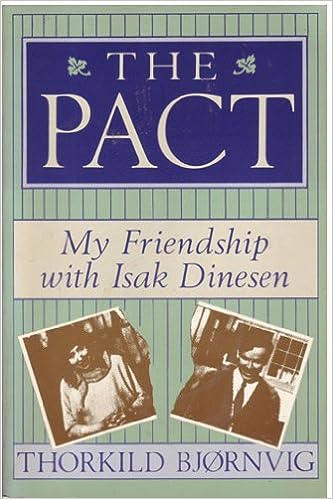
I used the text which appeared in The New Criterion Vol. 41, No. 10 / June 2023, skipping the excellent introduction, by William Jay Smith which can be read there, because is skewed to my objective here.
It is not mentioned neither by William Jay Smith or in the movie, but actually “The Pact” is inspired by Bjørnvig’s own experiences and relationships, including his deep intellectual and emotional connection with Isak Dinesen (Karen Blixen) but it is not about her. The novel is characterized by its introspective and philosophical narrative, which delves into the complexities of human relationships and the search for meaning in life.
The story revolves around the protagonist’s relationship with a woman named Helle, with whom he forms a “pact” to explore and understand the nature of existence and human connection. The narrative weaves together themes of love, art, philosophy, and the existential challenges of modern life.
Helle might share some of Dinesen’s characteristics, but it is not her.
At the opening of the movie, there is this phrase which suposedly Karen Blixen (aka Isak Dinesen) have sealed the pact she had with Thorkild Bjørnvig:
In Danish, it spells:
Ikke pa dit ansigt
mein pa din maske
skal jeg kende digt
In English:
Not on your face
but on your mask
do I know poetry
And in my language, Portuguese, the movie translated as
devo conhecê-lo não pelo seu rosto, mas por sua máscara
I should know you not by your face but by your mask
And it seems to me that the adaptation Christian Torpe did lose the original meaning and took the second idea and worked the whole subject under the idea that the persona that Thorkild Bjørnvig had, which operated like a mask, should be removed, better yet, destroyed and replaced with a mask which should be a combination of the ideas of Nietzsche, Goethe, Rainer Maria Rilke (and in the film the character representing Blixen says it) and since she adds that it was being made under the devil, better yet, sacramented by the devil, I should add Mephistopheles, perhaps with Thomas Mann in mind.
Before that was expressed clearly, my wife suggested that she was doing it along the lines which Elijah did on Elisha (which will be explained on the text), which to me, seems doubtful, to say the least.
Let’s take a look in the original text by Thorkild Bjørnvig, The Pact:
The pact is made
As an undergraduate I had read Seven Gothic Tales and Winter’s Tales by Isak Dinesen (Karen Blixen). I knew nothing about the author; who she was concerned me no more than who might have told the tales of The Arabian Nights or the Grimm Fairy Tales. I did not in fact think that she was among the living, and I was quite astonished when Ole Wivel suggested that we get in touch with her when he and I began our search for contributors to the magazine Heretica.(see note) He even knew her personally. It seemed fantastic to me that Karen Blixen was alive and perhaps might contribute to the periodical, as Ole Wivel seemed to think was not impossible. In June 1947 we decided to visit her to present our plans, but she happened to be out of the country. It was not until the winter of 1948 that I finally met Karen Blixen for the first time.
Note: Even though I am seeing it in English and I don’t know how he wrote it in Danish, it strikes me the way he refers to the person who later would play such an important role in his life, and it reflects how deep inside of him he had her, which was the case when he wrote that.
Note about Heretica: Heretica (1948-1953) was edited in 1948-49 by Thorkild Bjørnvig and Bjørn Poulsen; in 1950-51 by Ole Wivel and Martin A. Hansen; and in 1952-53 by Frank Jaeger and Tage Skou-Hansen. The periodical, which was anti-ideological, revolted against the narrow intellectualism of twentieth-century culture and put its main stress on art as humanity’s purest and noblest expression. Ole Wivel (1921- ), author, teacher, and close friend of Thorkild Bjørnvig’s, has been since 1973 director of the Gyldendal Publishing House.
I received one day quite unexpectedly an invitation from her to a small dinner party in the winter quarters of her house at Rungstedlund. Karen Blixen wrote that her niece, Countess Caritas Bernstorff-Gyldensteen, was absolutely enchanted with my poems and wanted very much to meet me. When I read the invitation I became slightly dizzy; I was to meet my first real reader, one who even wanted to meet me and had said so; moreover, one who was the daughter of a count and a niece of the Baroness! I paused, overcome with excitement; it was as if the door had been thrown wide open to the great world; soon I would stand on the threshold of fame and adventure: I was to be lionized (treated as a celebrity). I slept little that night; several times I pulled on my rubber boots and in my pajamas paced about in the cold thicket under the big trees to cool my burning expectations.
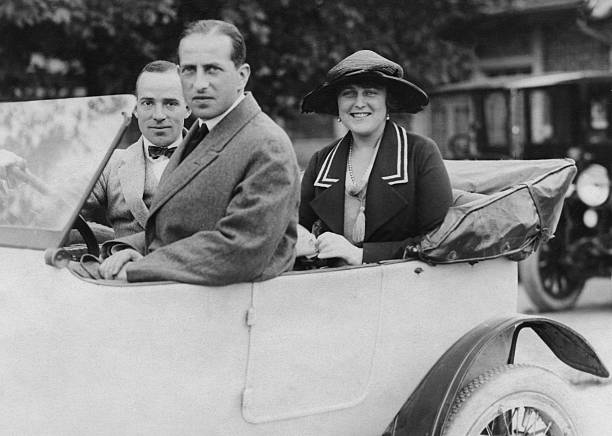
Note: I wonder why Christian Torpe in the movie put in the mouth of Karen Blixen that one of her few pleasures was to see these people go crazy and behave like animals dancing after a few drinks
The next evening I cycled to Rungstedlund, where I was shown in and introduced to Karen Blixen, her brother Thomas Dinesen, and to the Countess and her family. The ladies wore long dresses as for a formal party, and that seemed a bit unusual in the relatively small winter quarters, as if a ballroom had suddenly been telescoped into a magic box. After sherry and salted almonds, we went in to dinner and I was placed next to the lady of my dreams. The Countess was stately and amiable, and the situation, as well as the sherry, on top of the cold bicycle trip, went a bit to my head.
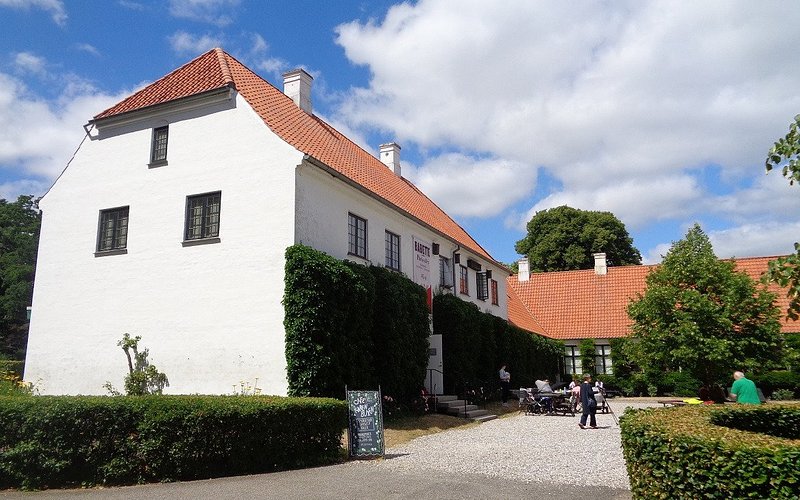
After we were seated and Karen Blixen had left the room for a moment, the Countess quickly leaned over and whispered, “I regret that I have not yet had time to read your poems. I’m very sorry, for Tanne [the nickname for Karen Blixen that was used by her relatives and close friends] lent them to me and told me to be sure to read them before this evening. Please, don’t tell her that I haven’t.” My first reader! But I promised not to tell and had no trouble not speaking of it to Karen Blixen. I felt more than odd sitting there, slightly spinning, as if I had stumbled over the threshold to fame instead of making a dignified entry and now had to get to my feet as discreetly as possible. That was greatly facilitated by the fact that the Countess was happily ignorant of my expectations, and suddenly I felt the situation to be completely relieved and burst out in heartwarming laughter. From then on we ate and drank and carried on an excellent conversation about everything under the sun, except my poems. When the evening was over, Karen Blixen invited me to come again soon.
The following spring I moved with my wife and two-year-old son into a prefabricated Finnish frame house across a clearing from Bjørn Poulsen’s log cabin, a few kilometers inland from Vedbaek. To this little spot called “Bjørnebo,” Karen Blixen often came, walking or cycling, to have tea with my wife and me and sometimes to play with our little son. Under the spell of her presence, he would occasionally perform peculiar dances. Once she exclaimed: “Doesn’t he look just like Ophelia in the mad scene?” There was no subject we did not touch on in our conversations, and she repeated her invitation to come to Rungstedlund. From this time on, I went to see her quite frequently and eventually she said that for me the door would always be open; I could literally just walk in. Later in our friendship she amplified her invitation; I could disturb her at any time, even at night, by tossing pebbles at her window, if I had something pressing that I needed to discuss with her. I never dared—and never found the occasion—to accept this characteristically generous offer.
When I reached Rungstedlund, I often found her sitting on an upholstered bench, her legs pulled up beneath her, turned sideways to the window behind her, listening to records. This was always in the winter quarters of her house, and I think she stayed there that entire year. I would sit down and listen to the music without knowing if she had noticed me. I would gaze at her long, sorrowful profile against the spring light or the winter dusk. Perhaps she ignored my presence only while the music lasted, but it sometimes happened that she exclaimed with surprise that she had not heard me come in.
Karen Blixen possessed a special kind of genius. Great talent was, of course, one of its indispensable qualities, but certainly not the only one; only in its organic combination with the rest of her person—mind and body, senses and heart—did talent manifest itself as genius. And apparently it was only in evidence temporarily, under special circumstances, like rare animals or plants. Suddenly it was present, acted and had its effect, and suddenly it was gone. It reminded one of wisdom, but lacked what otherwise is characteristic of wisdom, namely invulnerability and continuity. Almost X-ray-like it would see through the conditions for being and growth in other persons, but abruptly and without transition it would jump from action on their conditions to action on her own. She could with all her heart yearn for responsibility and consistency, but she found it almost unbearable to practice them except in her conduct toward her servants and toward animals. “I wish people would regard me as insane,” she would complain. “It would be such a relief.”
Because Karen Blixen was a woman of sixty-four when I met her (precisely twice as old as I was at the time) and frequently ill, I experienced this special genius mostly in conversations. As our mutual confidence and spiritual exchange grew with each meeting, one afternoon, as we were strolling in the park and had had an exceptionally good conversation, almost perfectly harmonious in its perceptions, she said that I should not write the book about her work which she had originally suggested to me. “That is not the reason we met,” she said. “No, we have met for an entirely different reason. I realize that now, and I will tell you one day about it.”
Our conversations would usually move from matters concerning contemporary poets and my magazine to more general topics such as Eros and Christianity, animals and the cosmos, the war and vivisection, and our often unexpected and spontaneous agreement did not stop the conversation as so often happens—but simply guided it quickly past all nonessentials, and, as if by mighty inertia, into a kind of happy, productive dimension. Above all, she did not tire of impressing on me the necessity of courage, which she felt was held in low esteem at that time. “Everybody is so unhappy because courage is counted for nothing. People today are brought up to be anything but courageous. To be courageous is neither proper nor fashionable. And so no one can be truly happy, for then one must also run the risk of becoming really unhappy, and that, I believe, nobody is. No, it takes courage to be happy. And this you must promise me: never to be afraid, for then you cannot be happy. And what is there to be afraid of?” she concluded with provocative emphasis.
It seemed to me that she touched the very base of my being and swept aside masses of opinions, concepts, and layers of prejudices I did not suspect I had. To be with her and converse with her was an experience that crossed boundaries and opened up the world. When I left her, whether in the intense light of the early spring evening or in rainy darkness along the seashore, I often felt intoxicated with a tremendous expectation of life, greater than I had ever known before. It was like meeting a person of a kind I had heard about in myth and history, and this impression was in keeping with my having originally believed that she was no longer living. Now I certainly felt her living presence, to say the least. On her side, she developed an unusual trust and confidence in me, which I did not understand, but which I reciprocated unconditionally.
I expressed my emotion and gratitude in a letter written to her on January 20, 1950, the same day she had given a lecture which my wife and I attended. Karen Blixen had often spoken of her loneliness, the loss of her servant Farah, and of the absence of kindred spirits around her. I thought the moment had come when I might simply offer to serve her. I wrote:
Dear Baroness Blixen,
The stars were large and close to earth and twinkled in the cold last night as we walked home across the fields. It was as if your eyes and your words had drawn them closer. As I walked, I thought of you, of the evening, of the many evenings I have listened to you and conversed with you. Last night was like a long wonderful monologue at a symposium, a monologue about the secrets and the unpredictability of life, a monologue about Eros, eliciting laughter and tears. Who but you could create such a symposium now that the symposium has become impossible? Who but you could speak to an assembly as if it were made up solely of equals, of beautiful people?
If I told my friends or colleagues about all this, they would think that I had been blinded. But I see clearly; there are no steamed-up windowpanes here to impair my view. My eyesight is good; but those who have not seen you cannot imagine how you really are, how wise, how right, how beautiful. It is altogether too common that a writer proves to be a disappointing, dull-gray appendage to his work I have finally met someone in whom things exist in their proper order, where the work is a splendid appendage to the person, where it is scepter, orb, and staff. I have at last encountered something that has meaning. I have always sought for someone to serve, but have found no one. To command or to serve has been my dream, although I am probably not well suited for either. But allow me, all the same, in the time that is left, to serve you. This will likely be the first and last time in my life when such an occasion arises.
Some day in the future I shall speak of you. Just as you speak of your first servant, so one day will your last servant speak of you. Your servant who knows how clumsy he is, and who fails in all things, except one: his ardent devotion,
Yours,
Thorkild Bjørnvig
Karen Blixen wrote back the next day:
Dear Thorkild Bjørnvig,
Your letter gave me great joy. It is very good to know that there is a person I can trust as I trusted Farah. I shall, therefore, now cast my mantle upon you as Elijah did on Elisha, as a sign that one day I shall let three-fourths of my spirit remain with you.
She considered this exchange of letters to be the foundation of our pact of friendship, and later said so. Our meeting was intended to lead to this pact and not to my writing about her work. In our next meetings she explained to me the essence of the pact: it meant that two people have mutual and perfect trust in each other, a trust of a mystic sort which nothing could touch or shake. One day, while I was seeing her home, she spoke of a play by Heiberg,[3] the one in which the young girl says to the hero, who is in great difficulty: “Now, if you have lost your faith in God, believe in me, and I will give you shelter.” She could see, as she wrote to me later, that I took it to be more than just a quotation. I felt that the trust we experienced was reciprocal and unrestrained. Its center of gravity might shift, but its reciprocity would remain unshakable.
A few months later when Karen Blixen paid us a visit, she took my son in her arms and kissed him in an outburst of tenderness of a sort she did not ordinarily show. The next day I was called to Rungstedlund, where she received me quietly and solemnly in the front room before the fireplace. She immediately began to explain that her kissing my son would not infect him with her disease. I must have seemed thoroughly confused, and so she told me her bitter secret, which she had assumed I already knew. She told me of the disease with which her husband had infected her in Africa, the disease that she gives to Lady Flora in “The Cardinal’s Third Tale,” the one that probably was also Nietzsche’s, namely, syphilis. She explained how it had cut her off from life, not only from the erotic part of life, but also how it had placed a taboo on any bodily contact. “But it is no longer contagious; it is now harmless—to everyone except myself,” she added. Shortly before I left, our conversation turned to Nietzsche, whose Thus Spake Zarathustra she had loved since her youth. “Because you know Nietzsche so well,” she said, “you must tell me if you have found or now find signs of megalomania in me of the kind he had. And if you do see such signs you must warn me as soon as possible; you really owe me that, it is part of our pact; you must defend my honor.””
You can read in detail about Elijah and Elisha, but perhaps summarizinig, it is:
“Elisha is first introduced in 1 Kings 19. The Lord appeared to Elijah and told him that Elisha would succeed him as prophet. Elijah then approached Elisha, who was plowing the field. Elijah threw his cloak over him, and Elisha asked to kiss his mother and father goodbye before going with him. He burned his plow and used the fire to cook his oxen, leaving his past life behind.”
Nietzsche
Nietzsche’s views on marriage and personal relationships were often critical of societal conventions and traditional morality. He questioned the limitations imposed by social norms and the potential suppression of individuality and creativity within the bounds of marriage.
While Nietzsche discussed human desires, passions, and individuality, he did not advocate for or against specific romantic relationships for married individuals. His writings are more concerned with the individual’s quest for self-discovery, personal growth, and the pursuit of a life that affirms one’s own values and desires.
Nietzsche never walked the isle and surprisingly has some very well known sayings about marriage that does not endorse the use Christian Torpe made of marriage using him as reference, and I quote:
The main thrust of Nietzsche’s view on matrimony is that if people are to make a good go of it, romantic feelings and sexual attraction alone won’t suffice; the relationship has to be built on a foundation of strong friendship
“It is not a lack of love, but a lack of friendship that makes unhappy marriages.”
“Ultimately, it is the desire, not the desired, that we love.”
“It is not the strength, but the duration, of great sentiments that makes great men.”
“The best friend will probably acquire the best wife, because a good marriage is founded on the talent for friendship.”
Rainer Maria Rilke
The central concern of Rainer Maria Rilke in “Letters to a Young Poet” is to encourage and guide the young poet, Franz Kappus, in his artistic and personal journey. Rilke addresses fundamental questions and struggles that young artists often face, offering advice and philosophical reflections on various aspects of life and creativity.
Key themes and concerns in the book include:
- Solitude and self-discovery: Rilke encourages the young poet to embrace solitude and introspection as a means to discover his authentic self and voice. He believes that genuine artistic expression arises from within, and one must look inward to find it.
- Art as a necessity: Rilke emphasizes the importance of art as a vocation and a necessity for the artist’s soul. He encourages Kappus to write only if he cannot live without writing, as genuine artistic creation should stem from inner compulsion rather than external motivations.
- Embracing life’s uncertainties: Rilke advises Kappus to embrace the uncertainties and challenges of life, as they contribute to personal growth and the development of one’s creative spirit.
- Patience and perseverance: Rilke emphasizes the need for patience and perseverance in the artistic journey. He urges Kappus to embrace the process of becoming an artist and to have faith in his creative development.
- Love and relationships: Rilke discusses love and romantic relationships, encouraging Kappus to avoid seeking love for the sake of filling a void and instead to cultivate genuine connections that contribute to personal growth.
- Nature as a source of inspiration: Rilke celebrates the beauty and significance of nature as a wellspring of inspiration for artistic creation.
Through his letters, Rainer Maria Rilke provides thoughtful and profound guidance to the young poet, encouraging him to embrace his own unique path and develop his artistic voice. The book has since become a timeless and cherished source of inspiration for artists and anyone seeking a deeper understanding of life’s complexities.
Despite the philosophical and artistic concerns expressed in “Letters to a Young Poet,” Rainer Maria Rilke’s personal life was characterized by complex and often tumultuous romantic relationships with various women.
Throughout his life, Rilke had numerous lovers, and he often relied on the support and sustenance provided by women. Some of his notable relationships include:
- Lou Andreas-Salomé: One of Rilke’s most significant and influential relationships was with Lou Andreas-Salomé, a writer, psychoanalyst, and intellectual. She was older than Rilke and served as his mentor and confidante. Their relationship was complex and intense, with Rilke often expressing his love and admiration for her in his letters.
- Clara Westhoff: Rilke married Clara Westhoff, a sculptor, in 1901. They had a daughter together, Ruth. However, their marriage faced challenges, and they eventually separated.
- Baladine Klossowska: Rilke had a passionate and stormy relationship with Baladine Klossowska, an artist and the mother of the painter Balthus (Balthasar Klossowski de Rola). Their relationship was passionate but ultimately ended.
Rilke’s romantic relationships, particularly with Lou Andreas-Salomé, played a significant role in shaping his personal life and artistic development. His experiences with love, desire, and the complexities of human relationships undoubtedly influenced his writings and artistic sensibilities.
It’s important to recognize that Rainer Maria Rilke, like any individual, had a multifaceted life with various personal experiences and relationships. His artistic pursuits and philosophical insights were informed by his own lived experiences, including his love affairs and encounters with different women.
Lou Andreas Salome had no sexual relashionship with neither her husband neither Rillke or Nietzsche.
Lou Andreas-Salomé was known for her intellectual brilliance and her ability to form deep and meaningful connections with various prominent intellectuals of her time. Her relationships with Nietzsche and Rilke were characterized by intellectual and emotional intimacy, but it is unclear whether they crossed into romantic or sexual territory and generally it is accepted that she didn’t because she didn’t have sexual relashionship not even with her husband, Friedrich Carl Andreas. Although there is limited information available about the private details of their relationship, historical records suggest that their marriage was somewhat unconventional and did not follow traditional norms, i.e, no sexual relations and intelectually open.
I detailed a little bit more on Rilke and Nietzsche because they are mentioned in the film and not in Thorkild’s The Pact and although not explored as such in the movie, the impact of the mentioning of him gives a lot of food for thought for anyone who is aware of the above facts and the obvious connotation of Thorkild and Blixen’s alleged lack of sexual relationship as well as the suggestions she supposedly suggests to him in the film. Thorkild was one of the main translators of Rilke to Danish.
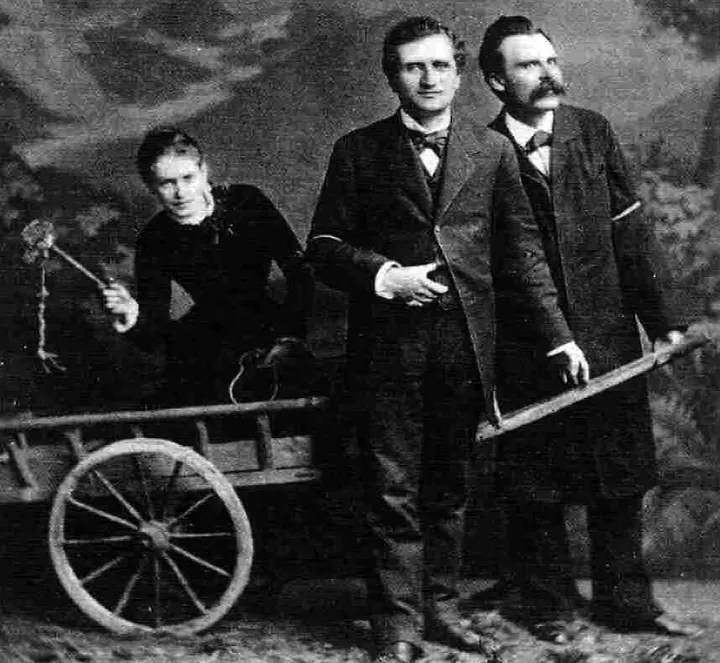
The triangles that Lou Andreas Salomé got into, with her husband Carl Andreas and a third, who was once Nietzsche, in a clear way and another with Rilke, poorly explained and the importance that Freud gave to her, turned her into a legendary figure for the feminism that would have to be discussed in a separate post. Lou Andreas Salome draws attention with the two triangulations discussed here, one, between Karen Blixen while married to Bror Blixen and Denys Finch-Hatton clearly and another with Thorkild very poorly explained that reminds Lou Salome and Rilke. Intellectuals, especially theorists, tend to complicate things and see horns in a horse’s head, elaborate extensively about Lou Andreas Salomé, but do not get to the point. This would have to be discussed in detail, but here are some pictures worth 1000 words, even if we don’t know what words they are:
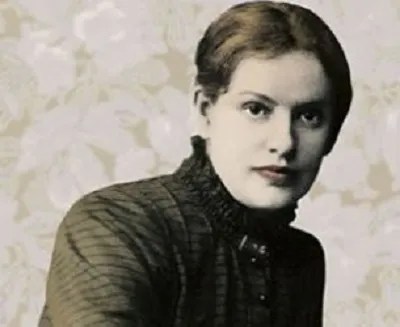
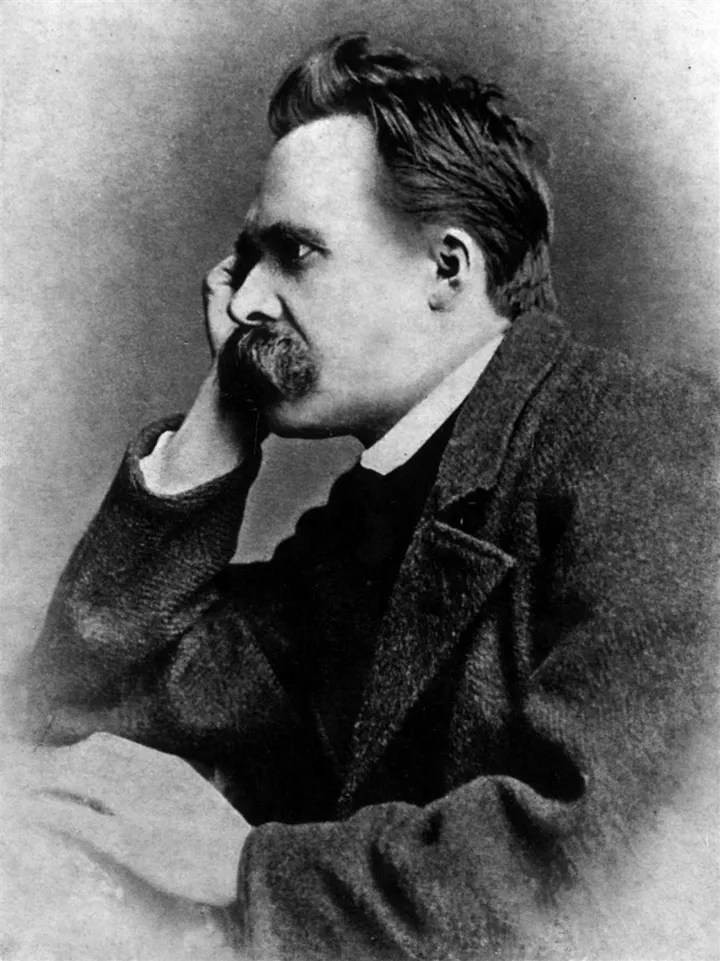
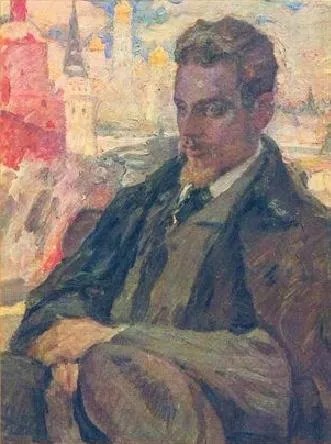
Goethe
Goethe is one of the foremost expressions in German literature, less narrow than Rilke and a lot more “normal” than Nietzsche and deals with much more subjects and for our concern, i.e., the coming of age of Thorkild as a poet, his book The Sorrows of Young Werther is of more interest. It should be also noticed that Thorkild also does not mention Goethe initially in his relationship with Blixen. Obviously his studies later in Germany would include Goethe. Let’s try to sumarize what Goethe thought about our issues:
Johann Wolfgang von Goethe, the German writer, poet, and philosopher, expressed various thoughts about marriage and love in his literary works and personal correspondence. As a prolific writer, his views on these topics can be found in his novels, plays, poems, and letters. Here are some of his perspectives:
- On Marriage: In Goethe’s works, marriage is often portrayed as a social institution that brings stability and order to society. He recognized its importance in providing a foundation for families and contributing to the continuity of communities. However, Goethe also acknowledged that marriage could be a complex and challenging institution, and he explored the dynamics of love, duty, and societal expectations in marital relationships.
- On Love: Love, particularly romantic love, was a central theme in Goethe’s writings. He celebrated the passionate and transformative nature of love, exploring its emotional depth and power in various characters and situations. Love, for Goethe, was an essential aspect of the human experience and a force that could inspire and elevate individuals.
- On Lovers: Goethe often depicted lovers as individuals deeply committed to each other, willing to endure challenges and obstacles for the sake of their affection. He explored the intensity of emotions experienced by lovers, the joys and struggles of their relationships, and the profound impact love can have on one’s life.
One of Goethe’s most famous works that delves into the complexities of love and relationships is the novel “The Sorrows of Young Werther” (1774). The novel explores the passionate and tragic love of the young protagonist, Werther, and the emotional turmoil he experiences.
“The Sorrows of Young Werther” (German: “Die Leiden des jungen Werthers”) by Johann Wolfgang von Goethe, published in 1774, is an epistolary novel that centers around the emotional and psychological struggles of the young protagonist, Werther. The novel explores several main subjects:
- Unrequited Love: The central theme of the novel is Werther’s unrequited love for Charlotte (Lotte), a young woman engaged to someone else. Werther’s infatuation with Lotte consumes him, and he is tormented by the impossibility of their love.
- Romanticism and Sensibility: “The Sorrows of Young Werther” is considered one of the early works of the Romantic literary movement. It delves into the heightened emotions, intense passions, and idealism characteristic of the Romantic era.
- Nature and Solitude: Nature plays a significant role in the novel, reflecting Werther’s emotional state and serving as a solace for his troubled soul. The beauty of nature is juxtaposed with Werther’s inner turmoil, emphasizing his sense of isolation and alienation.
- Individual Freedom and Social Constraints: The novel explores the tension between individual freedom and societal norms. Werther struggles with the constraints imposed by societal conventions, especially in matters of love and marriage.
- Suicide and Despair: As Werther’s emotional pain intensifies, the novel delves into themes of despair and suicide. Werther’s ultimate decision to take his life highlights the devastating consequences of unrequited love and emotional anguish.
- Friendship and Companionship: Werther’s relationship with his friend Wilhelm plays a significant role in the novel. Their friendship provides a means for Werther to express his emotions and find some semblance of understanding and consolation.
“The Sorrows of Young Werther” is a deeply introspective and emotionally charged novel, written in a series of letters from Werther to his friend Wilhelm. It gained immense popularity upon its release and became a symbol of the Romantic movement. The novel’s exploration of passionate love, emotional struggles, and the human psyche continues to resonate with readers and remains a classic of world literature.
I detailed it because those elements are fundamental to the any such a project as The Pact suggests and they can be explored in a infinite way and gives an aura of classic greatness to any romantic narrative.
In the movie there is an interaction between Karen Blixen and Thorkild in the context of the last verse of a poem from “The Sorrows of Young Werther”, which in the original Thorkild does not mention and it seems to me it was added by Christian Torpe perhaps a little skewed to the dialogue:
Only reveal it to the wise,
For the common people soon mock:
I want to praise the living One
Who aspires to death in the fire.
In the night – in which you were begotten,
In which you were begotten – you felt,
Calm down the light that shone,
A very sad discomfort.
You don’t suffer to stay in the dark
Where the shadow condenses.
And you are fascinated by the desire
For more intense communion.
The distances do not stop you,
O moth! and in the afternoons,
Avid for light and flame,
You fly towards the light in which you burn.
Die and change: while You
do not fulfill this destiny,
You are on the dark land
Like a dark pilgrim.
Goethe’s Faust
I mentionned Thomas Mann Mephistopheles, but Goethe’s Faust is the grandaddy of them all.
In Goethe’s literary works, particularly in his masterpiece “Faust,” the theme of selling one’s soul to the devil is a central and recurring motif. “Faust” is a two-part dramatic poem that follows the story of the scholar Heinrich Faust, who makes a pact with the devil, Mephistopheles.
The main elements of this theme in “Faust” include:
- The Quest for Knowledge and Fulfillment: Faust, a scholar disillusioned with the limitations of conventional knowledge, seeks a deeper understanding of life’s mysteries. He desires knowledge and experiences that go beyond the confines of mortal existence.
- The Pact with the Devil: Faust enters into a contract with Mephistopheles, the devil, in which he agrees to give his soul to the devil in exchange for unlimited knowledge, pleasure, and power. Faust hopes to find true fulfillment and transcendence through this pact.
- Temptation and Struggle: After making the pact, Faust faces various temptations and moral dilemmas. He experiences moments of happiness and indulgence, but he also grapples with guilt and remorse as he confronts the consequences of his actions.
- Redemption and Salvation: Throughout the play, Faust’s journey is marked by moments of redemption and spiritual growth. His pursuit of knowledge eventually leads him to a deeper understanding of love, compassion, and human connection.
The theme of selling one’s soul to the devil is symbolic of the human desire for power, knowledge, and transcendence. It reflects the struggle between individual ambition and the potential moral and ethical costs associated with such desires. The character of Faust serves as a representation of the human condition, with his flaws, aspirations, and capacity for both greatness and downfall.
Goethe’s “Faust” is considered one of the greatest works of German literature and a quintessential example of the Romantic movement. It explores profound philosophical questions about human nature, the pursuit of knowledge, the quest for meaning, and the complexities of morality and ethics. The theme of selling one’s soul to the devil adds depth and dramatic tension to the narrative, making “Faust” a timeless and thought-provoking masterpiece.
It should be added that in the movie there is a brief mention of Mme. De Stahel, which I couldn’t find in Thorkild’s writing and seemed to me an attempt of Christian Torpe, who wrote the script of the movie, to bring an aura of Feminism, as Mme.De Stahel is the GrandNanny of Women’s liberation.
De Staël published a provocative, anti-Catholic novel Delphine, in which the femme incomprise (misunderstood woman) living in Paris between 1789 and 1792, is confronted with conservative ideas about divorce after the Concordat of 1801. In this tragic novel, influenced by Goethe’s The Sorrows of Young Werther and Rousseau’s Julie, ou la nouvelle Héloïse, she reflects on the legal and practical aspects on divorce, the arrests and the September Massacres, and the fate of the émigrés. (During the winter of 1794 it seems De Staël was pondering a divorce and whether to marry Ribbing.) The main characters have traits of the unstable Benjamin Constant, and Talleyrand is depicted as an old woman, herself as the heroine with the liberal view of the Italian aristocrat and politician Melzi d’Eril
On marriage and love
In his literary works, Goethe often portrayed the complexities and challenges of romantic relationships and marriages. Some of his notable works that touch on these themes include “The Sorrows of Young Werther,” “Wilhelm Meister’s Apprenticeship,” and “Elective Affinities.”
- “The Sorrows of Young Werther”: This novel explores the passionate and tragic love of the protagonist, Werther, for Charlotte (Lotte), a woman already engaged to another man. The unrequited love and emotional turmoil experienced by Werther reflect the intensity of passion and the difficulties that can arise when emotions are not reciprocated within a marriage.
- “Wilhelm Meister’s Apprenticeship”: In this bildungsroman, Goethe examines the personal and emotional development of the titular character, Wilhelm Meister. The novel explores various forms of love and relationships, including romantic, platonic, and familial, shedding light on the different ways individuals can experience passion and attachment.
- “Elective Affinities” (Die Wahlverwandtschaften): This novel delves into the concept of “elective affinities,” exploring the idea that people are drawn to each other based on inherent emotional and spiritual connections. The novel depicts the struggles of characters who find themselves entangled in a web of emotions, desires, and societal expectations, highlighting the complexities of love and marriage.
Throughout his works, Goethe recognized the importance of emotional and spiritual connections in relationships. He explored the potential for passion to be present or absent within marriages, reflecting the varying dynamics and challenges that individuals can face when navigating love and commitment.
It also seems to me that Christian Torpe’s lines against marriage using Goethe are kind of skewed.
The lines Karen Blixen says in the movie from Christian Torpe: Yearning is proof that what you yearn for exists is from Milan Kundera.
Her lines, again by Christian Torpe, that everything is possible without marriage is contradictory, to say the least, because if everything is posssible, it is also possible to stay married to only one woman ad make great poetry, as it was the case of Robert Browning and William Wordsworth.
The Devil
We have a problem here. We are dealing with intelectuals and they have a special comprehension about evil, the Devil which deserves an introduction to figure out perhaps what Karen Blixen had in mind or what Thorkild had in mind when puting the words he had put in her mouth.
Although it was the Greeks who first posed the question of the origin and nature of evil in strictly philosophical terms, they manage to create gods, or Gods, as ambivalent manifestations of the one and same God. This contradictory ethical and ontological qualities (i.e. related to their existence) of the gods indicate more confusion than an atempt to coincide the opposites related to them.
They have two concepts indicating the character of the god, one ouranic or heavenly and the other chthonic, from the underworld (hell?) being the chthonic more often assimilated with the concept of evil. Again, you don’t have an entry for ouranic, but you can have a comparison between the qualities.
Daimon
On top of that they have another set of concepts, Theos and Daimon.
Interesting to know is that Theos is at any rate God and Daimon Daemon, to which I invite the reading of the entry. As Rollo May perceived, and we already discussed, Daimon, which is an alternative writing to Damon, in the dictionary is defined as (in ancient Greek belief) a divinity or supernatural being of a nature between gods and humans. Also as an inner or attendant spirit or inspiring force. And it should be observed that its synonyms are numen, genius, genius loci, inspiring force, attendant spirit, tutelary spirit, demon, from which you say:
“It must have been a magnificent daemon that inhabited the heart and soul of this artist”
I is curious, if not something else, that Thorkild refers to his creativity process as Daimon while when it comes to Karen Blixen, it is the Devil (with capital letter…)
VICTORIA GLENDINNING got it right in an article whe wrote for the Washington Post back em 1982
“Genius in the sense of “daemon” Dinesen certainly had. She emerges as a monster of vitality. Even as a child she told her sisters such long stories that they begged her to stop. She never wrote her work down until she had it off by heart, like an ancient bard; and in later life, as a celebrity, would talk for hours in a trance-state, exhausting her audiences. She was moody, demanding and unreasonable, an ancient mariner.”
Let’s see how the Devil get into scene in the original text of Thorkild:
Convalescence
[During a trip to Paris with his wife, Bjørnvig had fallen ill. Karen Blixen invited him to stay with her while he recuperated.] Near the end of September, I moved into the wing of the house at Rungstedlund with the green room facing west and an adjacent bedroom.
In the beginning Karen Blixen had me eat alone, and in the course of a day we would be together at most an hour before I retired. Bedtime was fixed at nine p.m. by my severe keeper during my stay, which lasted until two days before Christmas. She would interrupt even the most exciting conversation often in the middle of a sentence when the grandfather clock struck nine. She would then get up and say, “Well, good night, Magister.”[4]
She came into the green room at about eight o’clock on the first evening. She sat down across from me and explained thoroughly and at great length the regimen she had in mind for me. She concluded by saying: “Would you consider settling down here with the feeling that your stay is indefinite, as it sometimes was for guests on the old Russian estates? They might stay for a month, but it also happened that they stayed for ten years. That is the way you should feel about it, while you are here, and spend no thought on time.” And then she rose and placed a record on the old phonograph, given to her in Africa by Denys Finch-Hatton. But before putting the needle in the groove, she said slowly, “Just listen to the music, think of nothing else. You will hear this piece several times while you are here. The strains will wrap you up and rock your heart to rest in such a way that when you hear it again later in life, you will always remember these evenings and this green room where you first heard it.” It was the adagio of Tschaikovsky’s first string quartet, and I felt quite overwhelmed, receptive, and completely given over to the situation, taken away from all uncertainties that normally plagued me and from the disappointment of the interrupted stay in France to a remarkable dreamlike and yet wide-awake security. Karen Blixen sat there and gazed out into the September dusk and, once in a while, with kindness and penetration, at her guest. When the music was over, she got up, stopped the phonograph, said good night; and I went to bed with a profound feeling of homecoming.
I was consistently regarded as a convalescent and spoiled beyond measure. I was served breakfast in bed and otherwise left alone to read, take walks to the harbor, in the grove, over the fields and into the woods, and to listen to records. I might not even see the Baroness—she was always addressed in the third person as baronessen—for days on end. I would see no one at all but the housekeeper Mrs. Carlsen, who energetically and quietly took care of my meals.
While I was at Rungstedlund, my wife and friends would come now and then to see me, but their visits were rare and brief, as if limited to visiting hours. But once, my wife came over for the evening. Mrs. Carlsen prepared a magnificent meal of pheasant and red wine, served in the green room, while the Baroness was visiting a good friend nearby. We were alone and moved in a mood of elegiac rapture, enjoying being together and having such a splendid meal. We gave ourselves fully to the mood and to each other. But on the stroke of nine the Baroness returned, flung open the door, and sailed in like an ill-tempered swan that feels its brood threatened, bluntly declaring that my wife should go home and that I should go to bed.
There were no limits to the freedom Karen Blixen granted me or to the sovereignty she wanted me to exercise, unless I suddenly showed resistance to something she wanted me to do, something that I found unreasonable but not necessarily difficult, such as carving letters in a tree or escorting her to a certain embassy. She would then stamp her foot and hiss at me, “I can feel the white heat of your cowardice!” As long as just such trifles were concerned, I paid little attention. I always thought that one’s courage should stand its test on more serious matters. And I did not yet understand that she could become so excited. When she had shouted and been particularly harsh with me, she would then change key abruptly, come to sit down beside me, relaxed and intimate. With her most beautiful expression that bordered on transfiguration, she would say, “You must remember that deep down this is not at all what I meant to say. You must think of Sophus Claussen’s[5] words about the Divine Serpent, ‘When in its slough, venomous and murderous, it snorted, “It is all love.”’ Listen to the magnificent poet.” Then she continued, quoting by heart a section of Claussen’s poem “Man,” and it was obvious that she, with a humorous and triumphant rapture all her own, identified herself with the serpent and life’s dragon in the poem:
I often dare, when nights are inky black, to call
on the loveliness that dwells near the gates of death.
And in the sweet siesta hours, when the serpent
was charmed by its own big heart, I was chosen for lover.
Then it is imperative to seize the given moment
to embrace life’s dragon that seeks my life.
But I must rest my hand on the world’s steady
axis to escape the beast’s revenge and its terrible claws.
I love the dragon’s ferocity; serpents strike
only those who look upon them with poisoned eyes.
Karen Blixen also took great pleasure in acknowledging a kinship with the Devil, who gives one victory and power over everything in this world for passion and plunder, if one promises him one’s soul in return. For specific reasons he had, however, given her something else. She told me this one evening in December when she returned to the subject of the disease that had separated her from life, first and foremost the sexual part of it, at an early age: “When that happened to me and there was no help to be had from God, and you should be able to understand how terrible it is for a young woman to be denied the right to love, I promised the Devil my soul and he promised me in return that everything I experienced thereafter would become a story. As you can see, he has kept his promise.” We were sitting before the fireplace and for a long time after the final words she gazed mournfully into the fire, and the silence grew as if nothing existed but silence and the barely audible flames. What she had just told me sounded like the truth, a decisive truth regardless of the strange and unlikely framework it had been given. On the other hand, I could not take her quite seriously when she, almost without transition and using the same imagery, would suddenly interject into a conversation: “Wouldn’t you like to meet my good friend? Yes, my best friend, the Devil.” Such statements she stubbornly repeated and sometimes enlarged upon: “Won’t you get up on the broomstick with me?” I was usually taken by surprise and, bewildered, did not know how to answer. I thought a “yes” and a “no” equally impossible, and because more specific instructions did not follow on how one or the other should be carried out, nothing happened. Calmly and deliberately the Baroness resumed the conversation as if her suggestions had never been made.
The days passed and everything about me ran its course as if I were to stay on indefinitely. To Karen Blixen’s great displeasure, I not only had friends outside Rungstedlund, but also and worst of all, had a family, a wife and a child. She did what she could to accept this, but she ascribed the failure of my stay in France, among other things, to the presence of my three-year-old son during the last part of it, and her annoyance could, with studied sarcasm, break through in a remark such as: “So you thought you could go out and seek the holy grail with a perambulator (baby carriage), did you?” The night before Christmas Eve was celebrated with all the inhabitants of the house. It was a lovely light-headed evening, during which Karen Blixen ingeniously participated in all kinds of fun and games with her enigmatic smile. She laughed generously, as it befitted a demi-goddess and friend of the Devil plunging incognito into a saturnalia. The next morning I went home to my family.
Note: I highlighted the phrase above because Thorkild kind of wanted to pass the impression that somehow Karen Blixen was a witch teamed with the devil. Christian Torpe obviously priviledged this notion in his script to the movie.
Indecision
In those days, and particularly just after my stay at Rungstedlund, there was a tremendous friction in me between the certainty of what I wanted to do and the uncertainty of my means of realizing it. Karen Blixen had a keen eye precisely for this inner conflict, and time and time again she said both in conversation and in letters, as Jesus said to Martha, “You are worried and upset about many things, but only one thing is needed.” Once while she was abroad, and my affairs had taken a turn for the better after a difficult period, she wrote, “When you make it clear to yourself with sufficient force that one thing only is required, everything will obey the order nicely; everything will stand at attention and await detailed instructions.” It was true, at least for that situation, but by no means always. Karen Blixen knew well the means it took to realize the one required thing in her world, but sometimes she had no idea whatever of what it took to realize it in my world. She would not recognize obstacles; she demanded that you at least should “throw your heart over the hurdle,” as she put it, and it did help to remove or overcome many imagined hindrances. But she wanted to treat real and invincible obstacles the same way, mine and sometimes her own, and much trouble came of her doing so. Her genius allowed her at times to see through this with ease. Just as easily as she could see through one and know what the one thing required was for that person, so just as surely she could lament, “I know it will go wrong, no matter what I do to avoid it. Everything I undertake goes wrong. So it did when I brought one of my servants from Africa to this house and what I am doing with you will also go wrong. I cannot refrain from trying what cannot be done.”
I highlighted the phrase above because it is a paradox compared to the previous one, about her being a witch teamed with the devil, which obviously does not match what Jesus probably had in mind which was that Jesus teaches Martha that the most important thing in life is to seek His presence. We need to have a close and intimate relationship with Him. When we get that ‘one thing’ right then everything else will fall into place. Thorkild has mixed feelings and obviously Karen Blixen neither is a witch or a top notch christian as Martha and I prefer leave it to the reader judge it.
Karen Blixen and I had agreed that I should visit her weekly or at least fortnightly after my return to my family. Sometimes I arrived in the afternoon if there was something definite we were to discuss. One day it was her story “Daguerreotypes,” about which she asked me to give my unreserved opinion, which I did. She flew into a rage when I criticized a few points, only to deliver her grateful approval of my “honest criticism” and my “good judgment” on the next visit. Dinner was served that time in the green room where I had worked for three months. No one else was present; if anyone had been, we would have dined in the other wing of the house. We had coffee after dinner, and I was presented with a bottle of cognac shaped like a pig, which I took delight in emptying.
On this occasion our conversation was without intent or plan, rather like talk in a free-flowing and exuberant symposium. In my advanced state of intoxication I sometimes talked like a waterfall and made statements, guided by some magnetic perspicacity, that one normally must search the heart and try the brain to formulate. Or I was suddenly interrupted by an exhilaration that struck like bolts of lightning and dazzled my entire being. Strangely enough, without drinking anything but a little water and coffee, Karen Blixen literally went along with my state of rapture; excited, attentive, laughing far more frequently than she normally did, now and then gently tugging my hair as she went by me to fetch or arrange something. While I listened intently with my whole being, she said heartwarming things or terrible ones, told stories and reminisced with the chorus from “Daguerreotypes”: “I am imagining, for one may imagine anything and everything.”
In betwen the lines he pretends he was not aware that Karen (in his words) was seducing him
When on such occasions I finally went to bed in the adjoining bedroom, she would remain seated in the green room and, when blissfully inebriated I lay tucked under the comforter, she would open the door and put a record on the gramophone. At times I would fall asleep while the music played, at others, I heard her quietly remove the record, close the machine, and shut the door. The next morning I would usually go home without seeing her, but it did happen that I sometimes stayed for lunch, when normally others would be present. My existence had found its center of gravity and point of rest at Rungstedlund and Sletten, where I had my family and a study facing east behind the crown of a lime tree. I felt in all ways privileged and I committed myself completely to the writing of poetry.
More about the pact
After my return from Bonn [Bjørnvig had won a grant in 1952 for summer study at the university there] I again spent an autumn at Rungstedlund, but I was not as unconcernedly acquiescent as I had been the previous fall and my stay was shorter. This time a long-term isolation from my family and friends could not be for reasons of convalescence; it had to be based solely on the necessity of a quieter working environment than I could find at home. This was a flimsy excuse because I had excellent working conditions there also, although the magic atmosphere of Rungstedlund was, of course, missing.
Karen Blixen intensified her interference in my life. She considered it a misunderstanding and a forsaking that I had strong human associations also outside Rungstedlund, and though she might never admit it openly, she did let me know this indirectly and emphatically. It was not that I should have no connections whatever with other people, but they should be conventional and reverent and, moreover, of an adventurous and noncommittal kind. I should maintain an integrity based solely and fundamentally on my relationship with her, that is, on our pact. In the beginning she had tactfully shown much respect for my marriage and she had felt that it was endangered by my coarseness and lack of consideration for my wife. She said that with respect to my more delicate and far more refined wife, I behaved like one “who drove nails with a violin.” As time went on she regarded this marriage as a nuisance and a misunderstanding, a drag and a hindrance to what she considered my destiny.
She would come up with the most peculiar things for reinforcement and confirmation of the pact. She gave me, for example, an Indian coat her father had got in trade from the Indians in the forests of Wisconsin: “It will be good for you to wear when you sit and work, warm in the winter and cool in the summer, but this you will know, that if you are ever unfaithful to me while wearing it, it will burn you like a Nessus shirt.” And another thing she gave me: Above the door in the green room she hung a piece of wood with an inscribed text that she had quoted often to me—as the second formula for our pact—which under all circumstances and vicissitudes should remain in force. Sometimes she exchanged “I” for “you” as in the past; at others, she said that when I looked at it and read it I should think, with trust beyond measure, that this was how it was between her and me:
If I take the wings of the morning
and dwell in the uttermost parts of the sea,
even there shall thy hand lead me,
and thy right hand shall hold me.
Karen Blixen calmly put herself in God’s place when she felt it necessary. As in the quotation from Heiberg’s play, she did so when she was without her faith in God and was unable to believe, for example, in me, but on the contrary thought that I, in my insufficiency and in periods of exceptional exposure, needed protection and somebody to believe in: in her. Or when she was seized by the overwhelming jealousy characteristic of Jehovah and the Greek gods: an annihilating jealousy without shame or restraint, but with the marks of innocence and the right to exercise it. If she hid it and controlled it in any way, she would do so for strategic reasons alone, not because she was in doubt about her right to feel it. In apparent masked objectivity it would show itself for example as definite disapproval. I wrote a letter I did not see again until I was setting down these recollections in which, along with Christmas greetings, I told her how I was going to celebrate Christmas at home with friends and music and under the sign of the Christ child. Across the top of this letter in her large beautiful hand is written: idiot. This was the opposite of the stern and awe-inspiring generosity with which she said and sang, “Who dares to curse, when I will bless?”
She edited the text not just in this case where she changed the “You” that applied to God to “I” or “I” to “You” as in the passage of scripture; it happened in a like manner on another occasion. To explain to her that it did not necessarily mean a split mentality or a breach in the pact that I spent time with my family, with my wife and son, who most certainly meant much to me, as well as with my friends, relatives, and other connections, but that I could still keep a course toward God and fulfill a possible destiny, no matter what kind of destiny it might be, I presented her with one of Franz Werfel’s aphorisms from his Theologumena. It was an autumn evening during my second stay; we sat talking by the fireside. Already at that time I felt the aphorism, which I had carefully translated with this presentation in mind, to be a bit formidable for the occasion, but I could use it to explain not simply my present situation but what I hoped would some day become my permanent situation:
God speaks only to the oldest souls, to those that have lived and suffered longest: You shall belong to no one and to nothing, to no party, no majority, no minority, no community even if it serves me at my altar. You shall not belong to your parents nor to your wife nor your children nor to your brothers and sisters, nor to those who speak your language no more than to those who speak another language and least of all to yourself. You shall belong only to me in this world. But how could you be mine, except by living unobtrusively in your world like everybody else and yet not belonging to it?
After I had read it to her, she asked to read it herself. I handed her the paper, on which she concentrated a long time. Then she nodded, took a pencil, wrote something on the paper at the top and at the bottom, and handed it back to me. I was greatly astonished by what I saw. She had crossed out the word God and had written I above it—and below the aphorism she had signed her name and thus had turned it into yet another formula for our pact.
Note: Thorkild’s effrontery to write something similar to Luke 14:26 “If any man come to Me and hate not his father and mother, and wife and children, and brethren and sisters, yea, and his own life also, he cannot be My disciple.” hints to his weakness of character and total insecurity in the face of the mess he was making with his wife and family in the name of a talent that we don’t see at any point throughout his account of the event or in the film, trying to cover everything with a nobility and seriousness at the level of the biblical text that he uses. By the way, where are these wonderful poems and what do they say to someone who thinks that in this lamentable process of a fragile, helpless, sick, vain, intelligent, talented woman, but without the essentials for a passionate relationship with the opposite sex that is beauty, vitality, physical attractiveness, trying desperately to cling to life seducing and using a young and weak person for her purposes?
The jealous matchmaker
Karen Blixen wanted me to fall in love but only as the Councilor wants Anders Kube to find love in her tale “The Poet.” Although I was very fond of my wife, she did not think my marriage was adequate for my really falling in love. This feeling did not emerge until after my journey to Paris and after she had begun not just to ignore the marriage, but to act as if it did not exist at all. But great love does not make its appearance according to wish and arrangement, invitation, or order. On the contrary, it will nearly always, and particularly when one is well along in life, come uninvited, awkwardly, and at cross purposes to everything; its spontaneity is rebellious, and radical. Karen Blixen made no bones about her wish and played with various possibilities. When, for instance, Countess Caritas Bernstorff-Gyldensteen, whom I had seen a few times since we first met and about whom I had been asked my opinion, was to visit Rungstedlund, she would say, “But where will she sleep? How about the bed next to yours? Wouldn’t it be lovely to wake up with Caritas’ blonde head on the pillow beside you?” I liked the Countess very much, but not in that way.
As I appeared rather coldly disposed toward this and other suggestions, all of which were introduced and staged with frank frivolity—she meant them and yet she did not mean them—and because in these matters I was unimpressionable or good for nothing but to drive nails with a violin, she began to assert that I ought to take a snake charmer as a mistress. In any case it should be a big, strong girl, a type for which Karen Blixen had a special weakness, and one my clumsiness and lack of polish could not faze. A type like that would be what I needed to fulfill my basic (to me undefined) needs, once I had overcome my passion for the frail and delicate. It was not until I left for Bonn that these fantasies became alive and, so to speak, geographically placed, if not topographically so. Ominously enough, there was on the outskirts of Bonn a ridge called the Venusberg which in reality is a monotonous, shrubby, swampy area devoid of snake charmers and the like. Without doubt it was Venusberg that my subconscious wayward fantasies had skirted, but what I found in reality was the swamp. I did fall in love in Bonn, but it occurred far from Venusberg and with a woman of the quality of a Stradivarius, hardly a snake charmer.
Our love could not, of course, remain hidden, and Karen Blixen, to my shocked amazement and my friend’s horror, did not regard it as a blessing but as a calamity. It was disastrous in her eyes because my friend was the wrong partner for me and because our respective marriages were threatened. What she, hardly pretending, had hoped for and conjured up had occurred: I was seriously in love. It was obvious that it did not suit her, that it was not what she had in mind, and that it was again a disappointment. But why this vehement reaction that even made use of a Hera-like attitude, that seemed to want to negate what had happened, to undo it—to attempt to perform witchcraft with retroactive powers?
What she, hardly pretending, had hoped for and conjured up had occurred: I was seriously in love.
It had struck me in the past that every one of her projects or arrangements that I showed a trace of inclination to engage in earnestly myself had been tabled or terminated, but I had paid little heed to the fact at the time. Now I remembered and understood. Often Karen Blixen did not at all have the nerve or the strength of mind to be confronted with what she herself had implemented. This was one of the reasons things could go wrong, even if they were “objectively” successful. She had reckoned without her monstrous demon of jealousy. I am convinced that this demon could surprise her as much as whomever else she turned it on. I had permission to fall in love; it was good if I did, but, after all, not seriously.
I interrupted my stay at Rungstedlund shortly afterward to tour Norway in the company of several other poets. The Baroness and her secretary Clara Svendsen went with me to the bus stop at Strandvejen, because I had to go to Sletten first. Karen Blixen was wearing a hood, and while I waved and saw their forms fade away in the November mist, it seemed to me for one wild, grimly humorous moment that they looked like the old parson and his wife from The Angelic Avengers. Since my first happy autumn sojourn, everything had changed. Each paradise clearly has its limits.
The text speaks for itself… He had a relationship with his lover, who he does not say who it was, but who Christian Torpe arranged to be someone who would have been manipulated by Karen Blixen, like he was changing shirts. It comes to mind that Karen Blixen fell in love with her husband’s twin brother and married him as consolation and he, due to the endless slips he took in marriage, reached the point of transmitting syphilis to her, which gives food for thought. Karen Blixen repeated herself with Torkild and only escaped syphilis, but not of his superficiality and his attempt to throw his acts as a poet of dubious talent, but with great pretensions, over her back. Thinking as a catholic, this whole account is like a confession trying to save his face.
The rupture
When I returned from Norway, Karen Blixen called me at Sletten, where I was to stay for about a week before going on to Rungstedlund, and requested that we meet at once. She came and picked me up in her car and we drove to Store Kro in Fredensborg for tea. She quickly asked a few questions about the trip to Norway, then suddenly grabbed her bag from the chair beside her, placed it on the table, and pulled out a crumpled letter that she handed me to read. It was a letter to my wife from a friend of hers who ridiculed my extended stays at Rungstedlund and advised her to insist that I move home and that she create equally good working conditions for me there. During a visit to this friend’s house, I had seen on the dining-room wall a picture like the one entitled “Avant l’attaque” that hung above my bed at Rungstedlund. I had commented on it and said jokingly that under that picture I could work anywhere. She hinted at this in the letter and offered to lend it to my wife so that it might hang above my bed at home, if that would improve my working conditions and aid my inspiration. When I was home, before going off to Norway, my wife had mentioned her friend’s offer and had given me the letter to take along to read. I read it and then put it away with other letters in a closet or drawer in the green room.
Karen Blixen complained that her friends never would have treated her like this; after this letter she realized that they were people different from me; they were people with a code of honor. I answered meekly that I had not written the letter, that the letter had not been written for my eyes, and that I did not agree with its contents even if I had enjoyed reading it. She felt that I did agree because I had placed it among my letters. I said that I was far from agreeing with the contents of every letter I got, not to mention those intended for someone else. When she impatiently cut me off and declared that that was irrelevant, I answered that in the end it had to be a private matter and that I had not dreamt that she, in my absence, would read the letters I had kept. She answered that she had given me a key to the drawer and the closet where I could keep them and when I did not use it to lock them up, I had to accept the fact that she would read them. I disagreed with her and suggested that the difference between her honorable friends and me might be, in part, that she did not read their letters without their knowledge. She said that was unnecessary because they did not receive such letters and that moreover it was irrelevant but that she would like an explanation of this letter’s contents. I maintained that apparently my wife’s friend felt sorry for my wife because I was home so rarely and that she had chosen to express her feelings in a humorous fashion. Karen Blixen did not find this the least bit funny and continued her interrogation; gradually I felt like a suspect charged with something about which he could say no more than had already been said. In the end, she bitterly asserted that she and her friends might make bad mistakes, but never one of this kind, for they had a code of honor and first and last they always observed inviolably at least the rules of classical tragedy.
It became utterly impossible for me to see any reasonable relation between the crumpled and thoroughly studied letter on the tablecloth between us and her momentous conclusion. I did not think it particularly honorable to go into someone else’s drawer and read his mail. I would never have been able to do it myself, but I kept silent about such petty details; this was perhaps a code for which I was ill equipped. Or the Devil’s friend had rights not given to everyone. In short, I did not know whether she spoke from a plane dizzyingly high above mine, or from one a good deal below, and I was nauseated with shame and discomfort, but I tried to keep all my feelings at arm’s length by not saying too much—lying prone, so to speak, during the barrage. She concluded by saying. “The rules of classical tragedy are perhaps the only rules I and my equals, my friends, really have respected and observed; we know nothing of the pity and the mess in the world that you appear to be hopelessly entangled in and from which you apparendy cannot free yourself. One of my kind would know that after this we could not see each other again.” This vitriolic whiplash of disdain for my love for her, as well as the consequence she drew from it all, almost knocked the wind out of me. After this salvo she rose, but as I moved to pick up the corpus delicti, the unfortunate letter, she snatched it up in a flash, stuffed it into her bag, and with a profoundly wronged look declared that she would keep it.
On the way home in her car, I thought the worst was over, but she began talking about our pact and asked me to cancel it because she could not do it herself after what had taken place. “Because I cannot do it, you must.” In the meantime, she had pulled over onto the shoulder of the road at a lonely spot and stopped the car. Her anger had disappeared, her face was smooth, and I saw only her long profile, as in a somber and sad voice she quoted a stanza I was unfamiliar with at the time, one that she had written when quite young:
In its prison my heart sings
only of wings, only of wings,
none of the world’s other lovely songs
beautifully ring in its ear.
Even birds born in cages have dreams
about freely flying skyward,
and in its prison my heart sings
only of wings, only of wings.
Note: This was a cry out of unrequited love and perhaps her judgement of her husband and of this unfortunate pupil she chose to try once more to devote her heart. I elaborate in more detail on the men in her life and the construction of her image of her ideal complement which was behind all that at the post: Men in the life of Karen Blixen
She turned abruptly straight toward me, and bleary-eyed, implored me, as if I had complete power over her fortune or misfortune: “Release me, release me!” and she kept repeating these words as if they were the sequence of a great dirge, while I was at my wits’ end, knowing that if I said “yes” I would not mean it, and knowing that I could not say “no” either. I found the reason that I should cancel the pact idiotic and incomprehensible. The great love that I had discovered in Bonn had come to a dead end; it began every morning with a hope I could not kill and ended every night with a feeling of loss and void nothing could fill. And now I was to knock down that which, despite all vicissitudes, was just as dear to me, that which I had thought unshakable and untouchable whatever happened, the firm anchor in the confusion and the last place where my self-esteem had a hold: the pact. And I had to reach the decision myself. “Release me,” she said again, but I could not answer. I could only ask time to consider—and she turned the key, started the engine, and drove to the edge of Lave Woods, where I got out and said good-bye.
When I got home I felt humbled and crushed. I became ill, physically ill, and was laid low for a few days, running a high temperature and in a condition of numbness. When the numbness passed, I was finished with the pact; it no longer existed. Fundamentally, I had made no decision. It had been made in me in some place I could not reach at all; I could do nothing about it. Or else it had taken me and put me in another place of extreme loneliness far away from the pact. Again I had firm ground under my feet, breathed freely, and felt as if I were in the wholesome, clean, serene cold of a starlit night. Nothing could seriously hurt me any more. A few days later, I picked up my papers and personal belongings at Rungstedlund without seeing the Baroness.
A short while after this conversation, Karen Blixen sent me a new “anecdote of destiny,” “The Immortal Tale,” which she previously had promised me, accompanied by a letter in which she wrote as if nothing had happened. It was near the end of November, and some time later she asked me to come to visit her. She was sick in bed, and we had tea in the bedroom at the east end of the house; it was the first time I had ever set foot in that room. I was quite taken by the low windowsills and the sea; it was as if the water came right up below them. The room was paneled with dark wood and reminded me of the interior of a Norwegian mountain cottage. Even now she spoke as if the conversation at Store Kro never had taken place; instead she engrossed herself in my insoluble situation and expressed her deep sympathy. When I took leave of her, she emanated nothing but gentle authority and confidence and I felt completely understood and filled with the intense sweetness of homecoming.
When I next visited Karen Blixen in January, it was with great expectation and renewed trust. Once again the visit turned out to be exactly the opposite of what I had expected, at least in the beginning. To be sure, Store Kro still was not mentioned, but she now held against me my lack of seriousness concerning the pact and once more she put before me a letter, this time one of my letters to her from January 1950. “Your letter of promise,” she named it, “the one that gave impetus to the pact between us. And now, just two years later, I trust you can see how badly you have failed, how little the pact means to you and speaks to you. And now I would like to know whether or not you will become serious about it. You must decide now because it cannot work in this manner. It cannot continue this way.” As it previously had been up to me to cancel it, so it was now up to me to confirm it, if not to re-create it outright, and no more than I had previously been able to do the former was I now able to do the latter. I did not know how I had failed until I was told, and when I was told, the telling did not include how to avoid failure in the future when I had to live my own life and be the person I was. In short, I had no idea how I should go about taking the pact more seriously than I had done so far. In the acute perplexity of the moment, I spontaneously reverted to the decision I made sometime between the conversation at Store Kro and my last visit to Rungstedlund, and I started to say that it was impossible to take seriously something that did not exist anymore, but she interrupted me: “No, don’t say anything now, but think it over carefully before you answer and then write to me. But don’t wait too long.”
Then she asked me to play a record, first the andante of Haydn’s string quartet No. 17 and then Schubert’s “Faith in Spring” (Frühlingsglaube), which we used to play whenever a gloomy mood had to be dispelled and we needed to be cheered up. When the music was over, she suddenly said with her special blend of authority and irresistible roguishness: “What’s wrong is that I am not twenty-five years younger. If I were, we could take a two-week trip to Venice and straighten things out. Then there would not be so much to talk about.” And with that she launched into jokes and plans about the most remote things and immediate ones as well.
During this period of uncertainty, various decisions had been reached. My friend, who had no children, made up her mind to get a divorce, and I decided to stay with my marriage, not just because I had a child, reason enough in itself, but because I had no choice whatever as I understood things. It came about in the following manner.
Karen Blixen wanted me to excel and to separate myself from middle-class society, if in no other way, by doing something inadmissible, committing some sort of crime, so that I would be relegated from the social context and become dependent on her for protection in my conspiracy. “Whatever you do that is condemned by everyone else,” she said, “you can calmly rely on me and rest assured that I will be on your side.” She returned to the subject often and, to reassure me how deeply serious she was about it, she once gave me a long, slender silver letter opener with the claw of a lion she had shot in Africa mounted in gold and attached as a small handle. On the blade was the inscription, “I am on your side.”
She clearly did not mean a petty crime. It had to be a crime of sublime intent and motive. It had to possess meaning in another and more comprehensive context than the one it violated; to serve and be of a higher moral order, it had to be a violation to fulfill a deeper, more fundamental law, like the law of nature instead of those of social conventions. As an example, Karen Blixen told me of a native woman in Africa who lived with a husband whose behavior was brutal and criminal and how she had helped this woman kill him by inducing him to fall and break his neck. It had been done by magic, and Karen Blixen told me the story to exemplify the ruthlessness she thought might be required to serve the cause of the true good. She regretted that something similar could not be done and was impossible in our civilized middle-class society and that, if it came to such a test, she did not think she had the strength and the nerve required.
If she had had that strength or if we had lived in other times or in another kind of society, I do not think Karen Blixen would have hesitated long in getting my wife out of the way. Not because my wife was a bad person or a criminal, but because she interfered with the purpose of my life, which was to give chat life its highest artistic expression under the aegis of Karen Blixen. As it was, she had to be content with simply wishing, and one thing is certain: Karen Blixen wished that my wife not exist and she wished it to such a degree that by this intense, perceptible wish alone and the authority and knowledge of what was best for me that it represented, my wife felt threatened, her very existence called into question. Intoxicated by Rilke’s metaphysical treatment of death, which I, although an avid reader of Rilke, had never taken seriously, and by the fascinating resonance of death in Schubert’s “The Maid of the Mill” (Die Schöne Müllerin) and Die Winterreise, which we played constantly at the time, my wife went to the brink of suicide. Her suicide attempt, which took place while I was in Norway, was foiled in the nick of time. When my wife told me what she had intended to do, I was shocked and filled with conflicting feelings, a deep and painful guilt and a dull and inarticulate indignation. The intent alone, and the possibility that the attempt might have succeeded, paralyzed, for years thereafter, any effort to break up and leave. It could also be said that it relieved me and canceled any doubt about what I should do. After that I did experience many happy moments in my marriage, although it was doomed in the long run, doomed precisely by what kept it together, the lack of freedom.
For the first time in almost half a year Karen Blixen and I saw each other again at Rungstedlund. For the first time since it had occurred, she mentioned the conversation at Store Kro. She said that she had been terribly excited but that she had not really meant what she said—that I should not take it seriously—and asked me to forgive her. This took me as much by surprise as her remarks originally had. I could not comprehend how something I had accepted seriously and with so much pain was not meant after all. If I had not been made a fool of, I at least felt a bit like a fool and I could not regroup the forces I had committed to accept and live with the rupture. I did not know what to believe and said so.
To this Karen Blixen replied that evidently stronger means were required and that she wanted us to renew the pact and permanently confirm it by the mingling of our blood. Blood was the strongest and most powerful bond between people, she said, and a pact confirmed by blood would constitute an unbreakable convenant “Blood is stronger than words,” she said. Considering the tremendous tensions that existed between us, I thought it better to keep it revokable, that it probably would be best if we got together without any formal pact so that we could be together in friendliness and perhaps feel our meeting to be a plus instead of, as it now was, a continuing minus of mutual betrayal. But because I felt that it was embarrassing to answer her strong proposal in such a way and because I did not know quite how to formulate my response, I decided to wait, and my hesitation was made easier because Karen Blixen had already gone on to the next subject while I was thinking. She usually did so when she felt that nothing worthwhile would come from the pause.
Our conversations were more repetitious and it is difficult to place them in chronological order, with the exception of a few that stand out in their abysmal bitterness or halcyon clarity. When the latter occurred, I could, as if carried by a mighty wave, once again be in the lost paradise under the old spell. Then I would again sit in the green room at a festive table, empty my bottle of red wine and my piglet-shaped bottle of cognac and give myself up completely to companionship. Everything was as it once was except that Karen Blixen now always wore long and strikingly beautiful and elegant evening dresses.
Shortly after one such successful visit, on November 21, 1952, I received a new invitation. I replied that I would come and that I preferred to stay the night. When I arrived and stepped into the green room, she rose, came over and embraced me, and said with remarkable but suppressed emotion in her voice, “Sei mir gegrüsst, sei mir geküsst” (Let me greet you, let me kiss you), a greeting she had used in the past when she was particularly happy to see me. It turned into a long and unusual evening.
It was as if our sorrows were all ancient, the most recent of mine as old as the oldest of hers, as if under the pressure of the immense space of time they had become nameless and shapeless and now mixed like oil and nourished the moment’s bonfire. I drank white and red wine as well as the final cognac, and as I grew more and more intoxicated we both swung between contemplative profundity and light-headed gaiety. I was completely indifferent to what had happened and what might possibly happen in the future.
Suddenly she got up from the table and left the room slowly, without a word. She came back a little later with a revolver in her hand. She positioned herself with one hand resting on her high-backed chair, and raising the revolver in the other hand, drew a bead on me, and kept it for a long time. I was not in the least astonished; nothing could disturb my perfect happiness. Everything, I thought, is insoluble: you can never be happier than you are now and so it may as well be now as later. She looked steadily at me and I at her with a mutual, mad understanding. Then she slowly brought down her arm and went back out the door. She came back a little later, sat down, and began to talk as if nothing had happened.
We continued to talk until very late. When I went to bed, she put Tschaikovsky’s Andante Cantabile on the record player while I lay listening, unbelievably, blissfully intoxicated, risen, so to speak, above myself. I remember nothing of what we talked about that evening, only her salutation, the music, and the one magic movement of her arm as she raised the revolver. Neither of us ever said a single word afterward about that occasion.
A bit later, just before Christmas, Karen Blixen sent me at Sletten some artificial fruit and her story “Babette’s Feast,” which was finally in print. I answered with the letter about celebrating Christmas in the bosom of my family, at the top of which she had made the notation: idiot.
The parting
To understand what had happened to me, I needed an external solitude that corresponded to my internal loneliness. I found it in my summer cottage at Kandestederne, a small, thick-walled cinder-block house located on a dune by the ocean, several kilometers from the nearest neighbor in an uninhabited stretch of dunes, a bit of wild nature by Danish standards and one of the few places in the country where that still exists. As things stood, it was a place after my own heart and one that I really came to appreciate for the first time. I moved in, and in the following years lived there alone for three months in the spring and three months in the fall. I read and wrote and roamed about the countryside along the North Sea.
During the entire year of 1953, the third year since the pact had been established, Karen Blixen and I saw very little of each other. I suppose that we both had plenty to do trying to make out what had happened to us, and both of us worked hard. She worked on the stories for the projected novel Albondoctmi and on her Baaltale (Oration at a Bonfire, Fourteen Years Late). I worked on my dissertation and on poetry, a cantata for the university of Aarhus, and translations of works by Hölderlin.
On Twelfth Night, 1954, I dined again at Rungstedlund. As usual, I was the only guest, and Karen Blixen, derisive and gay, was not wearing the accustomed evening dress but rather a Pierrot costume.
This evening began to resemble, more than anything, a bitter satirical play. Karen Blixen had again changed her attitude and now poked fun at my friend, whom I still did not see, and at me because I did not do something about the relationship. But considering what we were like, that did not astonish her: “You with your foolish recalcitrance and cowardice, you, who dare not mingle your blood with another’s simply because you’re afraid of the sight of blood, and, as for her, don’t you see that her soul is no bigger than a pea?” I got quite worked up, but was so taken by surprise that I was totally paralyzed. And she went on with such monstrous jokes about us, about everything and everybody, that I, much against my will, had to laugh and let myself get carried along in a whirl of wild, hilarious, terrible irony; no one looked normal, and no one escaped. It was the perfect nihilism or black mass, and in one way or another it did liberate something suppressed in me, so that I ended up participating instead of protesting.
She suddenly became serious and said, “But I’m always the one who has gone about thinking of you and what I could do for you. Now cross your heart and answer: Have you thought of anything but your own misfortune? Have you ever really thought of me, how I was and what you could do for me?” And what answer could I give? It would have been ridiculous to have answered yes and enumerated how, and comical to have answered: No, come to think of it—I have not; or, frankly, I have forgotten. And there was something to her accusations: when one is unhappy one thinks mostly of oneself. So I said nothing, and no words were necessary either. She proceeded to go into detail with an intensity that had the character of a curse. And Karen Blixen truly possessed the ability to curse. What happens to the one subjected to such a curse? As far as I can see, what happens, psychologically at least, is this: the one who curses brings to light everything notoriously dubious in the one attacked, everything bad and inferior and pitiable, and turns it into the principal being, belittles and suppresses everything positive, and then insinuates that this agitated scum, this scarecrow, is, plain and simple, the person cursed. This is exactly how Karen Blixen proceeded, after which she swept up what remained of me with an inexpressibly tender gesture, and put me to bed.
That was the last time I visited Karen Blixen at Rungstedlund. In the days that followed, I suffered a severe mental hangover, first and foremost because of the diabolically ironic and sardonically humoristic excesses, which I felt had had a debilitating effect, not the least when they, as in this case, joined with the curse’s total reduction of my person to form a strong chemical compound. For one horrible moment, I felt as if I really, without knowing it but by no means innocently, had accepted her invitation of long standing and had mounted her broomstick with her.
That night Karen Blixen had induced me to deny everything, including my love.
Note: He obviously implies that he was under the spell of a witch…
That night Karen Blixen had induced me to deny everything, including my love. Slowly it dawned on me that, wearing different masks, she inscrutably and consistently had opposed and sabotaged the relationship between my friend and me so that it should not reach its consummation and that it should not be understood as tragic. I believe that deep down she was set against its attaining any kind of validity, and the last decisive clash between us was fought on this point. That was why my affair was denied consummation by moral indignation, and its tragic aspect denied by ridicule. She demanded therefore tragedy when I sought fulfillment, and fulfillment when I accepted the tragic—and in both cases maintained that we failed the laws of history, the history of which we were part. Our relationship was not permitted to exist, nor even to have existed. And her notion of my taking on a snake charmer meant that I should find someone by whom I could be sensually but not spiritually satisfied. Only one person could give me that spiritual satisfaction: the one I was bound to by the pact.
I realized that not just the pact but the whole friendship it stood for had to come to an end: we had gone too far to keep it alive.
Late one morning in September 1954 while I sat working in my cottage on the North Sea, there was suddenly a knock on the windowpane behind my back. I turned around, and there outside stood Karen Blixen motioning to me. I rushed to open the door. She shook hands and said, “I have traveled up through Jutland and have walked all the way out here just to visit you, to see how you are and how you are getting on. Here I am; may I come in?” I was unshaven and in overalls, and in my disbelief and astonishment I had not moved. I now invited her in, took her coat, showed her to a place on the bench at my table. I set about brewing some tea, and when it was ready we sat and drank tea and talked as we had done so often in the past, but in a place I could least have imagined. She told me she knew this part of the country well and that she had been around it quite a bit when she lived at Skagen and wrote Out of Africa. She felt that it was a very long time since we were last together and asked if I would never again come to Rungstedlund. “You don’t need to say anything now, but could you not just come as in the old days?” she asked. “Then we will not talk about all the sad things at all but about something entirely different. I think we have much to talk about; there are several things I would like to ask you. I miss you, and it could be so enjoyable. Don’t you think so too?” At that moment, it was impossible for me to do anything but agree, and then she slowly and in a bittersweet manner said, slightly paraphrasing Schubert’s “Faith in Spring” (Frühlingsglaube), “Some time everything must take a turn for the better.”
While we sat and talked and drank tea, the weather had changed back and forth between sunshine and heavy showers, between a sudden forenoon darkness and the dazzling reflection from the sea. When it cleared up about noon, she asked me to escort her to her hotel and get her a taxi because she had a luncheon engagement. We left the house and walked the narrow, winding sand path behind the dunes along the shore. As I walked ahead and now and then talked over my shoulder, I barely noticed a large snake—a viper—lying on the wet path in the cold sunlight, hissing and not moving away. We walked respectfully around it, eventually reaching the hotel, and got the only cab in Kandestederne.
Note: Again we have a witch in front of us…
The shock of her unexpected appearance had stayed with me during the first part of our conversation and slowly stabilized afterward into a feeling of bitter alienation and embarrassment which I overcame only sporadically. When she emphasized that she had come the long way solely for my sake, I could not remain untouched and bring myself to say that I wished she had not done it. Neither could I without contempt for myself, after all that I had thought and decided, receive her as if everything were fine.
As I walked back to the cottage, the feeling of the visit’s unreality grew on me. Karen Blixen had now and then half seriously threatened to haunt me after her death to see what I was doing. In my exaggerated despair, I accepted her remark as a foretaste that I should never get outside her spell and power, that at whatever outermost ocean her “right hand would hold me,” and that I should never again become as I once was; far better to be slow-witted, hesitant, and dependent on my own power, my own wings. And all this—combined with the thought of the snake we had seen, which had evoked the deepest discomfort in me, contrary to what I normally would feel—made me believe that that serpent would always lie in one place or another on our path. Its presence had affected me like a sign, something you are looking for when you do not know what is going on in yourself.
When I finally got back after walking for a long while along the ocean, I lay down on the bench and stared at the ceiling. All the progress, all the good results and the peace with myself I had gained by my resolute long solitude had blown away. I found it fundamentally unreasonable, foolish, and strangely heartless to oppose the generous and trusting attitude she had shown by coming to see me. I felt the sweetness of giving in overtake and relax me and I fixed my attention on her situation, trying to see everything through her eyes.
And so my thoughts and feelings wandered from one extreme to the other and began to dissolve one into the other in the days that followed until, prompted by sheer self-preservation, I finally saw clearly that I would have to pull myself together and not only make the break, but also inflict on Karen Blixen the degree of hurt and pain it would take to make it effective, which I had shied away from thus far out of consideration for her, or perhaps out of cowardice. And I decided to write a letter since it had become evident that silence was of no avail.
The day after I posted the letter, I received one from Karen Blixen; our letters had crossed. Her letter was destroyed, I believe, in accordance with her wishes, but I recall its contents fairly well. It was a great relief that I had already written and posted my letter, because hers was beautiful and cordial. She said that she had been very glad to visit me and see me in my new workplace and that if I had been slightly more hospitable, she would have stayed for lunch because the journey to see me had been long and tiring. But she thought that from now on all would be well, and that we could see each other with joy and that she had taken our encounter with the viper as a sign offered by her world, a serpent of brass that would protect us and our friendship against all evil.
The following day I received a second letter from Karen Blixen; it read: “Have received your letter, burn mine.” With that, everything, including the finale, was over, and there was a great stillness in the universe. One may wonder why it had all been so difficult. The best explanation may be found in this quotation from Out of Africa: “There is this about witchcraft, that when it has once been practiced on you, you will never completely rid yourself of it.”
Note: What a clown…
After I’ve done this post, it came to my knowledge the following book:
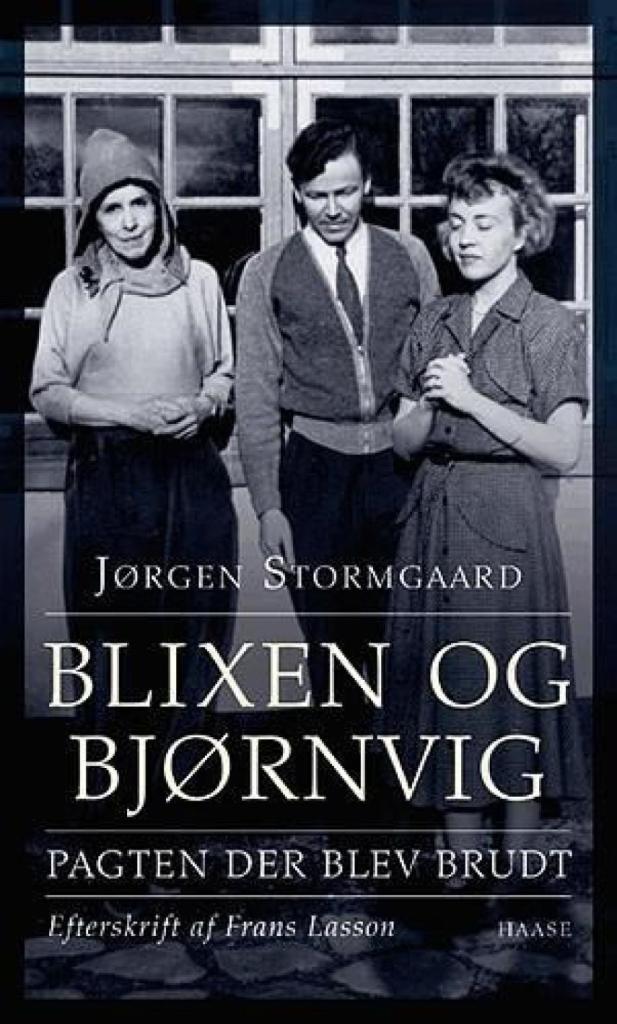
Description
In 1950, Thorkild Bjørnvig made an unusual offer to Karen Blixen. The young promising poet offered to ‘serve’ the famous writer and follow her advice in all aspects of life. Blixen agreed, and a pact between the 32-year-old poet and the 33-year-older lady at Rungstedlund lasted for four years. The consequences, however, were fatal, especially for Bjørnvig and his closest relatives.
The book tells the incredible story of the two great poets’ friendship: about their first meeting with Ole Wivel, about the motives for concluding the pact, about Bjørnvig’s apprenticeship and many trials, Blixen’s inspiring and sometimes capricious nature, the breakup and the great personal costs, that followed. The pact also took on a literary meaning. While it lasted, Bjørnvig wrote some of his best poems, and 20 years after the breakup, the sensational and critically acclaimed memoirs that tell his version of the events were published. In addition, the relationship with Bjørnvig gave Karen Blixen inspiration for four short stories, which are analyzed in this book.
Half a century after the abrogation of the pact, it still haunts. In the postscript to the book, the Karen Blixen researcher Frans Lasson uncovers some central questions that have been hidden or unresolved over the years, and which are important for our understanding of the two poets’ writings and their stormy friendship.
The book was originally published in 2005
There is clever analysis and serious entertainment in Jørgen Stormgård’s book about the stormy friendship … Both Blixen and Bjørnvig were victims of their high-flying games, but it left deep traces in the minds and writings of both, and this has never been better explained than here. – The policy
… sheds new light on a fascinating story about a man between three women. – Information
Can one let one’s way of life and artistic work be directed by one’s role model? Stormgaard has written a particularly successful work that elegantly combines an exciting and thought-provoking analysis of Blixen and the poet Bjørnvig’s ill-fated relationship… – Jørgen Stormgaard (b. 1958) is an MA. in French and English, master’s degree in film studies, and has lectured on Karen Blixen’s life and writing since 1996. “Karen Blixen’s Africa” is Jørgen Stormgaard’s third book on Karen Blixen’s life and writing. He has previously written “Blixen and Bjørnvig. The covenant that was broken” (2005) and “God’s plan – Karen Blixen and Christianity” (2010). File size: 197658 KB Uploaded by: Niels Borup

